by Akim Reinhardt
 When I was growing up during the 1970s, America still had a vibrant and thriving newspaper culture. My hometown New York City boasted a half-dozen dailies to choose from, plus countless neighborhood newspapers. Me and other kids started reading newspapers in about the 5th grade. Sports sections, comics, and movie listings mostly, but still. By middle school, newspapers were all over the place, and not because teachers foisted them upon us, but because kids picked them up on the way to school and read them.
Of course when dropping coins at the local newsstands and into boxes, us youngsters typically picked up tabloids such as the New York Post and Daily News, not those fancy papers so big you had to unfold them just to see the entire front page: the New York Times and the indecipherable Wall Street Journal. Those were for adults, and usually white collar ones at that.
My father was blue collar and not a big newspaper reader. But my mother was a high school English teacher and she made a family ritual of going out to buy the massive Sunday Times when it first hit newsstands on Saturday evenings. Mostly she just wanted the Book Review. We’d also pick up a Daily News because they too had a formidable Sunday edition; not cut into sections like the Times, but in a single massive tome like a phonebook. It had the best comics section of any NYC paper. After my sister and I had our way with the News, I’d occasionally thumb through the Times. No comics, but they did have an entire sports section.
As I rambled towards adulthood, I continued buying the tabloids for their local sports coverage and hilarious front page headlines. However, I also found myself reading more of that Sunday Times. Never all of it, of course. I was far too young, and anyway, never trust anyone who does; no one’s interests are really that far ranging. Read more »


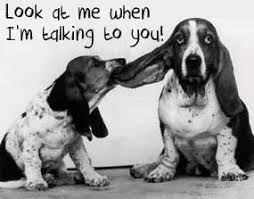 Although there might be nothing wrong with our hearing, we are quickly losing our ability to practice three formative modalities of democratic listening: Mindful, Aesthetic and Critical. These three modalities support our active participation in sustained, intimate conversations where we learn with and from each other. Millennials in particular struggle to listen to their friends, parents, and teachers for more than a few seconds without their brains becoming distracted by the ubiquitous hand of technology.
 Many years ago, I returned to my old high school for a visit with friends who were classmates back in the ’80s. Exploring the school and marveling over what had changed and what remained exactly the same, we ventured into the language lab. The room smelled exactly the same as it had in 1983, and it took me right back to those days of incredibly boring language lessons and sitting in that room with headphones on repeating monotonous phrases.
 Cogito Ergo Sum? Welcome to the party. There’s a lot more going on out there than we sometimes think: Cephalopods
 At MIT outside the Economics Department there was one scholar, whose several lectures I have attended was Noam Chomsky. I knew of him as a pioneer in modern linguistic theory, but his fame in the outside world is as America’s topmost dissenter (his position is somewhat like what used to be that of Bertrand Russell in Britain, a towering figure in his own subject philosophy, but his fame outside was that of Britain’s leading dissenter).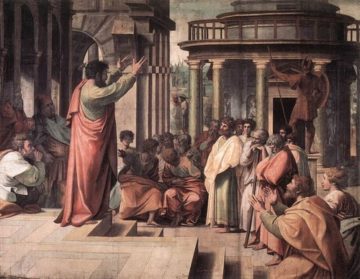
 A soft-spoken, self-effacing young man from Seoul may be the most listened-to living composer on the planet right now, with two blockbuster works of cinema and TV on his resumé. Not only did Jung Jaeil compose the score for the Oscar-winning Parasite, but his subsequent gig, Squid Game, has just stormed into the record books: Seen and heard by hundreds of millions by now, it has become a global phenomenon, another sign of South Korea’s approaching and encroaching hegemony over all things cultural.
 Mary Kuper. “… our curious type of existence here.”