by Michael Abraham-Fiallos
I am a messy person.
I am a messy person, and I don’t like to clean. My house testifies to this: cups in the sink, mail on the counter, books spilling off the windowsills, too much laundry in the bin, a scattering of incense dust on the coffee table alongside burnt out candles and ephemera (an old insurance card, jewelry, more books). About twice a month, I get fed up with myself and obsessively clean the house. Or company comes, and I scramble. But the rest of the time, I subsist in my mess. My psychiatrist thinks this is a matter of motivation, of the depressive side of manic depression. It is less that and more a matter of being a wanderer somewhere else, in a place wet with rain and glistening with wildflowers, in a place where the wind is always whistling, and the sun hangs perpetually low to the horizon, casting its light yellow and fragile past the hills and across the valley. This place is a place in my own head, a space where the eros in me dwells, where my capacity to bring things forth into the world exists, where the grand feelings and the big thoughts are. In the lull of the afternoon, I find myself at my keyboard exploring myself, and I forget to run the washing machine. Or, I take long walks in the daylight to get mired in thought, and the dishes be damned. When my husband arrives home from work, there is so much to tell him, so much to show him, which has been found or made or thought up—which has been brought forth—in the wandering, so much to hear from him that might provoke tomorrow’s wandering (all my best wandering has something to do with my husband).
Maybe what I mean is I’m lazy or perhaps distracted. It’s a cliché about scholars and writers (skola does, after all, mean “leisure”): so wrapped up in their minds that the external world around them fades into the background. In the matter of keeping house, I fit this cliché. However, there is more to keeping house than tidiness.
I have always thought it was a funny phrase: keeping house. What is one keeping? It seems to me that one is keeping something alive, keeping something kindled, as one does a flame with one’s hand. Something precious and vibrant is meant to be kept at the center of the home, as once, not so long ago, the hearth was kept stoked to keep the home warm and habitable. Upon thinking this, I went searching for what this something might be that one keeps alive or open or warm with one’s care and attention, went searching for what it is that makes a house a house. I found the answer, as I always seem to do, in the concept of love, but in a very peculiar and striking account of what love is: what the French feminist philosopher, Luce Irigaray, calls demonic love or sorcerer love. She explicates this concept in an essay titled “L’amour Sorcier: Lecture de Platon, Le Banquet, Discours de Diotime,” rendered in English by Eleanor H. Kuykendall as “Sorcerer Love: A reading of Plato’s Symposium, Diotima’s Speech.” It appears in a volume titled Luce Irigaray in French in 1984, and Kuykendall published her translation in 1989. Read more »
 When I was growing up during the 1970s, America still had a vibrant and thriving newspaper culture. My hometown New York City boasted a half-dozen dailies to choose from, plus countless neighborhood newspapers. Me and other kids started reading newspapers in about the 5th grade. Sports sections, comics, and movie listings mostly, but still. By middle school, newspapers were all over the place, and not because teachers foisted them upon us, but because kids picked them up on the way to school and read them.


 Although there might be nothing wrong with our hearing, we are quickly losing our ability to practice three formative modalities of democratic listening: Mindful, Aesthetic and Critical. These three modalities support our active participation in sustained, intimate conversations where we learn with and from each other. Millennials in particular struggle to listen to their friends, parents, and teachers for more than a few seconds without their brains becoming distracted by the ubiquitous hand of technology.
 Many years ago, I returned to my old high school for a visit with friends who were classmates back in the ’80s. Exploring the school and marveling over what had changed and what remained exactly the same, we ventured into the language lab. The room smelled exactly the same as it had in 1983, and it took me right back to those days of incredibly boring language lessons and sitting in that room with headphones on repeating monotonous phrases.
 Cogito Ergo Sum? Welcome to the party. There’s a lot more going on out there than we sometimes think: Cephalopods
 At MIT outside the Economics Department there was one scholar, whose several lectures I have attended was Noam Chomsky. I knew of him as a pioneer in modern linguistic theory, but his fame in the outside world is as America’s topmost dissenter (his position is somewhat like what used to be that of Bertrand Russell in Britain, a towering figure in his own subject philosophy, but his fame outside was that of Britain’s leading dissenter).

 A soft-spoken, self-effacing young man from Seoul may be the most listened-to living composer on the planet right now, with two blockbuster works of cinema and TV on his resumé. Not only did Jung Jaeil compose the score for the Oscar-winning Parasite, but his subsequent gig, Squid Game, has just stormed into the record books: Seen and heard by hundreds of millions by now, it has become a global phenomenon, another sign of South Korea’s approaching and encroaching hegemony over all things cultural.
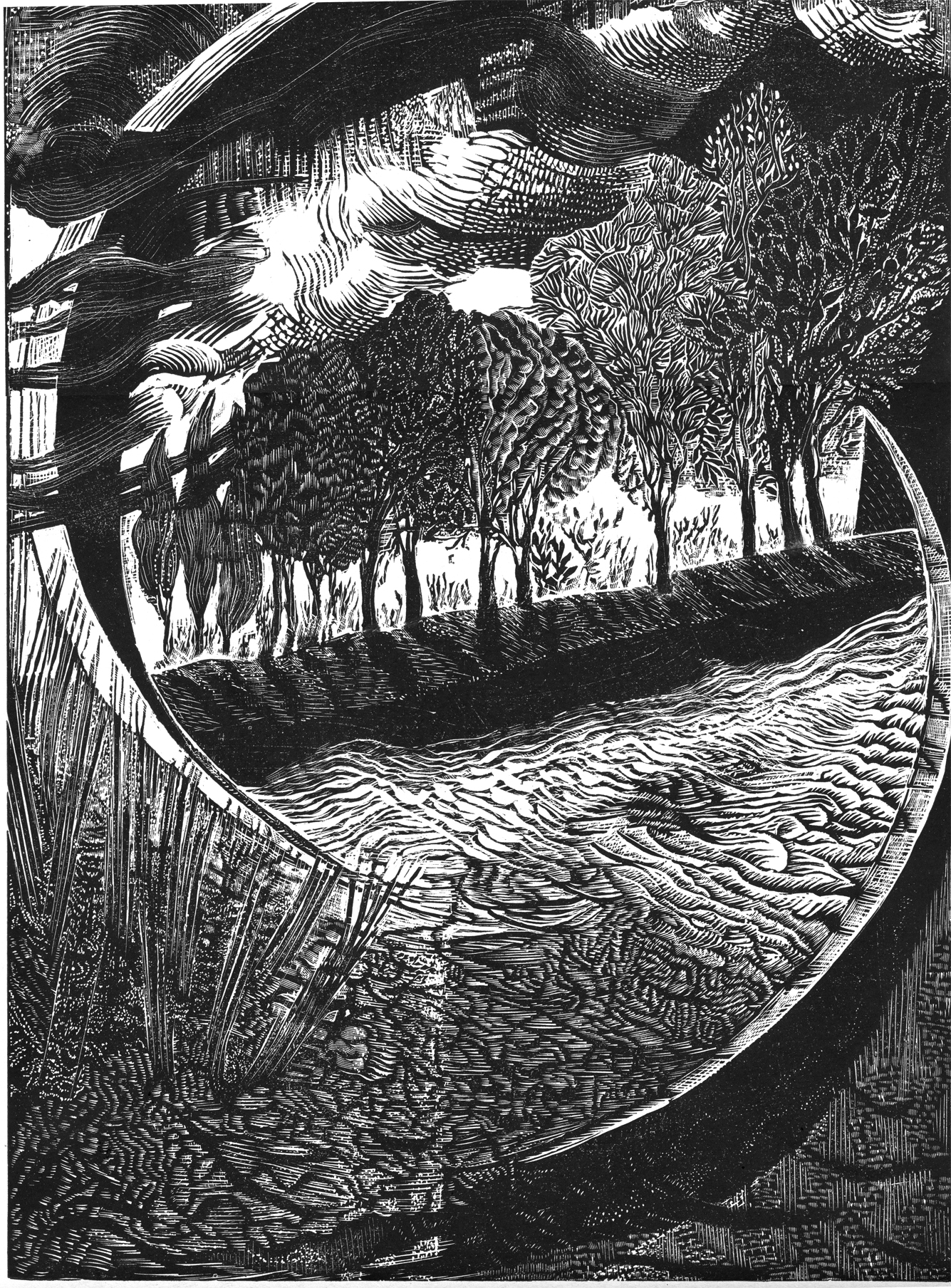 Mary Kuper. “… our curious type of existence here.”