
Like Lips, Like Skins, Andrea Scrima’s second novel (German edition: Kreisläufe, Literaturverlag Droschl 2021), is a diptych; the first half of the book is dedicated to the first-person narrator’s mother, the second half to her late father. We meet Felice in the early eighties as a young art student in New York and as a newcomer to West Berlin before and after the fall of the Berlin Wall; ten years later, she returns to New York to install an exhibition of her work. Another fifteen years pass and we encounter her as a single mother poring over her father’s journals in search of her family’s past. Like Lips, Like Skins is about art, memory, and the repetitions of trauma. The first chapter was published in issue 232 of the Austrian literary magazine manuskripte; English-language excerpts have appeared in Trafika Europe, StatORec, and Zyzzyva. The German version of this interview appeared in issue 234 of manuskripte. Ally Klein interviewed the author over the course of several weeks via email.

Ally Klein: There’s a scene in Like Lips, Like Skins in which the first-person narrator, Felice, recalls studying the Sunday comics as a child. She buries her nose in the newsprint; when she fetches a magnifying glass to get closer, she discovers an “accumulation of tiny dots.” Individually, they’re no more than “lopsided splotch[es],” but together give rise to a bigger picture. I see a parallel here to the way the novel is stylistically conceived. Memories pop up seemingly at random, and in the end, they produce an image that works intuitively. The book eludes a stringent retelling, but leaves the reader with a sense of understanding something that can’t be expressed in terms of an idea or concept. The discoveries, if that’s what they can be called, are situated elsewhere.
Andrea Scrima: As a child, Felice doesn’t yet know that the interaction between the eye and brain fills in the gaps, the missing information between disparate points; for her, it’s just magic. I use language to create imagery that can exist outside of description or symbolism. In literature, images often have a function, they’re there to convey a certain idea. But some images are irreducible, they’re not all that easy to explain. And these are the ones that interest me most: they’re autonomous, they have a life of their own. Sometimes they’re a bit uncanny.
I’m interested in literature’s resilience, its ability to find a formal language for phenomena that can’t be easily captured in words. A language the reader somehow perceives as “true,” even if they can’t necessarily say how or why. Read more »

 One of my earliest memories was of Christmas Eve in 1954. I was about 3 or 4 years old, playing under a table at my grandmother’s house. My sister and a cousin were with me, playing with a small wooden crate filled with straw. The crate represents the manger in the stable in Bethlehem 1,954 years ago, where the animals welcomed the baby Jesus, since there were no rooms in the inn. We three kids were waiting for the adults to come to the table to join us for Wigilia, the traditional Christmas Eve feast, after which we would move to the living room, sing Polish Christmas Carols, and wait for an uncle disguised as Santa to arrive with presents for everyone.
 Over the years I have heard many stories about Mahalanobis. One relates to his youth. He and Sukumar Ray (Satyajit Ray’s father, a pioneer in Bengali literature of nonsense rhymes and gibberish) were the two contemporary Brahmo whiz kids active in literati circles. They used to arrange regular meetings at someone’s home for serious discussion. But as usually happens in such Bengali middle-class gatherings, much time was taken up in the serving and enjoyment of food delicacies. Mahalanobis objected to this and said this was leaving too little time for discussion. So he sternly announced that from now on no food should be served in the meeting. For the next couple of times people morosely accepted the rule. But Sukumar subverted it, by one time arriving a little early and persuading the food-preparers in the household (usually women) that for the sake of the morale in the meeting, food-serving should be resumed. By the time Mahalanobis arrived, everybody was relishing the delicacies, which infuriated him, but he gave up.


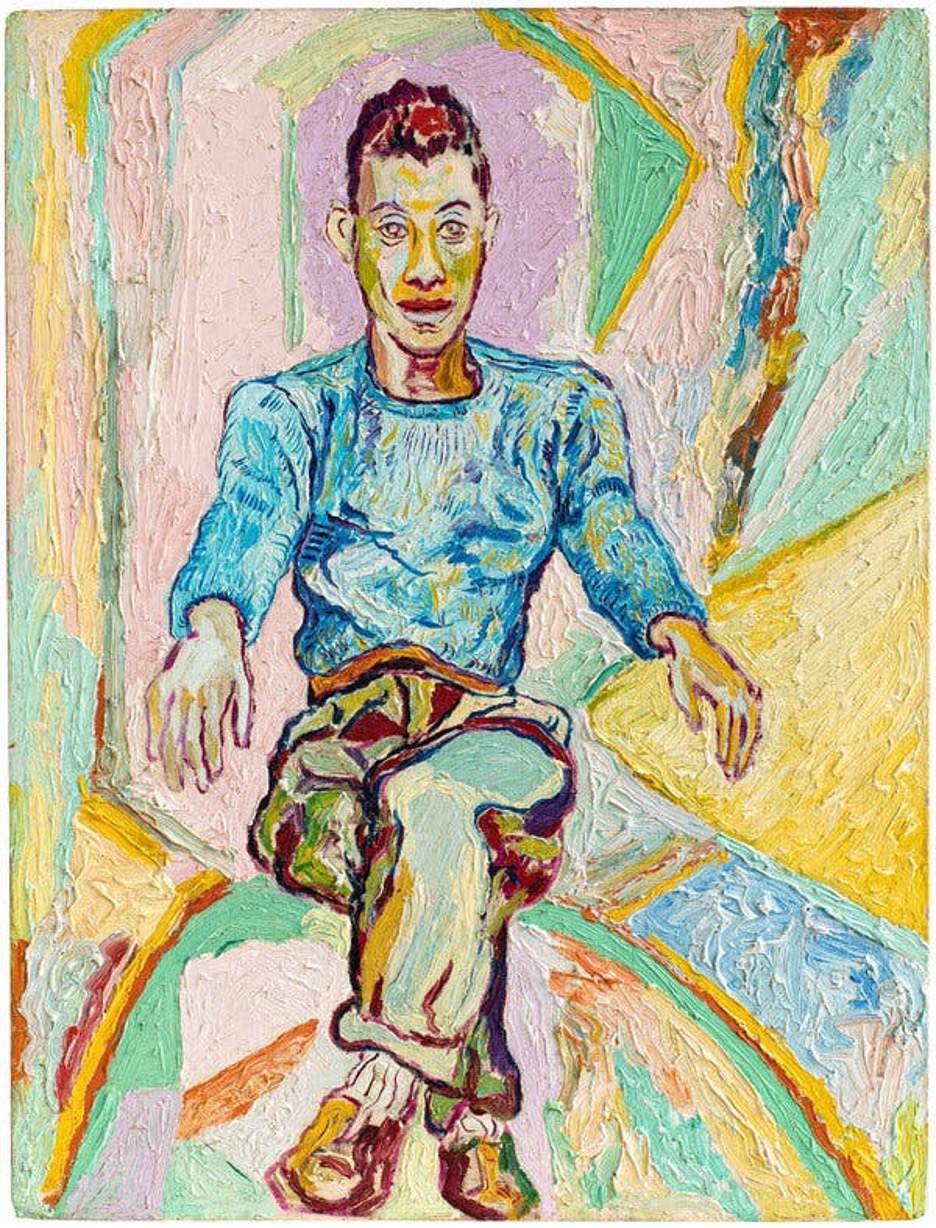 Beauford Delaney. James Baldwin (Circa 1945-50).
 A couple of weeks ago, on the pages of this website,
 One of those mysterious concepts that we use as a criterion for judging a novel or film is a “sense of place.” I call it mysterious because it’s so often poorly defined—we recognize it because we can feel it, but what goes into creating it? How can one go about transporting a reader, for example, into a time and place via text? I’m under the impression that if asked this question, most people would mention things like using the five senses to describe a character’s impressions of his or her surroundings, or providing detail via adjectives and adverbs. This may be a gross generalization, but it’s what I’ve gathered from my experience in creative writing courses. It’s also the sense I get from reading short stories in literary journals, which seem to be where aspiring writers publish their attempts at fiction. I often find this writing technically good, but lifeless; it has all the components of effective writing but doesn’t add up to anything compelling. I don’t mean to suggest that I could do better, but I do know what I enjoy reading and what I don’t.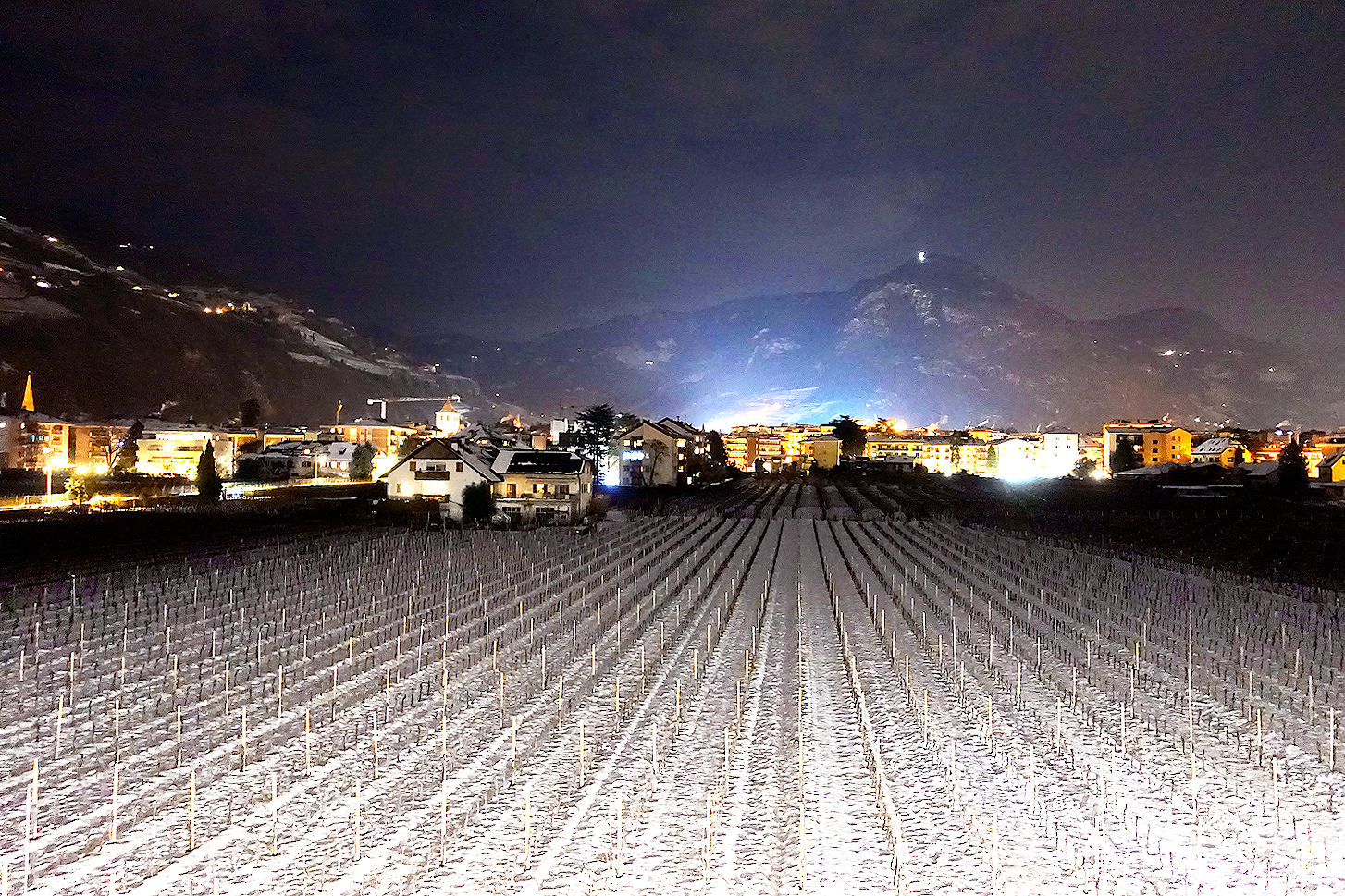

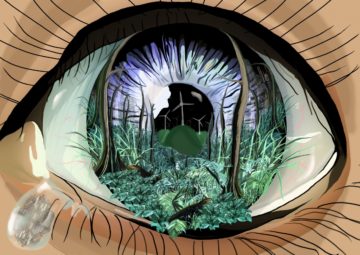 I began writing this series eighteen months ago to explore the human experience and human potential in the face of climate change, through the stories we tell. It’s been a remarkable journey for me as I followed trails of questions through new fields of ideas along entirely unexpected paths of enquiry. New vistas revealed themselves, sometimes perilous, always compelling. And so I went. The more I’ve learned, the more I’ve come to realize that our present environmental predicament is actually far worse off—that is to say, more threatening to near-term human wellbeing and civilizational integrity—than most of us recognize. This journey is changing me. So when I now look at contemporary works of fiction about climate change—so-called cli-fi, which I’d hoped might provide fresh insights—so much of it strikes me as somewhat underwhelming before the task: narrow, shallow, tepid, unimaginative, or even dishonest.