
Top of a mountain at the border of Brixen and Vahrn in the South Tyrol.

Top of a mountain at the border of Brixen and Vahrn in the South Tyrol.
by Michael Abraham
The shower is running. It has just begun to steam up the little bathroom in my little apartment, and I reach into it, turn the dial from all-the-way-hot to almost-all-the-way-hot. I step into the spray of the water, and I discover that, instead of almost-all-the-way-hot, I have turned the dial to nearly-tepid. I turn it back toward all-the-way-hot, and, almost immediately, I feel it scald my chest. I fuss with it. I fuss back and forth with the dial in my shower, and, as I do so, I think of you, whoever you are, whoever you are reading this essay or whoever you are who is not reading this essay and never will. I think of you, out there, in your bathroom, taking a shower in the early afternoon on a lazy day off, fussing with the dial or the handles or whatever contraption it is that controls the heat in your shower, finding yourself now scalded, now freezing. I think of you, of how we have this experience in common—this bare, quotidian experience that means nothing on its surface, that is easily forgotten in the moments after it happens, for it happens so frequently and with such little fanfare. I am thinking of you as I pick up the bar soap and soap my body. I wonder if you use bar soap, too, or if you are a shower gel kind of person. I feel fairly confident we share the experience of shampoo, but I reflect that not everyone conditions as I condition my hair. When I step out of the shower and am met with a bathroom that feels much more bracingly cold than it did when I stepped into it, I think of you as well, at how the hairs on your arms raise just like mine.
You see, I have been thinking of you a lot these days. I have been thinking of all the small, seemingly menial things that happen to me that also happen to you, of the way you swear under your breath when you burn the rice—how you cut your finger on the corner of the page of a book—how you are enchanted for a moment by a gust of wind and brought back to memories of playing in leaves as a child—how you make too much coffee and then drink too much coffee and then find yourself with a stomach ache and a buzzing mind. Read more »
by Derek Neal
 If Joan Didion were alive today, she might write an essay about Prince Harry and include it in an updated version of Slouching Towards Bethlehem. She might write a passage like the one she wrote about Howard Hughes:
That we have made a hero of Howard Hughes tells us something interesting about ourselves, something only dimly remembered, tells us the secret point of money and power in America is neither the things that money can buy nor power for power’s sake (Americans are uneasy with their possessions, guilty about power, all of which is difficult for Europeans to perceive because they are themselves so truly materialistic, so versed in the uses of power), but absolute personal freedom, mobility, privacy. It is the instinct which drove America to the Pacific, all through the nineteenth century, the desire to be able to find a restaurant open in case you want a sandwich, to be a free agent, live by one’s own rules.
Didion’s comment about finding a restaurant open for a sandwich comes from a remark she’d heard as an explanation for Hughes buying up real estate in Las Vegas. It may seem a bit much to procure a whole town as a way of ensuring you can get a bite to eat at 3 pm in the afternoon, or 3 am in the morning, but have you ever been to Europe? My first experience of Europe was a year abroad studying in Nice, France. One day, I planned to get together with an American friend for lunch. We figured we’d meet up in the old city center, walk around a bit, then pick a place that looked good. As it happened, we were both running a little late, then we strolled around a bit too long, and finally we walked into a restaurant at about, well, 3 pm. Ever the innocents abroad, we had yet to realize our fatal error. The restaurant was deserted, and we had difficulty finding someone who worked there. Eventually, we did. After we bumbled along in our best French, asking if we could eat there and feeling confused as to why we had to ask, the proprietor cast his cold gaze upon us and proclaimed that, in France, restaurants close between lunch and dinner time. The kitchen, he said, is closed. We were stunned. Were the social conventions truly so strong that they couldn’t be amended for us, two Americans, who just wanted something to eat and secretly felt that we deserved something to eat, as well? Were we really going to be turned away? We had money, after all. Read more »
by David Kordahl
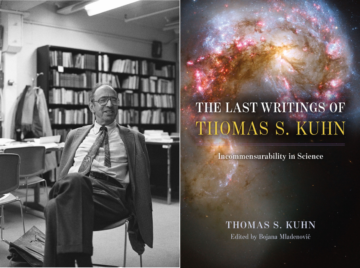
Thomas Kuhn’s epiphany
In the years after The Structure of Scientific Revolutions became a bestseller, the philosopher Thomas S. Kuhn (1922-1996) was often asked how he had arrived at his views. After all, his book’s model of science had become influential enough to spawn persistent memes. With over a million copies of Structure eventually in print, marketers and business persons could talk about “paradigm shifts” without any trace of irony. And given the contradictory descriptions that attached to Kuhn—was he a scientific philosopher? a postmodern relativist? another secret third thing?—the question of how he had come to his views was a matter of public interest.
Kuhn told the story of his epiphany many times, but the most recent version in print is collected in The Last Writings of Thomas S. Kuhn: Incommensurability in Science, which was released in November 2022 by the University of Chicago Press. The book gathers an uncollected essay, a lecture series from the 1980s, and the existing text of his long awaited but never completed followup to Structure, all presented with a scholarly introduction by Bojana Mladenović.
But back to that epiphany. As Kuhn was finishing up his Ph.D. in physics at Harvard in the late 1940s, he worked with James Conant, then the president of Harvard, on a general education course that taught science to undergraduates via case histories, a course that examined episodes that had altered the course of science. While preparing a case study on mechanics, Kuhn read Aristotle’s writing on physical science for the first time. Read more »
by Michael Liss
However tiresome to others, the most indefatigable orator is never tedious to himself. The sound of his own voice never loses its harmony to his own ear; and among the delusions, which self-love is ever assiduous in attempting to pass upon virtue, he fancies himself to be sounding the sweetest tones. —John Quincy Adams, “Lectures on Rhetoric and Oratory: Delivered to the Classes of Senior and Junior Sophisters in Harvard University.”
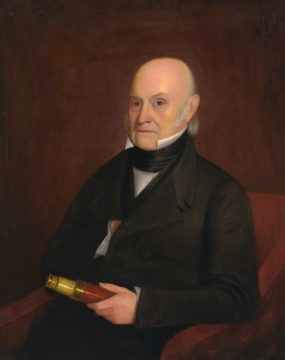
Oh, my goodness, could that man talk. And talk. And talk some more. It might amuse you to know that, in the above quote, he was referring to his fellow lawyers.
So much you can say about John Quincy Adams. Annoying, crabby, bilious, voluble. Also, one of the most remarkable men ever to occupy the Oval Office—and even more to serve in the House of Representatives. A superb diplomat, who literally began his career at his father’s elbow prior to the negotiation of the Treaty of Paris, he served four Presidents (Washington, Adams I, Madison, and Monroe) as Ministers to the Netherlands, Russia, Prussia, and the UK. He was Monroe’s Secretary of State. During the wilderness that was Thomas Jefferson’s Presidency, he spent six years in the Senate. In typical Adams manner, he managed to irritate his own Federalist Party enough for them to deny him renomination. In 1824, he won the Presidency against three strong candidates, Andrew Jackson, Henry Clay, and William Crawford. None got a majority of the Electoral College, and the race was thrown into the House. There, Clay endorsed Adams, enraging Jackson supporters (who called it a “Corrupt Bargain” when Adams picked Clay for Secretary of State).
Adams was not as deft a President as he was a diplomat, and Jackson trounced him in a rematch in 1828, sending the then-61-year-old home to his failing farm in Massachusetts. He was not thrilled to be back in the Commonwealth; he sulked and became even more a pain until his own neighbors rescued him by sending him back to Washington as a Congressman. Read more »
. . .—on a painting by Jack Braudis

.
.
.
.
.
.
Boat:
. . .Your slope is russet and graceful; seems soft.
Land:
. . .It is. I see it echoes the grace of your gunnels, stem to stern.
Boat:. . .
. . .We approach your still grace, having been upon water the day.
Land:. . .. . .
. . .Who is that with you, the who with articulating sticks?
Boat:
. . .He rows, he brings me to you to lie in your shade.
. . .He imagines the sky would be good to gaze into
. . .with you beneath his back; our painter has
. . .rendered us true and sure & his clouds
. . .follow the breath of wind as they must
Land:
. . .But I’m confused, what painter?
. . .I am real and true and so is sky.
Boat:
. . .Yes, and so is he and so am I.
Jim Culleny, 11/16/22
Painting by Jack Braudis
by Akim Reinhardt

There is a building on the Towson University campus called Van Bokkelen Hall. In that building, one of the rooms has recently been renamed for Richard E. Vatz. I don’t know who Van Bokkelen was (I should probably look into that), but I can tell you who Vatz is.
Professor Richard E. Vatz has been at Towson University more than twice as long as I have, and I’ve been there over twenty years. When I first met Vatz, he struck me as a fairly harmless, banal right winger. He was a type. Fashioning himself a Socatic gadfly, he complained about the school and state bureaucracy (Towson is a public university). He warned against faculty unionization (it’s actually against the law for professors to unionize in Maryland). He was a free speech advocate who cut against academia’s grain in his conversations and later in his uninspiring blog posts. I found him to be entirely unimpressive. But the university was big enough that I was able to largely ignore him, despite his efforts to be a presence and a “character.”
Then it got serious.
First he made himself the faculty sponsor of a hardcore racist student club: Matthew Heimbach’s White Student Union. A history major, Heimbach was a student in one of my classes. He was smart. He was articulate. He was over-the-top polite. And he was a very committed White nationalist. Because of this, and because being such a person on a college campus was such an oddity in pre-Trumpist America, Heimbach garnered his fair share of press. CNN, the New York Times, and some other major outlets all indulged him with interviews and coverage, holding him up as a curio.
Richard Vatz sponsored Heimbach’s White Student Union. This made it an official Towson University student organization, which it could not be without faculty sponsorship. Their activities included things like campus safety patrols. You don’t need to read too hard between the lines to understand just whom Heimbach and his cronies thought were the threat. Read more »
by Leanne Ogasawara
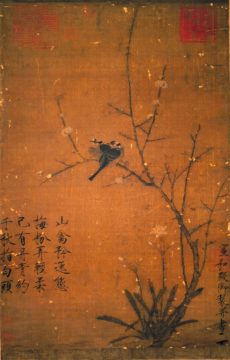
山禽矜逸態 梅紛弄輕柔 已有丹青約 千秋猜白頭
Mountain birds, proud and unfettered
Plum blossoms, pollen scattering softly
This painting but a promise
Of a thousand autumns to come
Nine-hundred years ago, a Chinese emperor painted a picture of a pair of birds in a plum tree –to which he then inscribed a poem in calligraphy of unsurpassed elegance, in a style all his own. It is interesting to consider that very few new styles of calligraphy emerged in China after the sixth century. But Emperor Huizong (r. 1101-25), while still only a young prince, created his own way of writing. Later dubbed the “slender gold” (瘦金體), it has been described by admirers as being writing like “floating orchid leaves,” or like “bamboo moving in the wind.” Or even more aptly, like “the legs of dancing cranes.” Detractors complained that the “skinny legs” are “too scrawny” to hold up the body, or “too bony”, like “a starving student in misfitting clothing.”
Whether one is partial to his characters or not, the fact remains that the “slender gold” style is probably the most famous –or maybe even the only– example in Chinese history of an emperor creating his own style of writing.
We see his four-line poem on the bottom left of the ink painting. Also there on the right of the delicately-drawn narcissus flowers, the emperor has signed his work –again, in that exquisite calligraphy like dancing cranes: “In the Xuanhe Hall, the Emperor drew this [picture].”
And what of the picture?
Well, we see two birds huddled together on a plum tree, under which grows a clump of narcissus. According to Chinese poetic convention, the plum and the narcissus are representative of the landscape of late winter and early spring. The plum, in particular, came to be admired for its capacity to blossom during extreme cold–even in the snow. Associated with pine and bamboo, both which remain green even in winter, the three became known collectively throughout East Asia as the “friends of the cold” (歲寒三友) and were considered to be symbols of fortitude and fidelity. Read more »
 Ada Beams. Landscape Somewhere in France, 2022.
Digital photograph.
With permission from the artist.
by Rafaël Newman
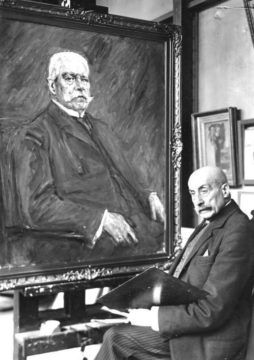
It’s been 90 years since Hitler was appointed German Chancellor, on January 30, 1933, despite his party, the NSDAP, having failed to achieve a majority in the elections to the Reichstag held the previous year; so naturally I’ve been thinking about Max Liebermann.
Born decades before the establishment of the German Empire, or Second Reich, in 1871, the painter Max Liebermann (July 20, 1847—February 8, 1935) was to die just as the Third Reich was rising to its hideous feet. Liebermann was a pillar of the German art world—or rather, he had become one by 1933, when he resigned from the Prussian Academy of Arts, the body he had served as president, but which had now fallen into line with the Nazis and had ceased exhibiting works by Jewish artists.
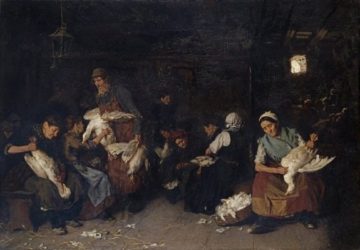
Max Liebermann was himself Jewish, but by the time of his death at the age of 87 he had long been accepted in the wider German bourgeois society into which he had been born, and which had persisted in its Prussian, Wilhelmine, and Weimar variations. After a rocky start to his career with scandalously “ugly” scenes of working-class life and “blasphemous” depictions of religious motifs, Liebermann would go on to play a leading role in the Berlin Secession, the fin-de-siècle movement opposed to the strictures of academic painting, which championed Impressionism and Realism and counted among its members such notable artists as Max Beckmann, Lovis Corinth, Käthe Kollwitz, and Otto Modersohn. Liebermann resisted the Secession’s eventual support for Expressionism, however, which moved him towards the conservative camp and prepared his entry into the Academy, the establishment’s artistic watchdog, and the mainstream of German culture. Read more »
by Brooks Riley
by Bill Murray
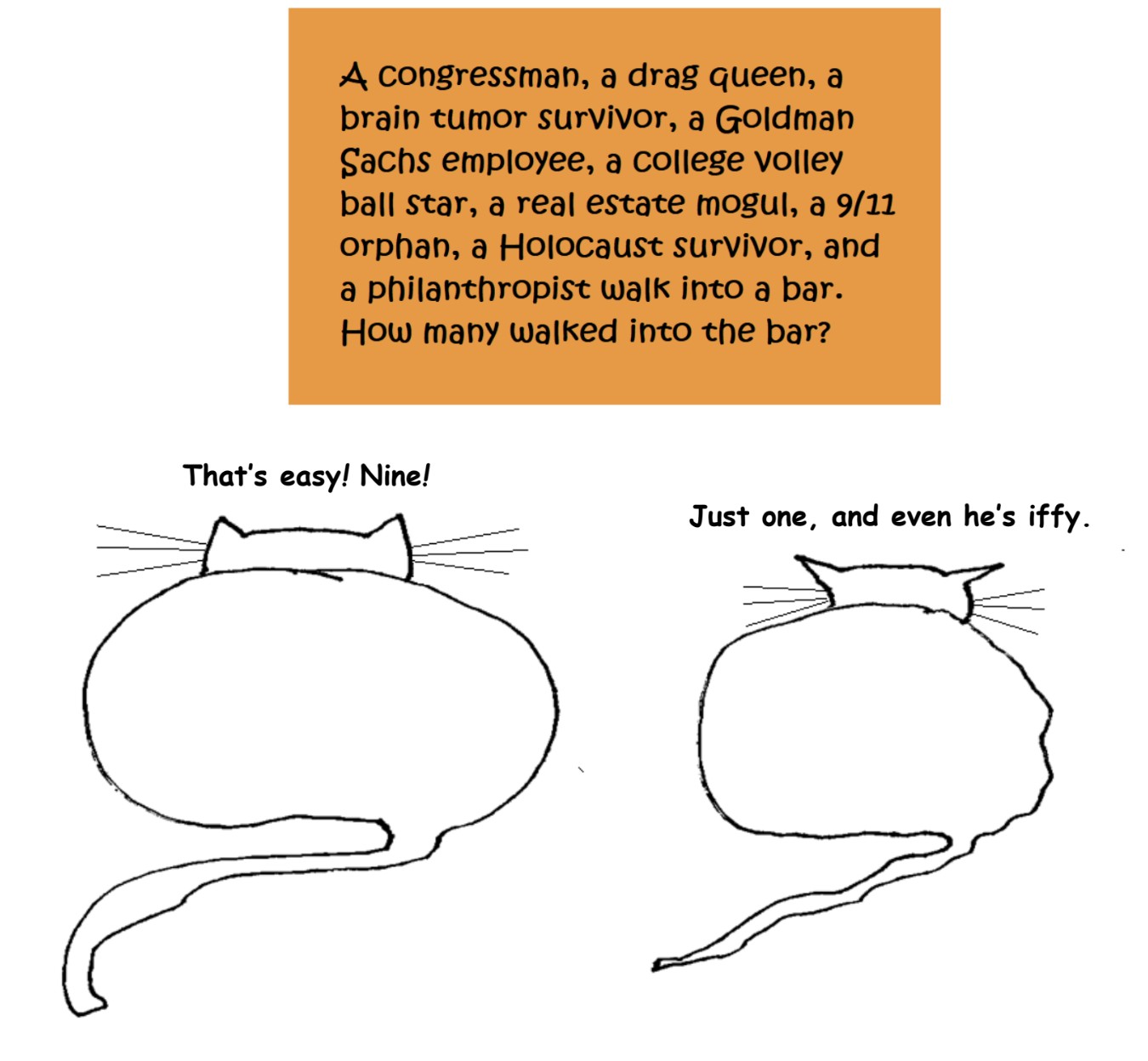
 I’m scared of birds. They’re dinosaurs, you know. They descend from the Jurassic when, just like in Jesus Loves Me, ‘they were big and we were small.’ Did you see those huge dinosaur tracks they found in Texas last summer? You were a scurrying little proto-mammal, foraging and minding your own business in the underbrush when that thing came along and blotted out the sun.
Birds are not cute little hopping around pixies, as likely shitting on your hand as sitting on it. Birds don’t have the presence of mind to fly off the hand that feeds it before despoiling it. Hummingbirds don’t even make sense in theory.
After the noise and furor that humans send up, birds are this world’s most insistent, annoying noisemakers, operating in the frequencies between bad manners and prison. The vocal rancor and pith of seagulls (find and bring to me a seagull that calms you) and the cage of two, three, four notes the rest of the bloody lot are doomed to stand inside and repeat all morning before it’s time to wake up, between those is where madness lies.
Privileged humans love birds. Birds’ appeal, they say, stacks right up alongside the majesty of the lion and the cheetah on safari. After you and your safari guide have rooted around for your fill of those mud trenches hippos make, say, and avoided the tse tse fly outbreak in day long pursuit of the famous muttering toad of this unique valley, somehow apparently, accidentally spying a dwarf cassowary in the sawgrass makes the day perfection. Read more »
by Marie Snyder
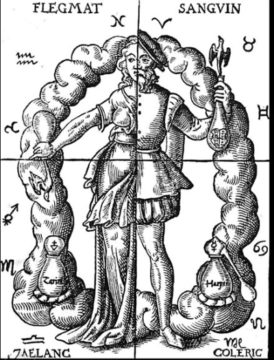 Lots of people discredit the Myers-Briggs as just a horoscope, but it’s significantly different and can be useful in recognizing that we’re all innately different kinds of people. This awareness can help us get along in this world and maybe even find love, or at least a better roommate.
Dividing people into types based on intrinsic tendencies has been around for millennia, born of scrutinized observations of human nature. Ayurvedic Doshas were recorded about 3,000 years ago identifying people who are Vata (energetic but scattered), Pitta (systematic and ambitious, but dogmatic), or Kapha (methodical but slow moving). The four humours came around 500 years later with Alcmaeon of Croton to differentiate those who tend to be sanguine, phlegmatic, choleric, or melancholic. If you think of those categories long enough, you can easily find yourself playing a game of slotting your friends and family under each term.
Then Jung wrote Psychological Types in 1921, outlining opposing traits along three continuums: extraverted/introverted, sensing/intuitive, and thinking/feeling. (That last one might be better updated to task-oriented/people-oriented.) Although it produces only nine specific types, the continuum set-up provides infinite possibilities within each set of four letters. It’s similar to being mainly melancholic with a touch of sanguine, or having a primary and secondary dosha. Jung explains his stance on innate personality:
“The fact that, in spite of the greatest possible similarity of external conditions, one child will assume this type while another that, must, of course, in the last resort be ascribed to individual disposition.”
This typology was popularized by Katharine Cook Briggs and her daughter, Isabel Briggs Myers who added the perception/judgment continuum and found a market for attaching types to careers. Later the Big 5 added another continuum: sensitive/resilient, and now it’s used by data miners. The fact that companies like Cambridge Analytica use psychographic marketing to influence our purchasing and decisions (and possibly our voting choices), means there’s likely something to understanding people under categories. Read more »

Franzensfeste, South Tyrol, at night.
by Bill Benzon
Of philosophy and food
Moe, the name has two syllables, is Moto’s wife and Sutan’s mother. Though it may also be a play on “a Japanese word that refers to feelings of strong affection mainly towards characters in anime, manga, video games, and other media [and] has also gained usage to refer to feelings of affection towards any subject.”
“Tan” is an honorific, roughly meaning small, and is used with babies, though I would say that Sutan is more a toddler at this point than a baby – at least in the usage common in my own (American) culture. She was a baby of 10 months when Moe started making Kimono Mom videos.
Moto, then, is Moe’s husband and Sutan’s father. When Moe started making her Kimono Mom videos Moto worked in the restaurant and hospitality business. But now he is business manager and partner in Moe’s YouTube business, which is centered on Japanese home cooking. And on Sutan.
Kimono Mom, though, is a cooking show in the way that Anthony Bourdain’s Parts Unknown was a food and cooking show. Yes, Bourdain traveled all over the world and showed us the food of many different cultures. But he used food as a vehicle for revealing and reveling in human diversity, for talking philosophy in plain language, for fun. Think of Kimono Mom as a philosopher with Sutan as her Socrates. She uses the cooking video the way Plato used the dialog form. It’s a vehicle.
Let’s walk through the video at the head of this article. (When watching the video be sure to click the “cc” button at the lower right. That will give you English language captions for people’s speech. You can set the language with this settings menu, the small “gear” to the right of cc.)
Moe, Sutan, Moto.
Sutan, Moto, Moe.
Moto, Moe, Sutan.
by Ashutosh Jogalekar

“Black Snow: Curtis LeMay, the Firebombing of Tokyo and the Road to the Atomic Bomb”, by James M. Scott
On the night of March 9, 1945, almost 300 B-29 bombers took off from Tinian Island near Japan. Over the next six hours, 100,000 civilians in Tokyo were burnt to death, more possibly than in any six hour period in history. James Scott’s “Black Snow” tells the story of this horrific event which was both a technological and a moral failure. It is also the story of how moral failures can result from technological failures, a lesson that we should take to heart in an age when we understand technology less and less and morality perhaps even lesser.
The technological failure in Scott’s story is the failure of the most expensive technological project in World War 2, the B-29 bomber. The United States spent more than $3 billion on developing this wonder of modern technology, more than on the Manhattan Project. Soaring at 30,000 feet like an impregnable iron eagle, the B-29 was supposed to drop bombs with pinpoint precision on German and Japanese factories producing military hardware.
This precision bombing was considered not only a technological achievement but a moral one. Starting with Roosevelt’s plea in 1939 after the Germans invaded Poland and started the war, it was the United States’s policy not to indiscriminately bomb civilians. The preferred way, the moral way, was to do precision bombing during daytime rather than carpet bombing during nighttime. When the British, led by Arthur “Butcher” Harris, resorted to nighttime bombing using incendiaries, it was a moral watershed. Notoriously, in Hamburg in 1943 and Dresden in 1944, the British took advantage of the massive, large-scale fires caused by incendiaries to burn tens of thousands of civilians to death. Read more »
by Tim Sommers

What’s the greatest prediction of all time?
By “greatest,” I mean something like how big a deal the thing predicted is multiplied by how accurate the prediction was. I would love to hear other proposals in the comments, but mine is Andy Warhol’s prediction that, “In the future, everyone will be famous for 15 minutes.”
It was made somewhere around 1968. Not only were there no social media and no internet at the time, but computers were barely even a thing. Could you have looked around at celebrity culture in 1968 and predicted Instagram and Twitter and influencers?
Yes, I know. Many doubt that Warhol said this. Wikipedia, for example, baldly asserts that this quote is “misattributed” to Warhol, while the Smithsonian Magazine more judiciously reports that he “probably never said” that. But I don’t think the evidence that they cite really confirms their skepticism. The Smithsonian Magazine, for example, reports that art critic Blake Gopnik (never even mentioned as one of the suspects in the Wikipedia article) claimed credit for the quote, and then they take it as confirmation of Gopnik’s story that later on Gopnik also said that he (Gopnik) heard Warhol say that he (Warhol) never said that. It’s like Wittgenstein’s example of someone trying to confirm what’s in the newspaper by buying a second copy of the same newspaper. Yoko Ono, John Lennon, and David Bowie all credit the quote to Warhol. That’s good enough for me.
On the other hand, maybe the fact that it’s hard to figure out to whom to attribute the quote, works better for our subject. Which is this. ‘If the medium is the message,’ as media theorist Marshall Mcluhan said, ‘what is the message of the internet as a medium?’ (Mcluhan, despite being an academic, became so widely recognize, largely for that line, that he did a cameo as himself in Annie Hall.)
My philosophy training forces me to begin by saying that I think Mcluhan should have said, ‘The medium of any particular media technology is itself also itself a kind of message in addition to the particular messages merely conveyed by that medium…” (Or something like that.)
Anyway, what is the message of the internet as a medium? The techno Utopian message of the internet, according to early enthusiasts, is that, “Information wants to be free.” Unfortunately, that’s wrong. The real message of the internet is, “All information is equal.” Read more »
 Sughra Raza. Early Winter Shapes, January 2022.
Digital photograph.
by Dwight Furrow
 If we are to believe the most prominent of the writers we now lump under the category of “existentialism,” human suffering in the modern world is rooted in nihilism. But I wonder whether this is the best lens through which to view human suffering.
According to existentialism, as the role of God in modern life receded to be replaced by a secular, scientifically-informed view of reality, the resulting loss of a transcendent moral framework has left us bereft of moral guidance leading to anxiety and anguish. The smallness of human concerns in a vast, uncaring universe engenders a sense that life is inherently meaningless and absurd. There seems to be no ultimate purpose in life. Thus, our individual intentions are without foundation.
As Camus wrote:
The absurd is born in this confrontation between the human need and the unreasonable silence of the world. (From the Myth of Sisyphus)
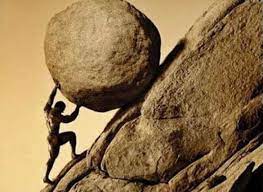
And so, for Camus, human suffering is like the toils of Sisyphus condemned to endlessly roll the boulder up the mountain only to have it roll down again—life is a series of meaningless tasks and then you die.
Sartre, for his part, argued that the demise of a theistic world view means we must now confront the incontrovertible fact of human freedom—no state of affairs can cause us to act in one way rather than another. Furthermore, there are no values that have a claim on us prior to our choosing them. Instead, at each moment, we make a choice about the significance of facts and our relation to them. If life is to be meaningful, we must invent that meaning for ourselves. We are thus “condemned” to be free and must take full responsibility for our actions and the meaning we attribute to them. Read more »
by Eric Bies

Jules Verne sent Lidenbrock and Axel over—to crawl down the throat of a dormant volcano.
W. H. Auden visited between wars and found the place wanting for souvenirs. “Of course,” he wrote, “one can always bring home little bits of lava for one’s friends—I saw the Manchester school-teachers doing this at the Great Geysir—but I am afraid I have the wrong sort of friends.”
William Morris went twice: once in 1871, again in 1873. To what purpose he did, his daughter, May, elucidates in her introduction to the Journals he kept during those journeys:
not to shoot their moors and fish their rivers but to make pilgrimage to the homes of Gunnar and Njal, to muse on the Hill of Laws, to thread his way round the historic steads on the Western firths, to penetrate the desert heaths where their outlaws had lived…. The whole land teems with the story of the past—mostly unmarked by sign or stone but written in men’s minds and hearts.
In the summer of 1627, a decade after the death of Shakespeare, a trio of ships appeared off the southern coast of Vestmannaeyjar. The people of the island—the Einars, Helgis, Gudrids, and Sigrúns—assisted by nearly eighteen hours of sunlight, kept their eyes fixed on the horizon for close to an entire day, during which they convened and debated; they watched and waited, weighing their options. In the end, they threw up a meager bulwark of stone and went to bed.
The following day, just when it seemed they could stand the menacing presence no longer, the ships dispatched a fleet of boats: then the boats disgorged a mass of men ashore—pirates—who descended on the town with spears drawn. Those who were quick on their feet managed to flee over hills and down through the caves that dotted the erupted landscape. The rest were captured or killed. Among the former was a man in his sixties, the Reverend Olafur Egilsson, who was taken together with his wife and children. Read more »