
by Eric J. Weiner
Scholarship is a choice of how to live as well as a choice of career. –C. Wright Mills

In 2001, I felt lucky to get a tenure-track job in the College of Education and Human Services (CEHS) at Montclair State University (MSU) in New Jersey. Not only was the university a short jaunt from New York City, but the leadership in CEHS, in partnership with the University’s Office of the President, had instituted a faculty reward system for tenure and promotion that used Ernest Boyer’s four-pronged system of scholarship to guide its evaluation of faculty work. The Center of Pedagogy (CoP) oversaw all aspects of Boyer’s progressive model of faculty development across departments, schools and colleges as well as provided support for matters concerning pedagogy, curriculum, community-university partnerships, and learning. The move to adopt Boyer’s faculty reward system showed the University’s commitment to support the diversification of its faculty and student-body by broadening how it defined and evaluated scholarship. Given the University’s history as a normal school and the College’s deepening relationship to the work of John Goodlad, the move to embrace and build upon Boyer’s model had both intellectual as well as ideological coherence.
Writing for the Carnegie Foundation for the Advancement of Teaching, Boyer’s work arises out of a frustration with the narrow way scholarship is traditionally conceptualized and rewarded within the modern university. In Scholarship Reconsidered (1990) he writes, “We believe the time has come to move beyond the tired old ‘teaching versus research’ debate and give the familiar and honorable term ‘scholarship’ a broader more capacious meaning, one that brings legitimacy to the full range of academic work.” He argues for a faculty reward system that considers the scholarship of the professoriate as having four overlapping functions: Scholarship of Discovery; Scholarship of Integration; Scholarship of Application; and Scholarship of Teaching. He rejects the idea that there should be a hierarchy of scholarship in the academy while acknowledging that Discovery and Integration–when produced for publication in peer review academic journals–have historically been recognized as the most legitimate forms of intellectual work. Read more »
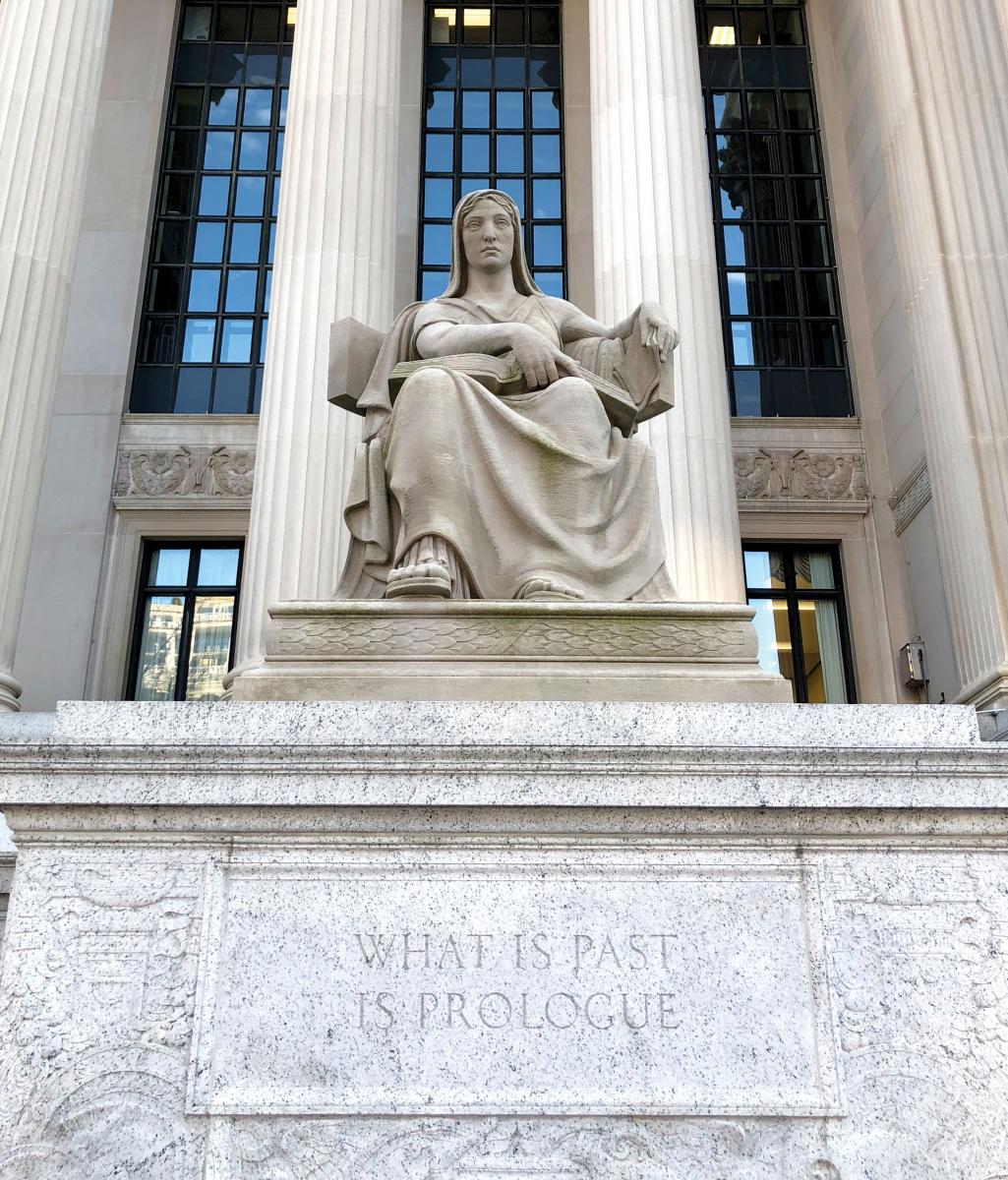 Is the Past Prolog? I’m not convinced. I say this as a professional historian.
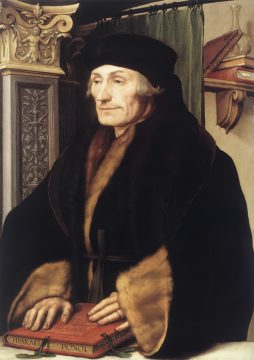 He had a visceral aversion to war, was strongly in favor of social distancing in times of pandemic, and believed it would be a good thing if the Germans turned down their heaters a notch or two.

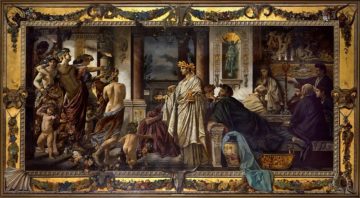

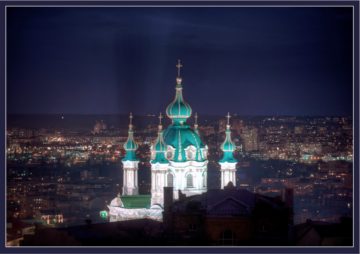 Anticipating war in Europe, 2022.
 Over the last few weeks, I’ve been spending more time in the office than I have since the start of COVID. I work for a technology start-up, and our New York office used to look and feel just as shows like Silicon Valley portrayed such offices: cool furniture, fancy coffee machines, lots of free snacks, gaming systems and board games piled up in a dedicated room, and lots of young people who gave the office a fun, high energy, even if noisy, vibe. But this visit, while the snacks and coffee machines are still there, the office has a rather ghost town-like feel. There’s been no mandate to return to the office, so for the most part, people haven’t. Every day I saw my colleague Andy who lives in a Manhattan apartment that’s too crowded with family and a dog. He escapes to the office for some peace of quiet. Then there was the receptionist and the facilities manager, who had no choice but to be there. But that was it for regulars. The odd person would float in for a bit, have a meeting, then leave. Is this the future of office life?
 We arrived in Berkeley and found it to be a pleasant place to live. I always have a partiality for small university towns that are culturally and politically alive. And yet Berkeley is not far from a thriving major city (San Francisco—“the unfettered city/resounds with hedonistic glee”, as Vikram Seth describes it in his verse-novel The Golden Gate) on the one hand, and from wide-open spaces on the other. Nature in Berkeley itself is quite beautiful, nestled as it is on a leafy hillside and facing an ocean and its bay, with gorgeous sunsets over the Golden Gate Bridge (on days when it is not shrouded by the mysterious fog—which appears almost as a character in San Francisco noir, like in the crime novels of Dashiell Hammett). Once driving in the dense fog in a winding street in the Berkeley hills I missed a turn and lost my way; I fondly remembered that famous scene in Fellini’s semi-autobiographical film Amarcord, where one winter-day in Rimini, his childhood town, the fog shrouds everything, the piazza disappears, and the grandpa loses his way home.

.jpg)
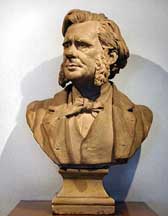 The President and the Provost have both been urging a whitewashing (if I can use this term) of the College’s history by such measures as removing Huxley’s name and bust from one of Imperial’s most prominent buildings. As I explained earlier, they attempted to accomplish this using a deeply flawed process. A History Group lacking in any higher level expertise in Huxley’s own areas of biology and palaeontology was set up, with the College archivist restricted to a consultative role, as was the Imperial faculty member best qualified to comment on historical matters. Two outside historians were consulted, but their areas of expertise did not really include Huxley.1 Adrian Desmond, Huxley’s biographer, was consulted but as I documented in my earlier article, his unambiguous vindication of Huxley was completely ignored. In October (revised version November), the
 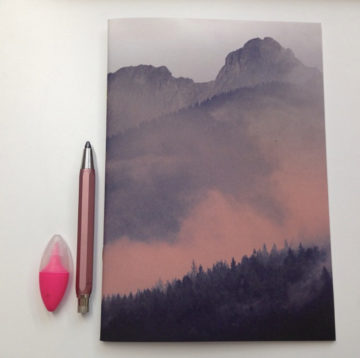 I am a modern-day scrapbooker. Which is to say that, like scrapbookers and notebook keepers across the ages, I am incessantly recording: things I have read, things I want to read, ideas I have come across or had, ways I want to be or to look, memorabilia from places I have been or want to go, inspiring or thought-provoking words, song lyrics, images, film clips, you name it. Like those who went before me, I record things in physical notebooks, but – and this is the new thing – my canvas is far larger than this original form. Digital photo albums, the iPhone ‘notes’ pad, emails to self,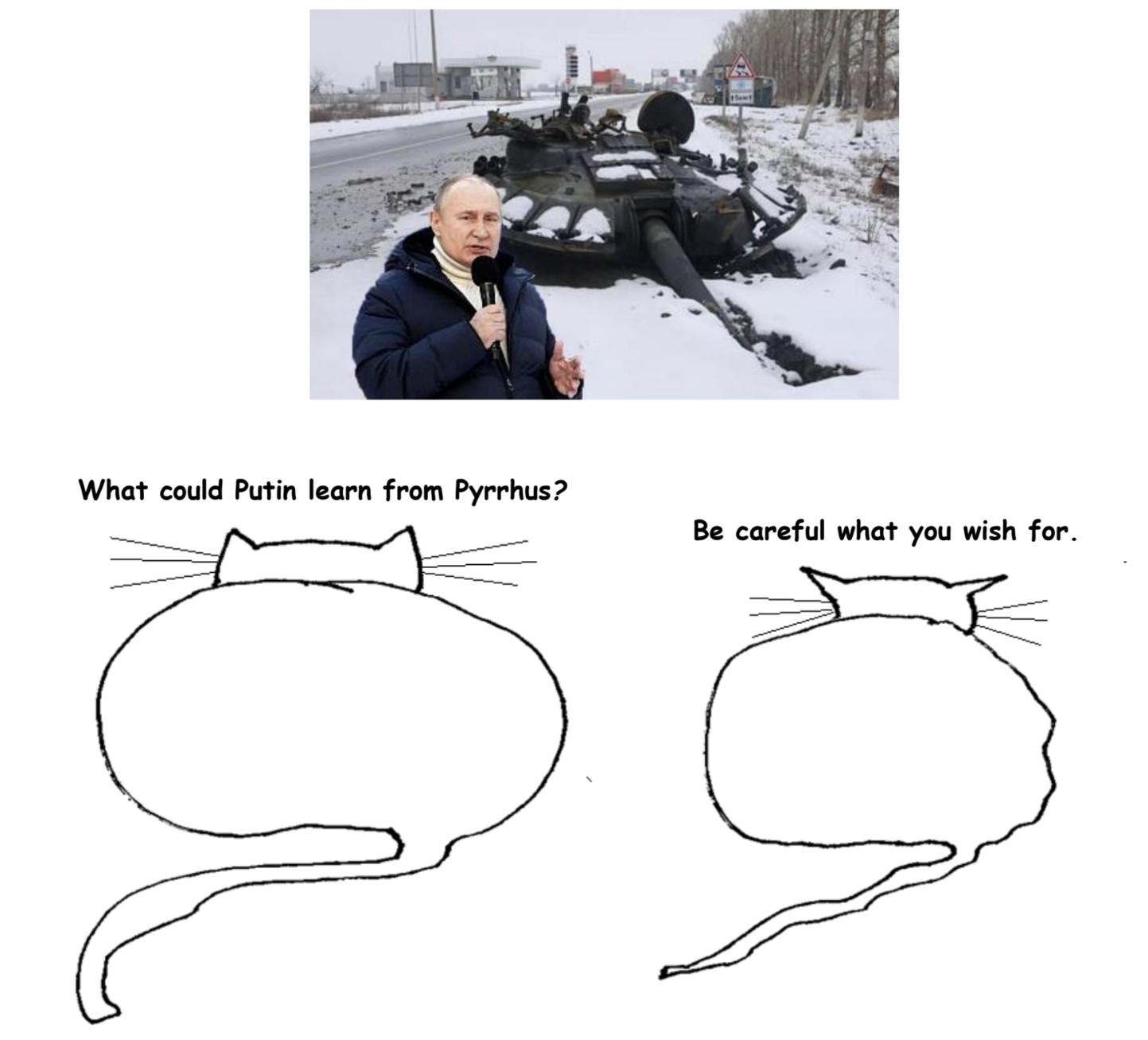
 I used to sit in class with songs in my head, loud enough to feel their beat in my fingertips. I used to blare Adele instead of listening to my teacher. I would sing voicelessly with Hozier while my classmates read a paragraph out loud. Passenger, P!nk, The Lumineers, Steven Sondheim. Billie Eilish, too, though not openly as it’s not cool to like anything that’s cool.