
by Pranab Bardhan
All of the articles in this series can be found here.
 The international academic conference circuit—for an amusing account of such circuits, one may read the British writer David Lodge’s novel Small World, which is second in his trilogy of campus novels, the first of which Changing Places is largely on Berkeley in the 1960’s—also brought me to some potentially hazardous situations. Once a reception given for us conference participants by the King of Spain indirectly helped me in what could have been a serious loss from a pickpocket in Madrid. The public reception hall was not far from the hotel where we were staying. I was walking there from the hotel with a fellow conference participant. I was busy explaining a particular point to her in conversation when I had a half-sense that two young women who brushed by seemed a bit too close, and I ignored that for a minute. The next minute I felt the inside of my jacket pocket and it was gone—a wallet containing not just money but a few important cards including credit cards (since then I have been careful not to put everything in the same wallet or pocket). So I excused myself from my companion and ran to a nearby policeman and told him about it. He brought out a whistle and made a signaling sound. Within 5 minutes another policeman from the opposite pavement came toward me with my wallet and asked me to check if everything was in place. Those two unlucky young women did not realize that as the King was to be there soon, the whole area was thick with plain-clothes policemen.
My conferences sometimes took place in cities where more violent robberies were quite frequent even in broad daylight. I remember the first day we were in our MacArthur network conference in Rio de Janeiro, at the lunch break we were told that the lunch would be in a restaurant just one block away. When we came out the building we saw that some giant commandos were guarding us all along the road as we were walking to the restaurant. I was told that this was part of the conference arrangement. I thought the organizers were over-doing it. But in the afternoon during the conference one woman in our group, who without telling anyone went to the store just next door to the hotel main gate, came back in tears saying that she was mugged. I faced a roughly similar situation in Nairobi and also in a couple of cities in South Africa; during the lunch break I thought I’d just go out for short walk around the big hotels where our conferences were, but the hotel guards would refuse to let us go out for the sake of our safety. I noted this situation might not be unrelated to the fact that in all those 3 countries, Brazil, Kenya and South Africa, the level of inequality is extremely high. Read more »



 On the 13th September 2022, Jean-Luc Godard, the Franco-Swiss film-director, film-poet, film-philosopher, died at the age of 91. One of the most imaginative, rebellious, truly courageous artists on this planet whose existence, in more ways than can be enumerated in language, changed the face of our modernity, decided to end his life through assisted suicide, which is a legal practice in Switzerland, the country he had been living in since 1976, and in which he had spent his youth. He was not ill, ‘but exhausted’. In addition to everything else, his last action resonates with a magnitude that is as powerful as a political stand as it is as a last demonstration of a personal ethics which can be summarised as: moral integrity or nothing. A moral integrity, which he brought to bear indefatigably over the course of a lifetime in pursuit of freedom, resolution and independence – at whatever price.
 The only thing worse than a good argument contrary to a conviction you hold is a bad argument in its favor. Overcoming a good argument can strengthen your position, while failing to may prompt you to reevaluate it. In either case, you’ve learned something—if perhaps at the expense of a cherished belief.



 As forced migration in the wake of war and climate change continues, and various administrations attempt to additionally restrict the movement of people while further “freeing” the flow of capital, national borders, nativism, and a sense of cultural rootedness have re-emerged as acceptable topics in a globalized order that had until recently believed itself post-national. In the German-speaking world, where refugees have been met with varying degrees of enthusiasm depending on their provenance, national pride, long taboo following the Second World War, at least in Germany, is enjoying a comeback. As the last generation of perpetrators and victims dies and a newly self-confident, unproblematically nationalist generation comes to consciousness, it is again becoming possible to use a romantic, symbolically charged term like Heimat.
 Sughra Raza. Don’t Step On The Jewels, 2014.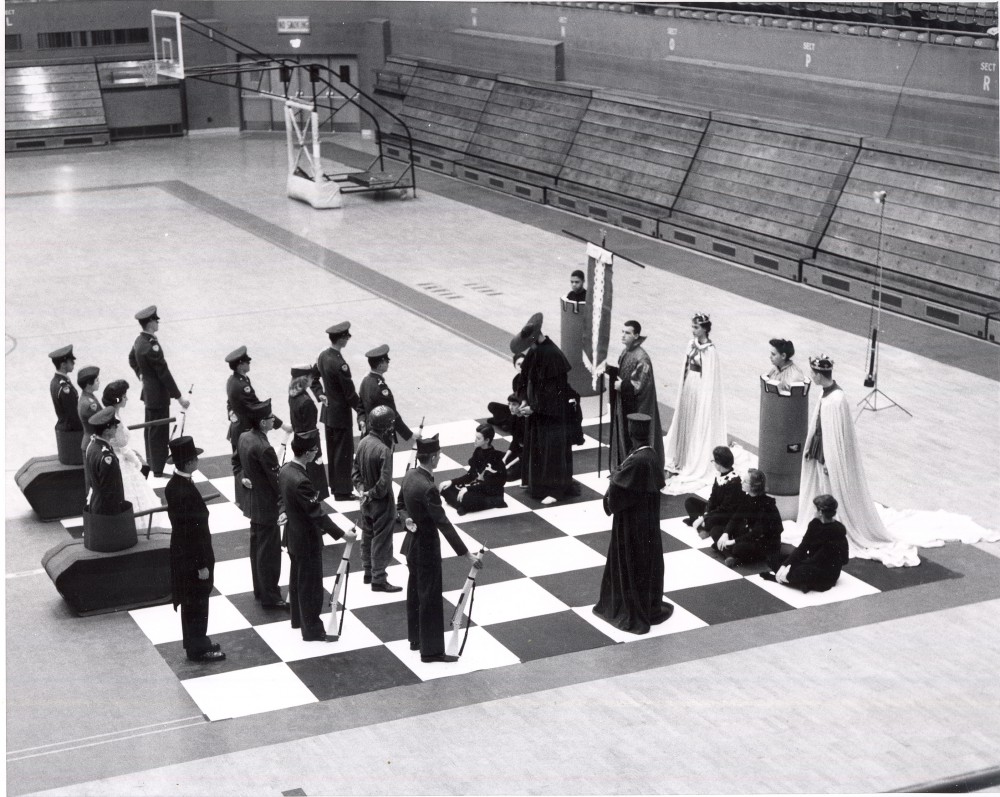
 technology will somehow amplify itself into a superintelligence and proceed to eliminate the human race, either inadvertently – as a side effect of some other project, such as creating paper clips (a standard example), or deliberately.