by David J. Lobina
Artificial General Intelligence, however this concept is to be defined exactly, is upon us, say two prominent AI experts. Not exactly an original statement, as this sort of claim has come up multiple times in the last year or so, often followed by various qualifications and the inevitable dismissals (Gary Marcus has already pointed out that this last iteration involves not a little post-shifting, and it doesn’t really stand up to scrutiny, anyway).
I’m very sceptical too, for the simple reason that modern Machine/Deep Learning models are huge correlation machines and that’s not the sort of process that underlies whatever we might want to call an intelligent system. It is certainly not the way we know humans “think”, and the point carries yet more force when it comes to Language Models, those guess-next-token-based-on-statistical-distribution-of-huge-amounts-of-data systems.[1]
This is not to say that a clear definition of intelligence is in place, but we are on firmer ground when discussing what sort of abilities and mental representations are involved when a person has a thought or engages in some thinking. I would argue, in fact, that the account some philosophers and cognitive scientists have put together over the last 40 or so years on this very question ought to be regarded as the yardstick against which any artificial system needs to be evaluated if we are to make sense of all these claims regarding the sapience of computers calculating huge numbers of correlations. That’s what I’ll do in this post, and in the following I shall show how most AI models out there happen to be pretty hopeless in this regard (there is a preview in the photo above). Read more »
 If you were a medieval peasant in the year 1323 AD, would you have believed that slavery was morally permissible?
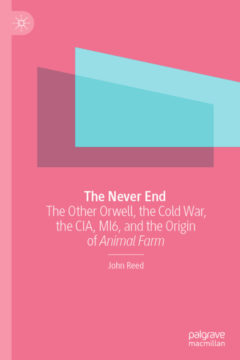 Twenty years ago, John Reed made an unexpected discovery: “If Orwell esoterica wasn’t my foremost interest, I eventually realized that, in part, it was my calling.” In the aftermath of September 11, 2001, ideas that had been germinating suddenly coalesced, and in three weeks’ time Reed penned a parody of George Orwell’s Animal Farm. The memorable pig Snowball would return from exile, bringing capitalism with him—thus updating the Cold War allegory by fifty-some years and pulling the rug out from underneath it. At the time, Reed couldn’t have anticipated the great wave of vitriol and legal challenges headed his way—or the series of skewed public debates with the likes of Christopher Hitchens. Apparently, the world wasn’t ready for a take-down of its patron saint, or a sober look at Orwell’s (and Hitchens’s) strategic turn to the right.
 “Martti Ahtisaari, ex-Finland president and Nobel peace laureate, dies aged 86” runs the headline of

 I once wrote a political column for
 Sughra Raza. Pale Sunday Morning, April 2021.
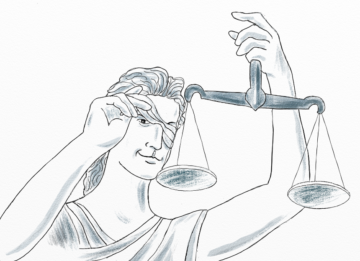 bankruptcy were billing at $2,165 an hour ($595 for paralegals). Since then we learned:
 Lightness comes in three F’s: finesse, flippancy and fantasy. The French are famous for the first. See how the delicate, sweet singer songwriter Alain Souchon transforms the heavyweight aphorism of André Malraux – the real-life French Indiana Jones who ended his career as minister for culture – from the desperate heroism of ‘I learnt that a life is worth nothing, but nothing is more valuable than life’ into the ethereal, refined song that even if you do not understand the words, you cannot help but feel the