
by Richard Farr
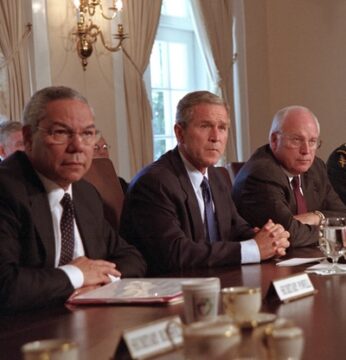
At first, the countless violations of the law by our new rulers still caused a degree of disquiet. But among the incomprehensible features of those months, my father later recalled, was the fact that soon life went on as if such crimes were the most natural thing in the world. —Joachim Fest, Not I – Berlin, early 1930s
[Y]ou have clearly proved, that ignorance, idleness, and vice, are the proper ingredients for qualifying a legislator; that laws are best explained, interpreted, and applied, by those whose interest and abilities lie in perverting, confounding, and eluding them. I observe among you some lines of an institution, which, in its original, might have been tolerable, but these half erased, and the rest wholly blurred and blotted by corruptions. —Jonathan Swift, Gulliver’s Travels, Book II, Chapter VI
The hero of a David Lodge novel says that you don’t know, when you make love for the last time, that you are making love for the last time. Voting is like that. —Timothy Snyder, On Tyranny
Sometimes it’s hard to stay on top of things. While trying to rank-order Nuclear War Over Taiwan, Deforestation in the Amazon, Child Slavery Linked to my own Spending Habits, The Latest Data from the Thwaites Glacier, and What’s Being Done Right Now to the Uighurs the Rohingya the Palestinians the Hazara the Yazidis the Kurds and the Tigrayans, I keep being distracted by trivia, like How Irritated I am to Have Received Yet Another Cloyingly Chummy Fund-Raising Email from the Biden-Harris Campaign.
Sometimes you have to put Now aside and get the cool perspective of ancient sources. So this week I dug around in my shelves and dusted off a book from a distant era. Written by Al Gore, and entitled The Assault on Reason, it’s an eyewitness account of the decline of more or less everything back when the American throne was occupied by the Kennebunkport Dauphin, George II.
Preoccupied with our current traumas, how quickly we forget! Gore is not a neutral observer, but his account is stolidly factual. And the fact is, George II’s reign at the great White Palace in Washington was astonishingly awful. Vandalizing, reckless, arrogant and ignorant; cruel and authoritarian; chaotic and incompetent beyond all previous measure; contemptuous of the law, of democracy, of transparency, of innocent life, of any “decent respect to the opinions of mankind.” In sum, what strikes the modern reader most forcibly perhaps is that the era, half lost in the mists of history, was so strikingly Trumpian. Read more »

 Amy Sherald. They Call me Redbone but I’d Rather Be Strawberry Shortcake, 2009.
 In November 2023, in an essay for the German national newspaper die taz, I wrote that Germany’s Jews were once again afraid for their lives. It was—and is—a shameful state of affairs, considering that the country has invested heavily in coming to terms with its fascist past and has made anti-antisemitism and the unconditional support of Israel part of its “Staatsräson,” or national interest—or, as others have come to define it, the reason for the country’s very existence. The Jews I’m referring to here, however, were not reacting to a widely deplored lack of empathy following the brutal attacks of October 7. In an open letter initiated by award-winning American journalist Ben Mauk and others, more than 100 Jewish writers, journalists, scientists, and artists living in Germany described a political climate where any form of compassion with Palestinian civilians was (and continues to be) equated with support for Hamas and criminalized. Assaults on the democratic right to dissent in peaceful demonstrations; cancellations of publications, fellowships, professorships, and awards; police brutality against the country’s immigrant population, liberal-minded Jews, and other protesting citizens—the effects have been widely documented, but what matters most now is now: the fact that the German press is still, four months later, nearly monovocal in its support of Israel and that over 28,000 civilians, two-thirds of them women and children, have died.

 by David J. Lobina


 ew years, I keep getting stuck on the same question: Don’t these people have grandchildren? How can corporate decision-makers spend their days actively working to destroy the environment, pollute the water, kill off the animals, melt the glaciers, and incinerate the biosphere? Even if what they care about the most is making more money no matter how much money they already have, don’t they care at all about the world they’re leaving for their kids?

 In
In  Amar Kanwar. The Sovereign Forest, 2011- …

 The last time I see Sam she’s sitting at the vanity in her bedroom, carefully examining her 16 year-old face in its lighted mirror.