by Ed Simon
Demonstrating the utility of a critical practice that’s sometimes obscured more than its venerable history would warrant, my 3 Quarks Daily column will be partially devoted to the practice of traditional close readings of poems, passages, dialogue, and even art. If you’re interested in seeing close readings on particular works of literature or pop culture, please email me at [email protected]

Russian Formalist theorist Victor Shklovsky argued in his 1917 Art as Technique that verse “makes the familiar strange so that it can be freshly perceived. To do this it presents its material in unexpected, even outlandish ways: the shock of the new.” Central to the interpretive vision of Shklovsky and his compatriots was that poetic language, which is figurative and consciously literary language, in opposition to prose and the literal, must engage in some form of defamiliarization. That is to say that poetry transforms the prosaic into the profound, but in the process, it draws attention to itself as artifice, as language itself. Prose, intended to convey information, whether it’s factual or fictional, largely eschews being about itself, but in some sense the Russian Formalists claimed that all poetry is about poetry. Verse toggles between the abstract and the concrete, gesturing towards the strange function of poetry itself, making clear that what’s being communicated is somehow both more and less than what it seems.
Such defamiliarization need not only be transforming clouds and trees into things which are strange, for as dramatic an event as a presidential assassination is converted into uncanniness by the Vietnamese-American poet Ocean Vuong in his poem “Of Thee I Sing” in his 2016 collection Night Sky with Exit Wounds. Written in an ekphrastic idiom, the poem depicts one of the most totemistic moments of the twentieth-century, President John F. Kennedy’s assassination at Dallas’ Dealey Plaza while traveling by motorcade while campaigning in 1963, so that Vuong makes this horrific and already deeply analyzed event into something even more ethereal, otherworldly, strange, even while in that poem the narrator, Jacqueline Kennedy, disturbingly “pretend[s] nothing is wrong” in the seconds after her husband has been shot in the head (whether because she won’t or can’t is left unsaid).
Common sense would dictate that the social, cultural, and political ruptures of an assassination are anything but normal; while the sheer violence of Kennedey’s assassination, as emblazoned into the collective consciousness of Americans through the wide-spread viewing of the infamous Zapruder Film, means that the murder is already an event that is defamiliarized. The opposite is actually the case, for regardless of the (thankfully) relative rareness of presidential assassinations, Kennedy’s death has been so parsed, examined, interpreted, and analyzed that “Of Thee I Sing” reminds us of the singularity of the event and of its broader metaphysical implications (which are not necessarily limited to the event itself).
Read in the context of Night Sky with Exit Wounds, as well as the broader poetic interests of Vuong which often focus on American military involvement in the nation of his birth, a lyrical intimation of JFK’s death makes innate sense. Read more »


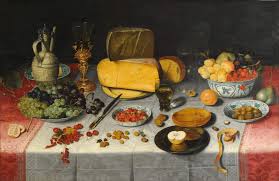 In an age where there is little agreement about anything, there is one assertion almost everyone agrees with—there is no disputing taste. If someone likes simple food instead of complex concoctions, who is to say that’s wrong. If I prefer bodice rippers to 19th Century Russian novels, you might say my tastes are crude and uncultured but hesitate to say one type of literary work is inherently better than the other. Aesthetic judgments are about subjective preference only. This is especially true of food and drink. Our preferences in this domain seem especially subjective. You can’t be wrong if you dislike chocolate ice cream can you?

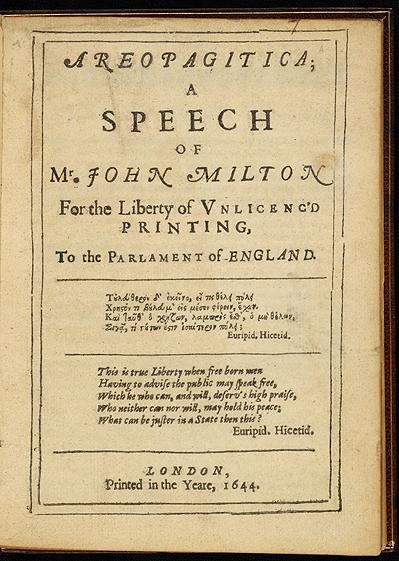 How do we regulate a revolutionary new technology with great potential for harm and good? A 380-year-old polemic provides guidance.
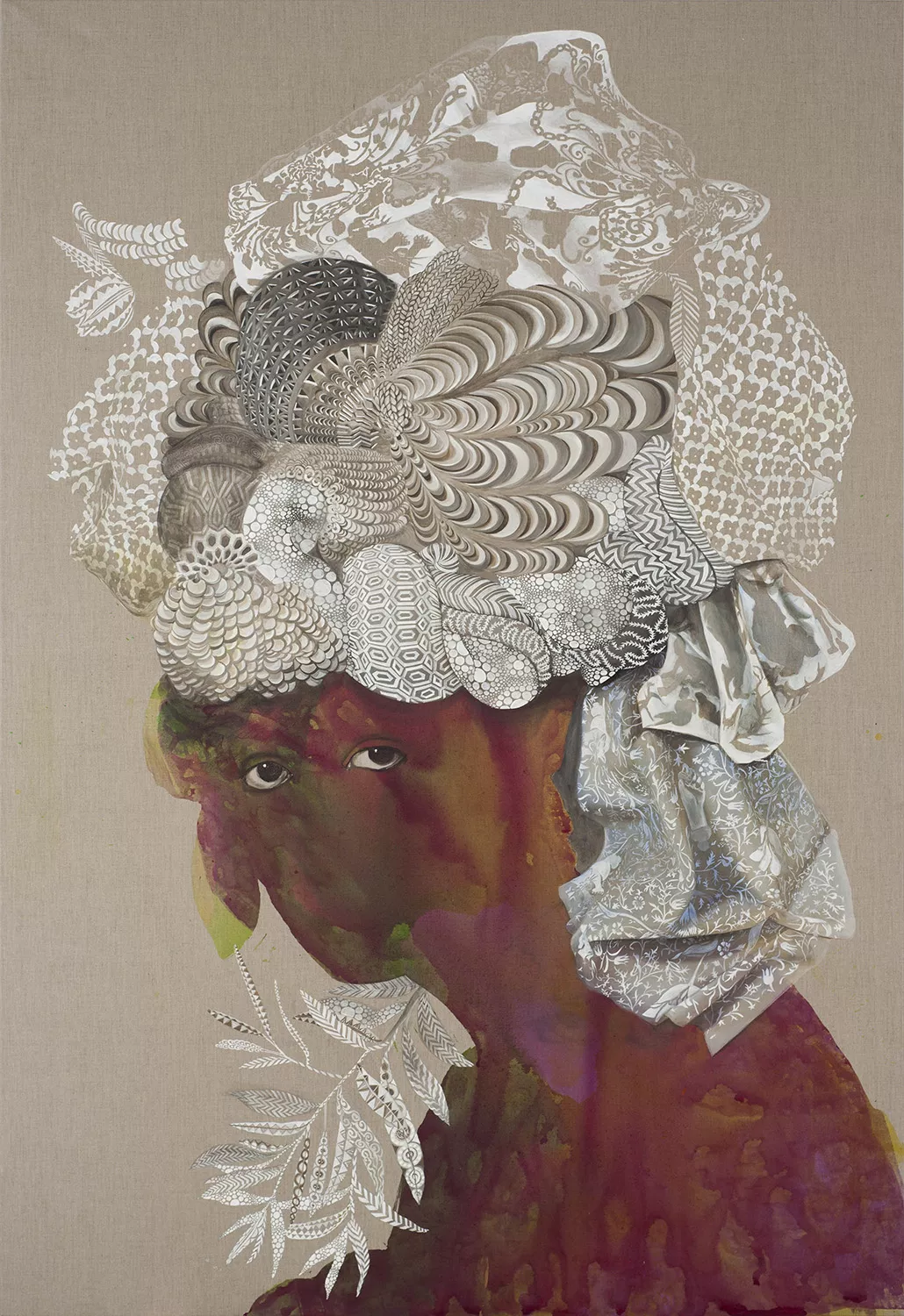 Firelei Báez. Sans-Souci, (This threshold between a dematerialized and a historicized body), 2015.
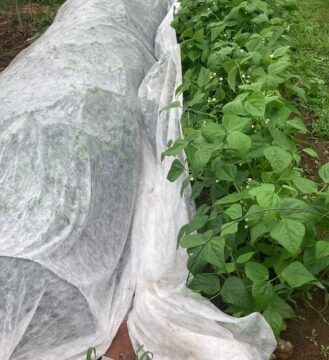 I take the row covers off of two forty-foot rows of beans (three varieties) as the plants have become so big so fast in the ungodly heat they are pressing against the cloth. Afterwards, in the early evening, I let the chickens out of their sweltering little house to run free for a couple of hours. I will watch them to see if they bother the plants. The birds might peck at and scratch up the bean plants, but these plants are so large the birds should be indifferent to them. The experiment is a success: The plants bask in full sunlight while the birds rummage for grubs around them. I decide to leave the row covers off for now and will recover them at night to deter the deer. One’s smallness is manifested in gardening, as the gardener is a single organism set against myriads. It is wise to tend to one’s insignificance during these times. Come what may, no one will care much about those who stay at home husbanding rows of Maxibel haricots.

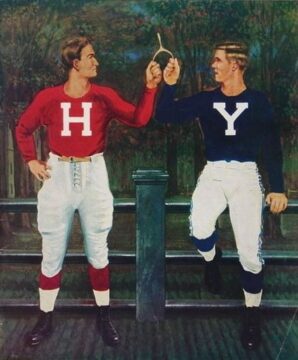 This week marks one year since Affirmative Action was repealed by the Supreme Court. The landmark ruling was a watershed moment in how we think of race and social mobility in the United States. But for high schoolers, the crux of the case lies somewhere else entirely.