by Mara Naselli
In an introduction to a seminal collection of Faulkner’s work, published in 1946, Malcolm Cowley called William Faulkner’s story “Spotted Horses” “wildly funny”—“the culminating example of American backwoods humor.” The collection resurrected Faulkner’s career and made his work teachable, part of the American canon. Nearly forty years later Cowley called it the funniest story he had ever read. “I was lecturing at Stanford once,” Cowley recalled, “and a very bright young woman in the class said, ‘Professor Cowley, referring to ‘Spotted Horses,’ why did you say this story was funny? And I said, ‘I don’t know what funny is, but let me read you part of this story,” and I read part of it where the horses had broken loose and were running through the town and one sailed through the house over that boy, and the class was in stitches. And I said, ‘Now do you think it is funny?’ She kind of flushed and said, ‘Yes.’”
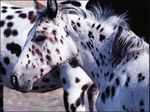
There isn’t anything more embarrassing than not getting the joke, but I admit, in this case, I don’t. The story teems with violence. A string of feral horses, tied together with barbed wire around their necks, is driven to Frenchman’s Bend in Yoknapatawpha County. They are beaten with wagon stakes, grabbed by their nostrils, fed enough corn to kill them, and move with such fury that no one can handle them. They are brought to town by a stranger in cahoots with Flem Snopes. Snopes, who arrived in Frenchmen’s Bend about thirty years after the Civil War, is so tricky, said one of his neighbors, he “don’t even tell himself what he is up to. Not if he was laying in bed with himself in the dark of the moon.” “Spotted Horses,” which was first published in 1931, set the writing of the Snopes trilogy in motion.
Humor needs tragedy, and the genius in “Spotted Horses” is the strong presence of both. “The hard and sordid things of life,” wrote Mark Twain, “are too hard and too sordid and too cruel for us to know and touch them year after year without some mitigating influence.” Twain might be saying that we need humor to withstand the cruelty in the world. Or, that we need humor to see it.
There are two ways to read “Spotted Horses,” as if it were one of those trick paintings that is both a duck and a rabbit at once. You can read the people or you can read the horses.