by Bill Benzon
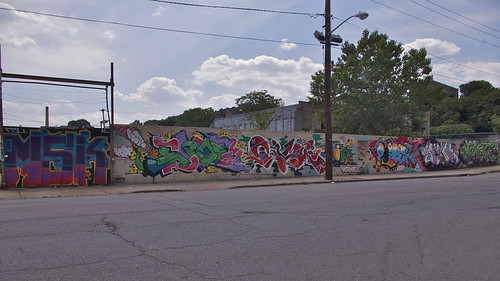
…though many don’t think of it as art at all, but as crime. After all graffiti – by which I mean the styles that originated in New York City and Philadelphia in the late 1960s and early 1970s – was born when kids and young adults began spray-canning their names on other people’s walls without permission. They were committing crimes, and some of them did time for it. Still do.
Art? Crime? Art? Crime? The question isn’t a real or least not a very deep one. Why can’t graffiti be both artistic and criminal?
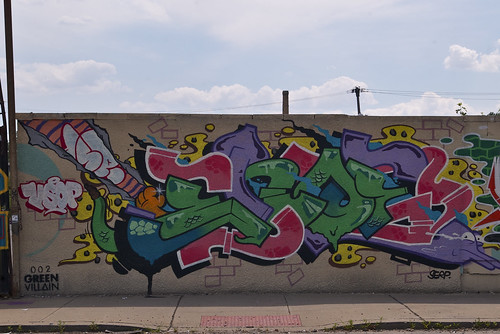
Enoe
Such mythical, but nonetheless real historical, figures as Taki 183 and Cornbread weren’t trying to make art. It’s safe to say that many of the early writers had never been inside the Guggenheim, the Met, or the Barnes and had never taken Art History 101 in college. They just wanted to get their names up, to be noticed. Not their real names, that is, the names on their birth certificates. But names they assumed for purposes of getting fame; names that had one significance within graffiti culture but that simultaneously were opaque and provocative to the outside world, names that told of another society walking the streets and claiming the walls.