by Mara Naselli
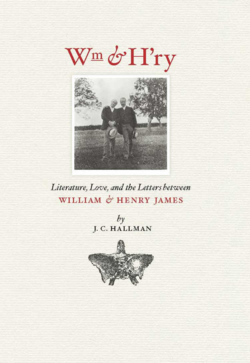
Around 1860, shortly after the James family returned from Europe to Newport for William’s painting apprenticeship, Edward Waldo Emerson (Ralph Waldo’s son), came for a visit. He experienced firsthand the vigor of a Jamesian family debate over dinner, hands gesticulating and brandishing dinner knives: “Don’t be disturbed, Edward,” Emerson recalls Mrs. James saying with a laugh. “They won’t stab each other. This is usual when the boys come home.”
The freethinking Henry James, Sr., raised his children to debate and explore. Their education (though not equally distributed among the five children), was wide ranging and itinerant, rich with art, travel, and theater. “Mr. James’s deepest desire was what his sons and daughter should be,” writes Emerson. “Their works would follow from what they were.” Of the five, William and Henry became monumental forces in American letters. Henry’s novels, stories, and criticism developed the standards by which many now evaluate the modern novel. William threw himself into painting, then natural history, then medicine, and finally became a founding architect of modern psychology and American pragmatism. William’s work strongly shaped Henry’s art, but just how the currents of their separate but intimate intellectual lives interwhirled and eventually eddied out in different directions is another story. In the fleet, beautiful little book Wm & H’ry: Literature, Love, and the Letters between William and Henry James, J. C. Hallman immerses himself in the complete extant correspondence of the James brothers to tell a new tale. As Hallman follows the affection, thinking, diction, and metaphors shared between the two brothers in their letters, we see just how much William’s investigations into consciousness and his philosophical preoccupations infused Henry’s approach to literature. “William is the pragmatist,” writes the scholar Richard Hocks. “Henry, so to speak, is the pragmatism.”
If the extent of William’s influence on Henry is remarkable, even more remarkable is the fact William failed to recognize his own influence in his brother’s art.



![[Portrait of Louis Armstrong, Carnegie Hall, New York, N.Y., ca. Apr. 1947] (LOC)](https://farm5.staticflickr.com/4091/4843734010_f330d5fc6b.jpg)