by Akim Reinhardt
The Democrats want him gone. So too do most of the Republicans. Hell, they never wanted him to begin with. The GOP did everything it could to derail his candidacy, and only climbed aboard after Trump's runaway train was the last red line careening towards the White House. So for now they're playing nice with the former Democrat who eschews Conservative dogma in a variety of ways and is loyal to absolutely no one save himself. But when the moment comes, they'll gladly trade Trump in for Mike Pence, a Conservative's wet dream.
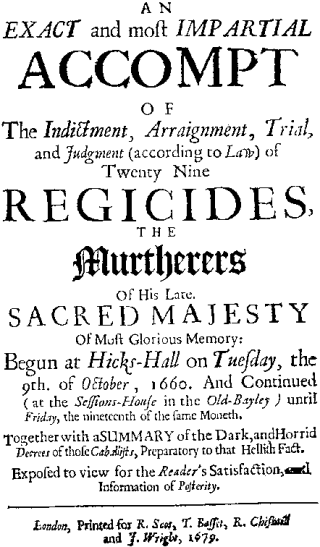
For all these reasons, Trump may not make it to the finish line. But there's one more factor to consider: the precedent of regicide. And to understand that, we should begin by briefly recounting of the demise of the Ottoman sultan Osman II.
Young Osman II ascended the Ottoman throne in 1618 at the tender age of 14. Wishing to assert himself, in 1621 he personally led an invasion of Poland, which ended with a failed siege of Chota (aka Khotyn, now in western Ukraine). In a rather unwise move, Osman blamed the defeat on his elite fighting force, the Janissaries. Afterwards, he ordered the shuttering of Janissary coffee shops, which he saw as a hotbed of conspiracies against him. The Janissaries responded with a palace uprising. In 1622 they imprisoned the 17 year old monarch and soon after killed him. Because it was strictly forbidden to spill royal blood, they strangled him to death.
I first learned about the rise and fall of Osman II in 1992 while taking a graduate course on Ottoman history. "Something happens," our professor warned us in a foreboding tone, "the first time an empire commits regicide."