by Mara Naselli
The Soviet writer Isaac Babel is well known for his relentless scrutiny in revision. He and his young wife retreated to the mountains to work on the stories that would become The Red Cavalry, published in 1926. “Achieving the form that he wanted was endless torture,” writes Nathalie Babel. “He would read my mother version after version; thirty years later she still knew the stories by heart.”
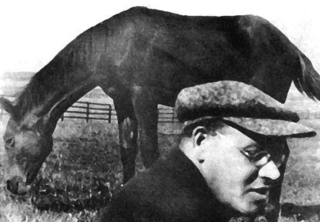
The writer Konstantin Paustovsky also recounts when he and Babel sat along the parapet of a cliff discussing the art of writing. Babel flung pebbles into the sea and then quashed his friend’s romantic notions.
“It’s all right for you other writers,” said Babel. “You can wrap things up in the dew of your imagination, as you put it! What an awful expression, by the way! But what would you do if you had no imagination? Like me? . . . I have to know everything, down to the last wrinkle, or I can’t even begin to write. ‘Authenticity,’ that’s the motto, and I’m stuck with it! That’s why I write so little and so slowly. Because it’s terribly hard.”
Babel explained his method: “I take out all the participles and adverbs I can. Participles are heavy, angular, they destroy the rhythm. They grate like tanks going over rubble. Three participles to one sentence, and you kill the language. . . . Adverbs are lighter. They can even lend you wings in a way. But too many of them make the language spineless. . . . A noun needs only one adjective, the choicest. Only a genius can afford two adjectives to one noun.”