
by Claire Chambers
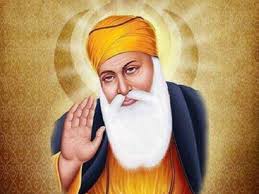 A few tall, dreamy-eyed Sikh men were on my plane to Lahore. Guru Nanak’s 550th birth anniversary celebration was taking place nearby about a month later, on 12 November 2019, so I guessed their final destination was Nankana Sahib, Guru Nanak’s birthplace. The British-Indians’ presence was a reminder, if any were needed, of Punjabiyat’s close binds. To take another example, after the violence of the 1984 raid (known as Operation Blue Star) of Amritsar’s Golden Temple, some Sikhs took refuge in villages just across the border in Pakistan. It is unsurprising, then, that in Imagining Lahore, one of the best-known recent books about the ancient West Punjabi capital, Haroon Khalid takes pains amid rising Islamization to stress the region’s earlier Sikh rulers and the present-day city’s neglected gurdwaras and crumbling havelis.
As ever, the trip from the airport afforded a veritable binge for the eyes. I made my way through the Beijing Underpass with its sign wishing the Pak-China Friendship a long life. Other less geopolitically-named channels evoked poets Faiz Ahmed Faiz and Waris Shah, emphasizing Lahore’s rich and proud literary culture.
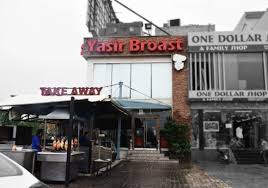
Whereas I have written in a few different places about British chicken shops being an alphabet soup from AFC to ZFC, in Lahore I saw Yasir Broasts and Fri-Chicks. Passing the brightly-lit shopfront of Cakes & Bakes made my mouth water. Meanwhile, educational institutions had equally imaginative handles, including Success College and the Bluebells School. Read more »
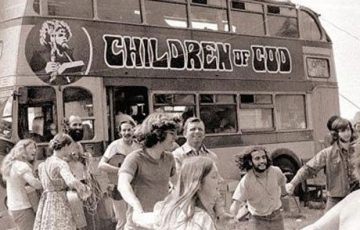 I never met Jeremy Spencer, so I can only guess. I suspect he was searching for something. Only 23 years old, perhaps he was unhappy with himself, or the world around him. Perhaps he was scared and craving shelter from the storm. Perhaps he dreamed of what could be, or pined for a grand voyage. Maybe he just got lost.
 In Homo Deus, the 2017 follow-up to his widely read Sapiens, Yuval Noah Harari dismisses the idea of free will in cavalier fashion. Contemporary science, he argues, has proved it to be a fiction. In support of this claim, he offers several arguments.
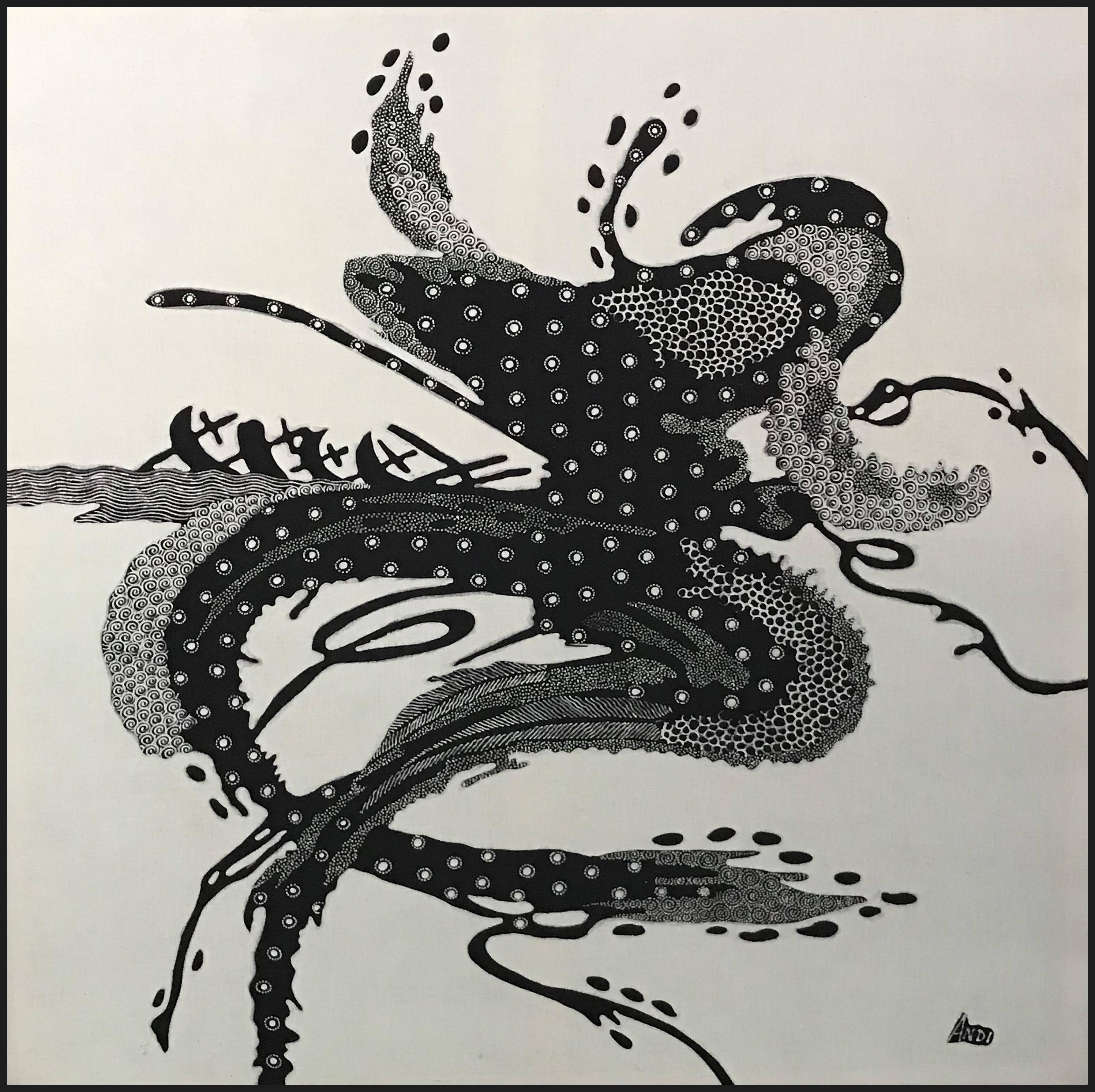
 Once upon a time, in a beautiful but endangered forest far far away a prince and princess met, fell in love and married. They were blessed with a hundred children. “I wonder,” said the princess, somewhat exhausted from her exertions, “how best to raise our dear ones to care for each other and their beautiful forest home?” “I have heard,” replied her husband “that reading to children matters.”


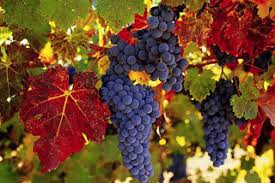 Wine is a living, dynamically changing, energetic organism. Although it doesn’t quite satisfy strict biological criteria for life, wine exhibits constant, unpredictable variation. It has a developmental trajectory of its own that resists human intentions and an internal structure that facilitates exchange with the external environment thus maintaining a process similar to homeostasis. Organisms are disposed to respond to changes in the environment in ways that do not threaten their integrity. Winemakers build this capacity for vitality in the wines they make.

 I was always a skinny fuck. Forever the thinnest kid in the class, and for a longtime the second shortest boy (thank you, David Mehler). My stick-figure proportions were the thing of legend. I could suck my stomach in so far that some people swore they could touch the inside of my spine. My uncle used to refer to me as the Biafra Boy, a tasteless reference to the gruesome famine that accompanied the Nigerian Civil War (1967 – 70). In an effort to fatten me up, my grandmother would serve me breakfast cereal with half-and-half instead of milk. It was to no avail. A growth spurt in the 8th grade got me well above the short kids, but my body didn’t fill out. I graduated high school standing five feet, nine and a half inches tall, and weighing less than 120 pounds.
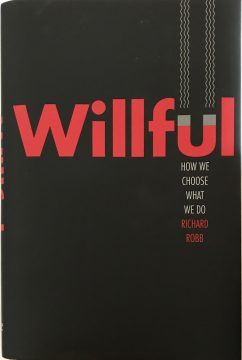 Economics. The dismal science. All those numbers and graphs, formulas and derivations, tombstone-sized copies of Paul Samuelson and William Nordhaus’s Macroeconomics (now apparently in its 19th edition), and memories of the detritus that came with them: half-filled coffee cups and overfilled ashtrays, mechanical pencils and HP-45s.
 The opening lines to the French philosopher and mathematician René Descartes’ classic philosophical text, the