by Anitra Pavlico
 I recently read Jill Lepore’s This America–which she describes as a “long essay,” calling on historians to begin again to tell stories about America to counter the rise of nationalism in the country, to bring about “a new Americanism, as tough-minded and openhearted as the nation at its best.” She writes that patriotism is not the same as nationalism: “Patriotism is animated by love, nationalism by hatred.” Lepore quotes Stanford historian Carl N. Degler, who at the annual meeting of the American Historical Association in 1986 accused his colleagues of abandoning the study of the nation. Degler warned that if historians failed to “provide a nationally defined history, others less critical and less informed will take over the job for us.” As Michael Lind points out in his review of This America, Lepore has made clear in other venues that she has problems with the “very lefty history that can’t find a source of inspiration in the nation’s past and therefore can’t really plot a path forward to power.” The left has renounced patriotism to such an extent as to leave a vacuum that the right has filled.
In recent decades, many individuals who were previously underrepresented in the history academy began to write about the experiences of their ancestors, both in this country and in their countries of origin. The study of American history took a turn toward globalism, cosmopolitanism, and individualism. In the late 20th century, many historians felt that by studying the American nation they would prop up nationalism, which many believed was on the wane. As we now know, nationalism has not died, as evidenced by the rise of Vladimir Putin, Donald Trump, Marine Le Pen, Rodrigo Duterte, Jair Bolsonaro, and many others. Far from it.
Lepore has arguably directed This America not only at her fellow historians but at all Americans, urging us to begin to see ourselves again as part of a nation with a history that is worthy of being remembered as positive and illustrious–overall. She does not gloss over the negative by any means. Lepore paints the current battle of ideas in America as nationalism versus liberalism. Liberalism, “a very good idea: that all people are equal and endowed from birth with inalienable rights and entitled to equal treatment”–was not a feature of the United States at the beginning of its nationhood. How are historians to square this fact with Lepore’s call for a renewed focus on telling a story of American liberalism to counter the rise of nationalism in the form it has taken in the last century? That is their quandary and ours to wrestle with. Read more »
 At the heart of French existentialism – and especially the version associated with its most famous representative, Jean Paul Sartre – was the notion of radical freedom. On this view, when we choose, we choose our values and thus what kind of person we are going to be. Nothing can prescribe to us what we ought to value, and the responsibility of freedom is to accept this fact of the human condition without falling into the ‘bad faith’ which would deny it. The moment of existentialism may have passed, but the view that we are radical choosers of our values persists in many quarters, and so I want to consider how well this idea holds up, and what an alternative to it might look like.
 Facebook, Amazon, Apple, Microsoft, and Google, often referred to as Big Tech, know more about you than your closest friends and family. They know who you are talking to and what you are talking about, what you are buying or are thinking of buying, how much money you have, and what your fears and desires are. What a few years ago may have sounded like a dystopic vision, is today a reality of our online life (our ‘onlife’). In this setting, even Facebook’s plans of introducing their own currency, Libra, does not seem out of the ordinary.

 A long time ago, on a mountainside in Liechtenstein, I tuned my transistor radio to the Deutschlandfunk, one of neighboring Germany’s state radio stations whose broadcast range leaked into that tiny country. This is what I heard:
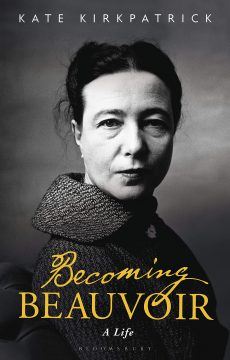 Biographies frequently provide us with insights into individual characters in a way that autobiographies might not: the third person narrator offers the prospect of greater ‘objectivity’ when evaluating and narrating information and events and circumstances. And so it is with Paul Avrich and Karen Avrich’s Sasha and Emma: The Anarchist Odyssey of Alexander Berkman and Emma Goldman,and Katie Kirkpatrick’s Becoming Beauvoir: A Life.These two books provide a wealth of knowledge on the political and philosophical thinking that engaged the brilliant minds of two significant women of the twentieth century: Emma Goldman and Simone Beauvoir.
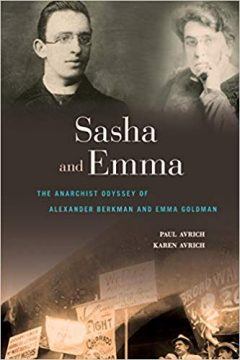 The life trajectories of the two women could not have been more different: Goldman was a Jewish Russian émigré to the United States; she learned her politics through experience and in that process clarified her political thinking on anarchism, and her life was lived humbly. Beauvoir on the other hand, was from a bourgeois Catholic family and benefited from a formal education and she lived life relatively comfortably. However, despite their divergent lifestyles and politics, similarities can be drawn between their thinking on women, love and freedom.

 Suppose you had some undeniable proof of the Everettian or Many-Worlds Interpretation (MWI) of quantum mechanics. You would know, then, that there are very many, uncountably many, parallel worlds and that in very many of these there are many, many nearly identical versions of you – as well as many less-closely related “you’s” in still other worlds. Would this change the way you think about yourself and your life? How? Would you take the decisions that you make more or less seriously?
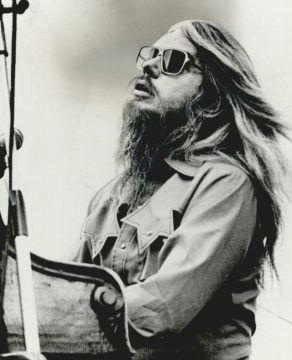 He released 33 albums and recorded over 400 of songs, earning two Grammys among seven nominations. Yet you probably don’t know who Leon Russell was. For some people he’s a vaguely familiar name they have trouble putting a face or a tune to. Many more have never even heard of him. Because despite his prodigious output, Russell also had a way of being there without letting you know. He was the front man whose real impact came behind the scenes. He was very present, but just out of sight.



 Despite Vonnegut’s strong counsel to babies entering the world, kindness seems to be in short supply. Little wonder. Our news media portray to us a world of power politics, corporate greed, murders, and cruel policies which are anything but kind. Our popular forms of entertainment, much more often than not, are stories about battles that shock and thrill us and gratify our lust for bloody vengeance, leaving no room for wimpy, kind sentiments. Success is advertised to us as requiring harsh discipline, dedication, and focus, and kindness, it appears, need not apply. Even though we all like to give and receive kindnesses, they seem to play no role in our political, social, and cultural economies.
 In a