by Robert Fay
Near the end of Italy’s greatest 20th century novel, The Leopard by Giuseppe di Lampedusa, the elderly Prince Salinas is slumped in an armchair on a Sicilian hotel balcony looking at Mounte Pelligrino. The Prince knows he’s dying, but even more poignantly, he understands centuries of Salinas aristocratic mores and traditions will soon die with him. It is 1881 and a unified, republican Italy has recently displaced the monarchial customs and feudal relationships of the Kingdom of the Two Sicilies. The Prince has witnessed the complete collapse of his world within two decades. And though he has an heir, his grandson Fabrizietto, the boy is “odious” and incapable of protecting the sacred Salinas patrimony. He is a product of this new, republican age, “with his good-time instincts, with his tendency to middle-class chic.”
Lampedusa’s narrator describes the Prince’s loss this way: “for the significance of a noble family lies entirely in its traditions, that is in its vital memories. And (the Prince) was the last to have any unusual memories, anything different from other families. Fabrizietto would have only banal ones like his schoolfellows, of snacks, of spiteful little jokes against teachers…”
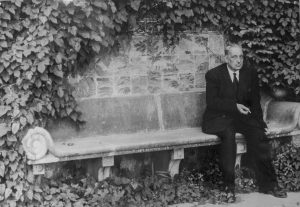
Trying to elicit sympathy for elites is generally a fool’s errand, but Lampedusa is such a master, that any unprejudiced reader of The Leopard will surely be moved by the enormous humanity of the Prince. He is undoubtedly a snob, but his snobbery is like the egoism of a fighter pilot or the boastful pride of a mother, which is to say, it is in inseparable from their mission, their vocation. The power of this portrayal undoubtedly stems from the personal pain and loss in Lampedusa’s own life. He was born in 1896 to an aristocratic family and in 1943 his beloved family estate in Palermo—the seat of the Lampedusa family for centuries—was destroyed by U.S. Army Air Corps bombers during World War II. It was a loss that Lampedusa could never reconcile himself to. He had believed he’d die in that house, just as all ancestors had.
There is an echo of Lampadusa’s fate in the life of fellow aristocrat and novelist Vladimir Nabokov, who lost his ancestral estate(s) in Russia to war and politics. The Nabokovs had roots dating back to a 14th Century Tartar prince, but the cadres of the Bolshevik Revolution cut those ties in 1918, seizing the family’s properties and forcing them into exile. Nabokov never got over this loss. In a 1964 interview with Playboy he explained why he’d never bought a house in America, despite being a resident for 20 years, “…the background reason, is, I suppose, that nothing short of a replica of my childhood surroundings would have satisfied me. I would never manage to match my memories correctly—so why trouble with hopeless approximations?” Read more »

 Our uniform was a shirt tucked into jeans. Sandi stretched the smallest size over well-proportioned breasts, her black bra peeking through a run of buttons. Mine hung long in the sleeves and fell over my waist.
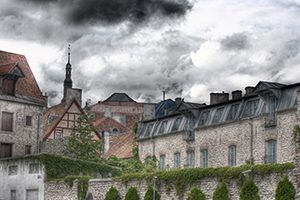 In the middle of the night of March 24, 1992, a pressure seal failed in the number three unit of the Leningradskaya Nuclear Power Plant at Sosnoviy Bor, Russia, releasing radioactive gases. With a friend, I had train tickets from Tallinn, in newly independent Estonia, to St. Petersburg the next day. That would take us within twenty kilometers of the plant. The legacy of Soviet management at Chernobyl a few years before set up a fraught decision whether or not to take the train.
 It’s been a while since I posted on this issue, and I’ve already said most of what I intended to say about it, but things seem to be coming to a head in my own state, and I thought I’d report on that, including a couple of weird local wrinkles (the Garden State is a strange place). Three weeks ago, after months of missed deadlines, an adult-use marijuana legalization bill was approved by a joint (Assembly/Senate, that is, not … never mind) committee of the legislature, and may (note: may) be voted on later this year. If it is passed and signed into law by the governor – neither of which is a given – New Jersey would be the eleventh state to legalize adult use, and the second to do so by legislative action. (Washington and Colorado in 2012, Alaska and Oregon in 2014, California, Massachusetts, Maine, and Nevada in 2016, and Michigan in 2018 did so by voter referendum; Vermont did so by legislative action (in 2017, I think), although that state’s bill did not set up a legal market, which means that while it is legal to grow marijuana in one’s basement there, it remains illegal to buy seeds to do so.)
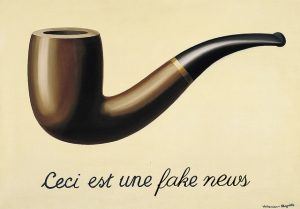
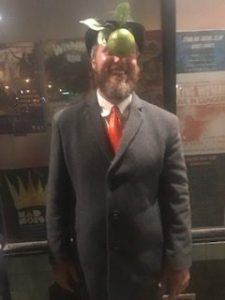 I met Rene Magritte a few weeks ago at the Starline Social Club in Oakland. A surprisingly jolly fellow, it turns out he’s working these days as a pedicab driver in San Francisco. Surrealism isn’t my jam, but when he offered me a pickup the next morning at the BART and mushrooms and tickets for two to the retrospective of his work at SFMoMA, well—I had to accept.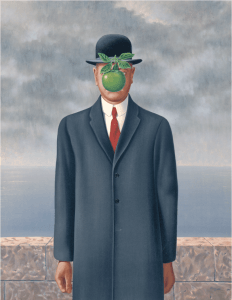

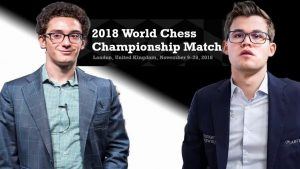 Magnus Carlsen and Fabiano Caruana faced off for the World Chess Championship over three weeks London. I’d been looking forward to the match all year, and following the progress of the two players towards it. This piece looks at the two players and the situation before the match, gives an account of the Championship games, and concludes with some reflections on the significance of the match for the participants, and for the sport.
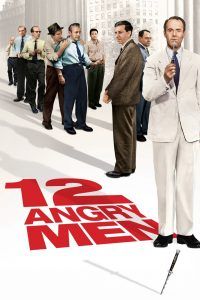 I recently rewatched “12 Angry Men” with The Philosophy Club at the University of Iowa as part of their “Owl of Minerva” film series. The 1957 film has the late, great Henry Fonda as the lone holdout on a jury ready to convict a poor, abused 18-year-old boy for allegedly stabbing his father to death. Over one long, tense evening (shown in something close to real-time), juror #8 – none of the jurors are identified by name, only number – forces the rest of the jury to methodically reexamined the evidence. It’s not a courtroom drama, it’s a jury-room drama in which only 3 of 1:36 minutes of running time take place outside the sweaty, claustrophobic jury room. The film is intense, moving, and effective. Afterwards, I made the following remarks.