
by Michael Liss
“He knew the American people better than they knew themselves, and his truth was based upon this knowledge.” —Frederick Douglass, Oration in Memory of Abraham Lincoln, April 14, 1876
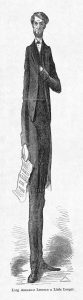 In October of 1859, Abraham Lincoln received an invitation to come to New York to deliver a lecture at the Abolitionist minster Henry Ward Beecher’s Plymouth Congregational Church in Brooklyn.
Although Lincoln was, at this time, largely a regional figure among Republicans, and held no public office, the invitation was not accidental. The party was still a bit like a Rube Goldberg contraption, made up of pieces (former Whigs, Know-Nothings, disaffected Northern Democrats) that didn’t all quite fit together. People of influence, notably the newspaper publishers William Cullen Bryant and Horace Greeley, knew the new movement needed a coherent, inclusive platform, and an articulate, attractive man to lead it.
They weren’t, by any means, anointing Lincoln—in fact, they had no idea what he could do. He had acquitted himself well in his 1858 Senate race against Stephen Douglas, the presumed 1860 Democratic Presidential nominee, but he had also lost. There were other questions as well: Would a person some described as a “backwoodsman” play in front of a New York audience?
What was obvious was that the most likely Republican candidates for the nomination were either flawed or disliked, or flawed and disliked. The presumed frontrunner, William Seward of New York, was unquestionably competent, but had made some radical-sounding speeches and was seen by many as a captive of Thurlow Weed’s political machine. Seward’s support was also thin in lower North states like Pennsylvania, Indiana and Illinois—all of which Republicans had lost in 1856 and were essential to victory this time. Other potential candidates had different weaknesses: Ohio’s Salmon P. Chase was an able Governor, but lacked what we would now call retail political skills. Pennsylvania’s favorite, Simon Cameron, was undeniably corrupt. The fourth “first tier” candidate, Edward Bates of Missouri, was 66, barely a Republican, and almost certainly the most conservative. It was hard to see how he could have ignited a movement. Read more »
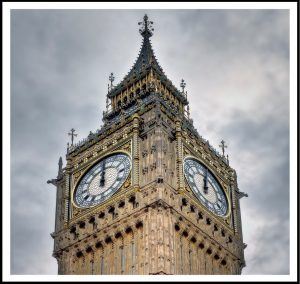 47-year old Teburoro Tito stood at the head of his delegation on an island way out in the Pacific Ocean. At the stroke of midnight on January 1

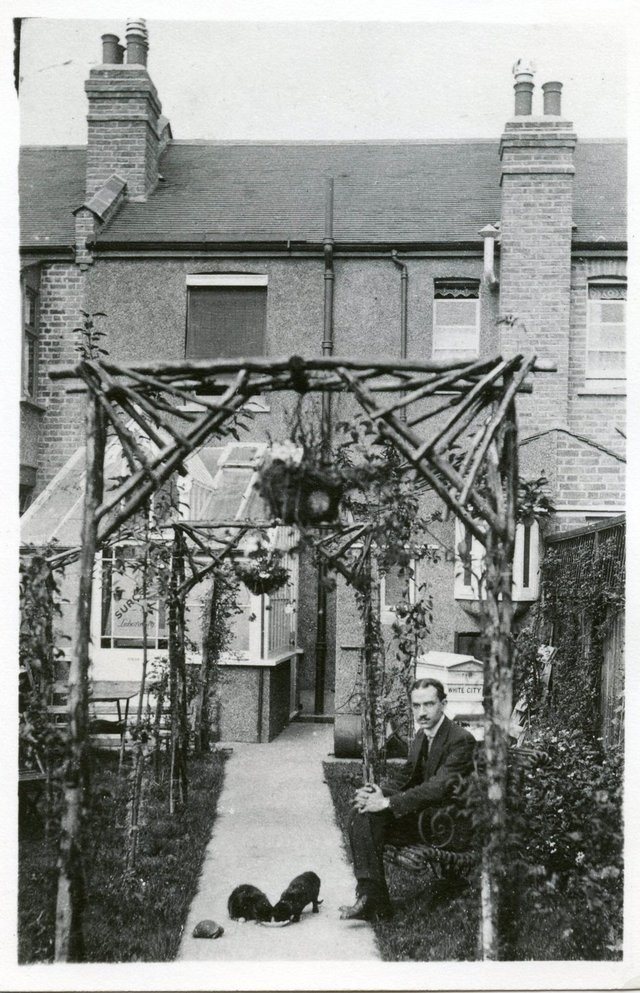

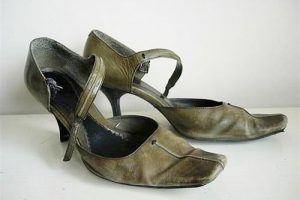 Okay. I’m done. I’m through. I’m hanging up my ruby red slippers, my fuck-me shoes. I’m not going down that yellow brick road no more, no more. I’m giving up internet dating. I may have run a successful antique business in Portobello Road for many years which kept my three children in fish fingers, the three little children I was left with in the middle of Somerset – where I kept chickens, made bread and grew my own veg – when I was 31 and they were all under 6. I may have dragged myself off as a mature student up to the University of East Anglia, after I’d moved us like Ms Whittington to London, to do an MA in Creative Writing with the crème de la crème, whilst juggling child care as the other students hung out talking postmodernism in the bar. I may have written for Time Out, The Independent and The New Statesman as an art critic, published three collections of poetry, one of short stories and three novels but none of this is as anything compared to my failure with internet dating.
 I know you’ve heard this before. But it’s just too relevant to avoid, so, please, bear with me. It may, or may not, be a garbled version of something Bertrand Russell wrote in Why I am not a Christian, but it has become the equivalent of an urban legend in philosophy. It goes like this. Some famous philosopher or another, maybe Russell, maybe William James, is traveling in some non-Western country, probably India, because of the elephants, and they ask a local informant about their cosmology. The local says, “We believe that the world is a vast sphere resting on the back of four great elephants.”

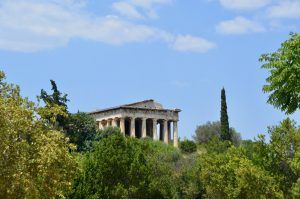 No one knows if it was really in the state prison, the ruins of which are visible today outside the ancient Agora of Athens, that Socrates was kept during the final days before his execution, so many times has the area been destroyed and reconstructed— walking past it sends a chill down my spine. Ancient Greece is visceral and vivid because it entered my imagination early in life; some of the most cherished tales of my childhood came from the crossovers of Hellenistic history and legend, such as the one in which Sikander (Alexander the Great) is accompanied by the Quranic Saint Khizr, in pursuit of “aab e hayat,” the elixir of immortality, or the one about the elephantry in the battle between Sikander and the Indian king Porus, or of the loss of Sikander’s beloved horse Bucephalus on a riverbank not far from Lahore, the city where I was born. I became familiar with ancient Greece through classical Urdu poetry and lore as well as through my study of English literature in Pakistan, but I would read Greek philosophers in depth many years later, as a student at Reed college; I would subsequently discover Greek influence on scholars in the golden age of Muslim civilization while working on a book on al-Andalus— the overlooked, key contribution of Arabic which served as a link between Greek and Latin, and its later offshoots that came to define the cultural and intellectual history of Europe.