by Eric J. Weiner
 An intransigent form of identity politics in combination with neoliberal ideology has left the modern university, if not in ruins, then lacking imagination and cultural capital. It has become a place of sequestered spaces—symbolic and real—where too many students and faculty fear discussing issues deemed to be controversial, inappropriate, or “political.” Across the social sciences/humanities, politics, religion, sex, sexual orientation, climate change, science, gender, economic inequality, poverty, reproductive rights/regulations, homelessness, race, Trump, democracy, capitalism, patriarchy, anti-Semitism, Israel, terrorism, gun violence, sexual violence, and white supremacy are just some of the topics that today make students and even some teachers uncomfortable. At best maybe these topics are addressed by creating some kind of false equivalent in an effort to feign neutrality and keep people comfortable. Discomfort in the classroom from ignorance, tension, power imbalances, conflict, disagreement, or any degree of affective and cognitive dissonance is no longer tolerated. While it used to be considered a fundamental part of the critical learning experience, discomfort of this sort now signals a flaw in pedagogy and/or the curriculum and a betrayal of trust. Learning should always feel good, be nurturing (maternalistic), and, above all, fun. If it’s not then there is hell to pay.
The fear of being emotionally and intellectually uncomfortable and the strategies used to avoid it come from all over the ideological spectrum. Avoidance strategies, from the right and left, take the form of accusations about political bias; political (in)correctness-gone-wild; claims of social/intellectual marginalization; censoring viewpoints (books, speakers, media) that are deemed offensive; silencing people through various forms of protest; creating homogenized “safe spaces”; and policing, through different modes of surveillance, language, thoughts, and behavior. Retreating into intellectual silos on campus and online, students and teachers find comfort and solace in group-think, shared social practices, and aligned ideologies. The cost of these avoidance strategies for the individual and the republic is a form of idiocy, from the Greek “idiotes,” which describes a person who cannot participate in political and intellectual life because of their lack of skills, knowledge, and general ignorance about the responsibilities of civic life. At the same time the left and right are doing their best to defang the critical civic function of the university, most universities are now aligned with neoliberal ideology, focusing on market-based competition, branding, privatization, the de-unionization of faculty/staff, and job training. Within this toxic brew of schooling, tribalism, and ideology, students are seen (and generally want to be seen) first and foremost as children in need of protection, entertainment, and comfort; savvy and influential consumers; agile agents of social media unofficially employed to promote their schools; and docile members of the university “family.” Read more »

 A degree in engineering from India, grad school at an American university, and a job at an American corporation: call it the Indian-engineer version of the American dream. Like hundreds of thousands of Indian immigrants, Ved, the 36-year old protagonist of A California Story, appears to have fulfilled this dream. He lives in San Francisco and works for a famous Silicon Valley company, Omnicon. Arora’s novel immerses us in Ved’s life at a time when the disillusionments of corporate life are gnawing at him and he longs for love and sexual fulfilment.
 Academic dishonesty is a widespread problem in colleges in many countries, and it is getting worse. One particular form of cheating has become especially common in the age of the internet: students buying custom-written essays–a.k.a. “contract cheating.” A recent study estimated that over 15% of college students had paid someone else to do their work for them;
 A while ago findingtimetowrite wrote a
 It’s fashionable to criticize wine critics for a variety of sins: they’re biased, their scores don’t mean anything, and their jargon is unintelligible according to the critics of critics. Shouldn’t we just drink what we like? Who cares what critics think? In fact, whether the object is literature, painting, film, music, or wine, criticism is important for establishing evaluative standards and maintaining a dialogue about what is worth experiencing and why. The following is an account of how wine criticism aids wine appreciation by way of providing an account of wine appreciation.
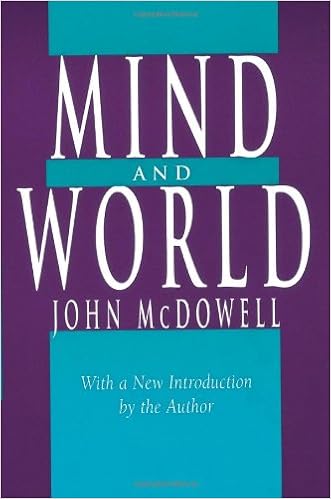 This year marks the 25th anniversary of the publication of



 It doesn’t take much. A small piece of gravel, spit out by a truck’s wheel, ricochets off the windshield, taking a tiny chip of glass with it. A microscopic divot and discreet little lines, like crow’s feet at the corner of an eye. Barely noticed for months, the accordion of heat and cold compress and expand, adding and relieving pressure. Then finally, the scratches spread out across the glass like an avant garde spider web.
 by Leanne Ogasawara