by Dwight Furrow
 Among the best books I’ve read about wine are the two by wine importer Terry Theise. Reading Between the Wines is a thoroughly enjoyable account of his life in wine and a passionate defense of artisanality. But it’s his most recent book What Makes a Wine Worth Drinking: In Praise of the Sublime that really gets my philosophical juices flowing.
Long celebrated for his portfolio of mostly German and Austrian wines as well as grower Champagne, in these two books he articulates a sophisticated, yet non-theoretical philosophy of wine and introduces a badly needed corrective to our fatally constrained and often vulgar approach to wine that confuses marketing with aesthetics. But like any work of philosophy, this book raises profound questions. Here are a few quotes that I think raise the most important questions we need to answer.
Great wine can induce reverie; I imagine most of us would concur. But the cultivation of reverie is also the best approach to understanding fine wine.
What is it about us and what is it about wine that induces a dream-like state, that sets the imagination in motion? Why does wine’s capacity to induce reverie help us understand fine wine?
If wine had turned out to be merely sensual I think for me its joys would have been transitory. I’d have done the “wine thing” for a certain number of years and gone on to something else. What continued to drive me, and what drives many of us, is curiosity, pleasure in surprise, and those elusive, incandescent moments of meaning—the sense that some truth, normally obscure, was being revealed.
How can a beverage reveal truths? What kind of truth is this and how would we know we have it? Read more »
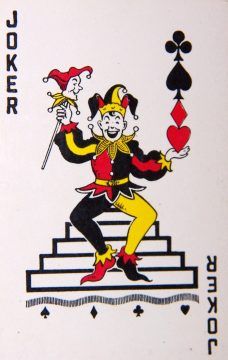 I saw Joker last week. I think it’s an excellent film. But the two friends I was with, whose tastes often overlap with my own, really hated it, and we spent the ensuing 90 minutes examining and debating the film. Critics are likewise fiercely divided. Towards the end of our conversation, one friend admitted that, love it or hate it, the film evokes strong reactions; it’s difficult to ignore.
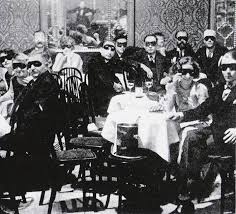 The terror of the unforeseen is what the science of history hides, turning a disaster into an epic. —Philip Roth, The Plot Against America
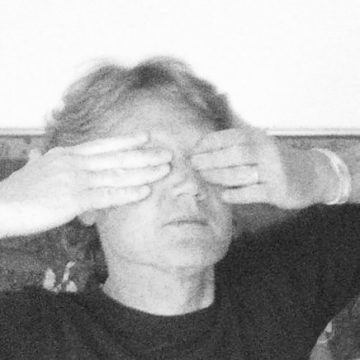 “What is hidden is for us Westerners more ‘true’ than what is visible,” Roland Barthes proposed, in Camera Lucida, his phenomenology of the photograph, almost forty years ago. In the decades since, the internet, nanotechnology, and viral marketing have challenged his privileging of the unseen over the seen by developing a culture of total exposure, heralding the death of interiority and celebrating the cult of instant celebrity. The icon of this movement, the selfie, is now produced and displayed, in endless daily iterations, in a ritual staging of eyewitness testimony to the festival of self-fashioning.
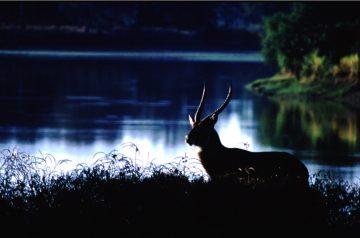 Late morning heat rises in waves over tall grass. It’s an hour and a half drive, sand flies buzzing, to Luwi bush camp, a seasonal camp with just four huts of thatch and grass on a still lagoon, far out into Zambia’s South Luangwa National Park, about 300 miles north of Lusaka.

 This morning I rode an Uber to JFK from my apartment in Queens. I do this regularly and normally don’t worry too much about it, but this morning, there was just something about the driver that concerned me, though I couldn’t put my finger on what. But every time his, very loud, GPS gave him a direction, in a language I couldn’t pin down, I just had this sense that he truly had no idea where he was going. And in case you’re not familiar with NYC, if you drive a car for a living, you’ve probably driven from the city to JFK more than a few times and do know where you’re going. Anyway, we arrived at JFK, I reminded him I wanted terminal 2 and I thought, “I guess my worries were for nothing”. And almost as soon as I thought that, he missed the sign for terminal 2. I mean, I guess it can happen, but it’s never happened to me before in all my many years of flying out of that airport. The signs don’t exactly creep up on you. I tell him he’s missed it; we start on a loop back around the airport and I say, “the green sign’s for terminal 2”, then he misses it again. And it turns out, the reason he kept missing it was because his GPS was telling him something contrary. I pointed out to him that I hadn’t put terminal 2 in Uber, so how would its GPS know that? The third time around the airport, I rather lost my temper and told him to stop listening to his phone and to listen to me. And third time lucky, we reached terminal 2.