
by Samia Altaf

Baiji, my grandmother, was the custodian of standards of behavior of young women in the family. How to comport oneself — sit, stand, speak, eat—were strictly prescribed according to her rules of what was “proper” practice for girls. These rules did not apply to young men and boys.
Although I found most of Baiji’s rules onerous, it was especially difficult to adhere to one related to what the girls should eat and how much. First on Baiji’s list was meat –of all kinds. Mutton, beef and fish were strictly forbidden. Organ meat could not be mentioned in the same sentence that had the word girls in it. Neither were eggs, or butter or cream or rich edible oils. Nuts—walnuts, cashews and specially almonds—were also prohibited.
Once in a while, on special occasions such as Eid or at family weddings, girls could eat meat–in moderation. In winter they could have almonds —but no more than five a day. Peanuts were allowed but just a fistful, no more, at a time. Basic dry cereals, bread without butter, vegetables and fruits—these too in moderation—were best for girls. These foods kept them calm and of a clear mind, she said. Meat and such were “hot” and prone to causing agitation in women. Pregnant women and lactating mothers had special privileges. Even then, though calorie rich foods such as butter were fine, as were eggs — meat was still considered too extravagant for them. Read more »



 Wine is a living, dynamically changing, energetic organism. Although it doesn’t quite satisfy strict biological criteria for life, wine exhibits constant, unpredictable variation. It has a developmental trajectory of its own that resists human intentions and an internal structure that facilitates exchange with the external environment thus maintaining a process similar to homeostasis. Organisms are disposed to respond to changes in the environment in ways that do not threaten their integrity. Winemakers build this capacity for vitality in the wines they make.

 I was always a skinny fuck. Forever the thinnest kid in the class, and for a longtime the second shortest boy (thank you, David Mehler). My stick-figure proportions were the thing of legend. I could suck my stomach in so far that some people swore they could touch the inside of my spine. My uncle used to refer to me as the Biafra Boy, a tasteless reference to the gruesome famine that accompanied the Nigerian Civil War (1967 – 70). In an effort to fatten me up, my grandmother would serve me breakfast cereal with half-and-half instead of milk. It was to no avail. A growth spurt in the 8th grade got me well above the short kids, but my body didn’t fill out. I graduated high school standing five feet, nine and a half inches tall, and weighing less than 120 pounds.
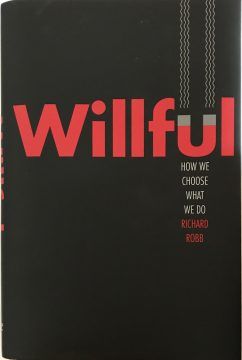 Economics. The dismal science. All those numbers and graphs, formulas and derivations, tombstone-sized copies of Paul Samuelson and William Nordhaus’s Macroeconomics (now apparently in its 19th edition), and memories of the detritus that came with them: half-filled coffee cups and overfilled ashtrays, mechanical pencils and HP-45s.

 The opening lines to the French philosopher and mathematician René Descartes’ classic philosophical text, the
  The blog post screams: “If you think 2 + 2 always equals 4, you’re a racist oppressor.”


 “I don’t like Polish people,” he says, and raises an eyebrow suggesting “How could anybody, really?”
  are suitable to it. The computer is ontologically ambiguous. Can it think, or only calculate? Is it a brain or only a machine?