by Shadab Zeest Hashmi
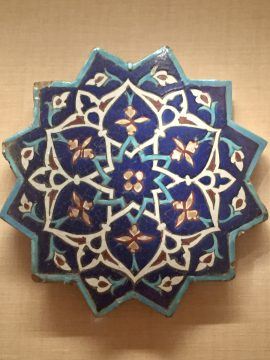 The month of Ramadan is at once a time of respite from the external— when one’s focus shifts from worldly affairs to the spiritual— and a time to deepen one’s sense of compassion and fellow-feeling via the rigors of daily fasting, prayer, reflection and generous giving. It is a time to break free from day to day concerns and to pay attention to one’s lifelong inner journey, whether it is through revitalizing the connection with the Divine or investing in human relations: personal, communal, and global.
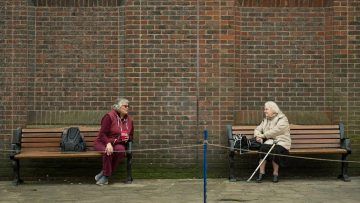
In the face of unprecedented grief, anxiety and uncertainty brought on by the COVID-19 pandemic, this Ramadan has been a rare opportunity for reflection. Where social distancing has taken away the comfort of breaking the fast in communal settings and sharing the challenge and peace of the sacred season with family and friends, it has shown a hitherto unknown way to experience this sacred time.
On a typical Ramadan day, I would wake up to make the pre-dawn meal, and get the family ready for the usual morning routine— school and work, balancing the day between Ramadan demands and the family’s routine demands such as work deadlines, tests, after-school activities and work-related social commitments that required us to participate in a state of fasting, feeling exhausted and isolated. Being able to share with others, often only on weekends, the singular sense of contentment that comes from Ramadan-fasting always makes the challenges feel worthwhile.
This Ramadan, we are cut off from loved ones and friends; we cannot invite anyone or visit the mosque for special prayers and have festive Iftar meals together. While the daylong hunger and thirst of every Ramadan is a bodily reminder of those among us who struggle with basic needs, this year I’m also reminded of those who live under lockdowns imposed by military occupations. The idea of a lockdown suddenly feels much more immediate, more oppressive. How does one bear curfews that go on for months and months— the uncertainty, the impossibility of accessing ordinary necessities such as food and medicine, of gathering for prayers, weddings and funerals? Read more »
 The COVID-19 pandemic has instigated talk of the systemic- or societal relevance of institutions and professions. Quickly, attributions of systemic relevance have become a matter of distribution of resources. In Germany, for example,
  What is worse – coronavirus itself, or the social and economic catastrophe that comes with it?
 Like most people who have time to think in these stressful days, I have been thinking about life after the COVID-19 pandemic has passed – mostly at a personal level, but also a little about the world at large. This essay is an attempt to put some of these thoughts down as a time-capsule of how things appear from this perch in May of 2020, the first year of the New Plague.
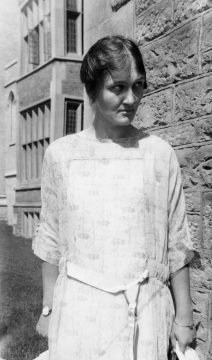 What’s the universe made up of? Most people who have read popular science would probably say “Mostly hydrogen, along with some helium.” Even people with a passing interest in science usually know that the sun and stars are powered by nuclear reactions involving the conversion of hydrogen to helium. The dominance of hydrogen in the universe is so important that in the 1960s, two physicists suggested that the best way to communicate with alien civilizations would be to broadcast radio waves at the frequency of hydrogen atoms. Today the discovery that the stars, galaxies and the great beyond are primarily made up of hydrogen stands as one of the most important discoveries in our quest for the origin of the universe. What a lot of people don’t know is that this critical fact was discovered by a woman who should have won a Nobel Prize for it, who went against all conventional wisdom questioning her discovery and who was often held back because of her gender and maverick nature. And yet, in spite of these drawbacks, Cecilia Payne-Gaposchkin achieved so many firsts: the first PhD thesis in astronomy at Harvard and one that is regarded as among the most important in science, the first woman to become a professor at Harvard and the first woman to chair a major department at the university.
 I sometimes consider becoming a skeptic, but then I’m not so sure what that entails.
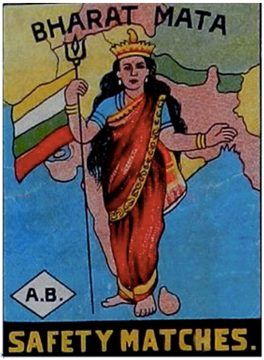 So, here she is Bharat Mata, or as Sabila saw my mother, wrapped in a bright sari, superimposed on a map of India painted on a box of safety matches. It’s incendiary. Kashmir crowns the Mata who wields a trident in her right hand. A multi-color flag erases Afghanistan and Pakistan. Left-hand shadows Bangla Desh gesturing towards Myanmar. Her foot seems bigger than pearl-shaped Sri Lanka which forms the central story of the Hindu epic Ramayana. Here’s how Sabila told Mother the story.
 One of the things that fascinates me about history is the different ways we know historical periods. We know the times we live through in a very deep way, not just the events and how they affect us, but the details of daily life. We know the slang, the jokes, the mid-list books; the forgettable songs and the ephemeral news; what the world smells like and how it tastes and sounds. It’s very hard to know another time period in anything like the detail we know our own: what people wore to work, what they did on Saturday afternoons, what all the machines did and why they were made.