
by Akim Reinhardt
 In the Age of Trump, the banality of evil can perhaps best be defined as unfettered self-interest. Banal because everyone has self-interest, and because American culture expects and even celebrates its most gratuitous pursuits and expressions. Evil because, when unchecked, self-interest leads not only to intolerable disparities in wealth and power, but eventually the erosion of democratic norms.
American culture has historically found ways to limit individual self-interest. Particularly during times of calamity and instability, it has created expectations of sacrifice for the common good that pressure political leaders to limit their excesses.
For example, during and after the American Revolution, the concept of republican virtue advanced the notion of self-sacrifice to safeguard and develop the fragile new nation and its untested, grandiose, halting experiment in democratic self-rule. Military service in local and state militias was the core of national defense and a standard obligation of male citizens. Elites eligible for political service (most commoners initially could not vote, much less hold office) were expected to sacrifice their personal self interest, forgoing their business and commercial pursuits to temporarily serve the public interest before returning to private life.
The point is not that everyone lived up to these expectation. Many did not. Rather, it’s that the expectations existed, and they helped temper runaway self-interest. Overt selfishness at the expense of a then narrowly-defined polity was hardly eliminated, but it was discouraged, criticized, and sometimes even censured. Read more »
 I may rise in the morning and notice that a long overdue spring rainfall has revived the flagging vegetation in my kitchen garden. I may give thanks to an unseen, benevolent power for this respite from a protracted and wasting drought. And I may record in my journal: “The heavens cannot horde the juice eternal / The sun draws from the thirsty acres vernal.” In such exercises, I will not have practised rigorous inquiry into the causes of things; I will not have subscribed to any particular view of the metaphysical; and I will certainly not have produced literature. But I will have replicated the conditions for the birth of science, as sketched by Geoffrey Lloyd in his account of the pre-Socratic philosophers, the first thinkers (at least in the Western world) to consider natural phenomena as distinct from the supernatural, however devoutly they may have believed in the latter; and who frequently set down their observations, theories and conclusions in formal language. For my observation of a natural phenomenon (rain and its effect on plant life), while not methodical, would bespeak a willingness to collect and consider empirical data unconstrained by superstitious tradition, and would not necessarily be contradicted by my ensuing prayer of gratitude to a supernatural force; and the verse elaboration of my findings into a speculative theory would not consign them to the realm of poetry (or even doggerel), but would merely represent a formal convention, whose forebears include Hesiod, Xenophanes, Lucretius and Vergil.
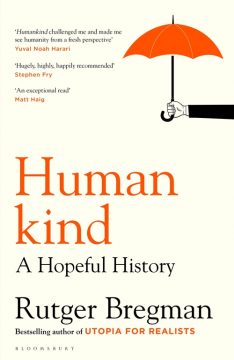 Rutger Bregman’s Humankind: A Hopeful History is a clearly written argument if ever there was one. Bregman believes humans are a kind species and that we should arrange society accordingly. The reason why this thesis needs intellectual support at all is not that it is particularly profound or complicated, but that there are so many misunderstandings to be cleared away, so many apparent objections that need to be overcome.
 Anguilla is a sandbar ten miles long. It’s three miles wide if you’re being generous, but generous isn’t a word that pairs well with the endowments of a small, arid skerry of sand pocked with salt ponds.




 Physics writing, let’s face it, is usually pretty boring. In a recent
 I have a friend who is a self-described “cop magnet.” He’s been arrested six or seven times, just standing there.


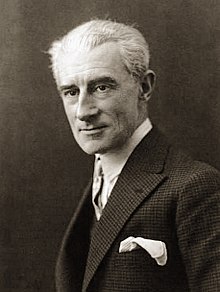 Lately I’ve been craving the music of French composer Maurice Ravel (1875-1937). As reality continues to be fraught, in the midst of a pandemic, social unrest, culture wars, and on and on, Ravel’s music offers an enticing escape. Described by his close friend, concert pianist Ricardo Viñes, as “inclined by temperament toward the poetic and fanciful,” Ravel created music that continues to captivate with its otherworldly beauty. Another reason for his appeal now, when the public health crisis has disrupted all of our quotidian rhythms, is that rhythm is the sine qua non of Ravel’s art. All you have to do is listen to
 Being Korean is a behavioral science all its own. There are formalities at all levels of society and potential affronts lurking in every social engagement. Ageism is set in stone, and in honorifics that define older or younger persons, friends, siblings and relatives, as well as differing levels of social standing. Personal humiliations are many and varied, some of them universally recognizable, some of them exclusive to Korea’s tight-knit family structures or evident hierarchies. It goes beyond how to address someone: How to drink soju, how to pour it for a superior, how to bow, when to bow, who to bow to, when to get down on your knees—the list goes on.