by Dave Maier
 By the beginning of the 20th century, it had become clear to an influential minority of philosophers that something was badly amiss with modern philosophy. (There had been gripes of innumerable sorts since the beginning of modernity in the 17th century; but our subject today is the present.) “Modern” here means something like “Lockean and/or Cartesian,” where this means … well, it’s not immediately clear what exactly this means, nor what exactly is wrong with it, and therein lies the tale of a good deal of 20th-century philosophy. As with every broken thing, we have two choices: fix it, or throw it out and get a new one; and many philosophers have advertised their projects as doing one or the other. However, as we might expect, unclarity about the old results in corresponding unclarity about the supposedly better new. What’s the actual difference, philosophically speaking, between rehabilitation and replacement?
Let’s start with what two important groups of contemporary anti-modern philosophers (again, let’s leave pre-moderns out of it for today) say about what they’re doing. We can all agree that (in Wittgenstein’s words, but quoted by all and sundry) “a picture held us captive,” and even, in his continuation, that the way it did this was that “it lay in our language and language seemed to repeat it to us endlessly.” That is, it’s not simply a philosophical theory, the conclusion of an argument we have come to regard as unsound. Even in such relatively straightforward cases, of course, there may be plenty of disagreement about how to continue; but here part of our task is not simply to outline a better view, but also to diagnose and escape this characteristic feature of the old one. Such a treatment would explain how such captivity was possible, and how our very language could turn against us, as well as (naturally) what to do about it. Read more »
 Over the course of two days in early September, the Trump administration quietly formalized its commitment to the ideology of white supremacy within the context of schooling and public education. In two separate but parallel moves, both of which would have made Senator Joe McCarthy proud, Trump announced that the Department of Education (DOE) would investigate public schools to determine if they were using the Pulitzer-Prize winning curriculum, The
 I’ve telecommuted from home for many years now. Before COVID-19, I would rarely turn my camera on when I was on video chats. And if I did, I’d make sure to put makeup on and look somewhat professional and put together from at least the waist up. But since lockdown started in March, I now turn my camera on for almost every video call and I don’t bother to put makeup on or to change my clothes from whatever ratty t-shirt I happen to be wearing. And I don’t care. I sit in my armchair au natural, secure in the knowledge that everyone I’m on calls with is likely dressed casually and taking the call from some room in their home. We’ve seen each other badly in need of haircuts. Then, in some cases, with bad haircuts that we did ourselves or let family members do to us. And we’ve grown familiar with each other’s living spaces, pets, and sometimes family members. I know the view outside of one colleague’s window, the clock on the wall behind another and I always admire the piece of art behind my colleague in Austin. Except for the occasional vacation house rental for a week or two, we’ve all been working out of our homes, living a more lockdown, limited version of the work-life we lived before. It made sense to stay put while lockdown was at its peak. But as it eases up, at least in some places, and while its clear that office life isn’t going back to normal anytime soon, is there a different, new way to live and work?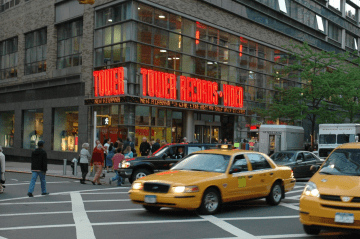
 We are not dead yet. Battered a little, yes. Frustrated, anxious, wondering about our jobs, our neighborhoods, our schools, absolutely. Definitely not dead.

 Harold Newton. Untitled, 1960s.
 researchers, as well. Indeed,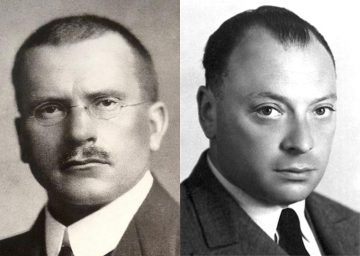
 Louise Bourgeois