
by N. Gabriel Martin

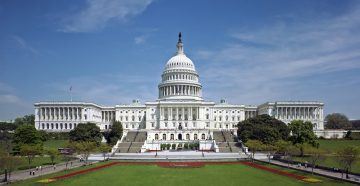
Among the most frequent and important complaints against President Trump and his administration is that it has contributed to the degradation of public institutions. The title of an Op-Ed in The Atlantic this year referred to his “war on American institutions,” and even prior to his election an Op-Ed in The New York Times warned that he was targeting ‘democracy’s institutions’ with his threats to jail Hillary Clinton. It isn’t just political institutions that Trump undermines, as an article in Nature argued, but scientific institutions as well.
Neither is the threat facing institutions today limited to Trump; other Trump-like political figures, such as Boris Johnson, pose similar dangers, as an article in The New Statesman argued. Still, Trump epitomises it. To sloppily paraphrase Tolstoy: every bad president is bad in their own way. The epitome of George W. Bush’s badness was his futile and venal wars, Trump’s is his destruction of institutions.
As an indictment, the one levied against Trump is oddly intangible. It is surprising that the chief complaint against the most unpopular president in history is not about a death toll, unemployment figures, or some similarly hard fact. I don’t mean that it is less consequential or important, on the contrary, our ideas and other artifacts of our culture are immensely important, and it is encouraging to see broader recognition of their significance in the opposition to Trump. To many, including myself, Trump and his enablers have proven the importance of institutions that had previously escaped attention: institutions such as voting rights, an independent judiciary, and congressional oversight, to name just a few. By endangering these and others, Trump has brought our attention to things that are easy to overlook because of their intangibility and because they can be taken for granted as long as they are functioning normally. Read more »


![Shakespeare & Company, Paris. [Wikipedia]](https://3quarksdaily.com/wp-content/uploads/2020/10/SandC.jpg)

 Racial disparities are present in all aspects of life. In the U.S.
 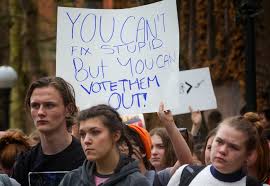 Some people whose political views are liberal and progressive say they will not vote in the 2020 US election. They detest Donald Trump and his Republican enablers like senate leader Mitch McConnell; they oppose Trump’s policies on most issues–the environment, immigration, health care, voting rights, police brutality, gun control, etc.; but they still say they won’t vote. Why not?


 Last month’s most popular movie on Netflix is a horror show in the guise of a documentary. In 2020, reality has turned scarier than fiction, and The Social Dilemma expends more dread per minute than any episode of Black Mirror. It’s a timely, manipulative film, built for one purpose: to scare the f*ck out of everyday Americans.

 What did the wines that stimulated conversation in Plato’s Symposium taste like? Or the clam chowder in Moby Dick, or the “brown and yellow meats” served to Mr. Banks in To the Lighthouse? Or consider this repast from Joyce’s Ulysses: