
by Emrys Westacott
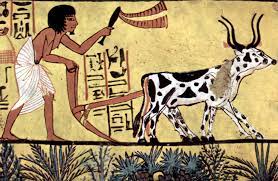 If, for a long time now, you’ve been getting up early in the morning, setting off to school or your workplace, getting there at the required time, spending the day performing your assigned tasks (with a few scheduled breaks), going home at the pre-ordained time, spending a few hours doing other things before bedtime, then getting up the next morning to go through the same routine, and doing this most days of the week, most weeks of the year, most years of your life, then the working life in its modern form is likely to seem quite natural. But a little knowledge of history or anthropology suffices to prove that it ain’t necessarily so.
Work, and the way it fits into one’s life, can be and often has been, less rigid and routinized than is common today. In modernized societies, work is organized around the clock, and most jobs are shoehorned into the same eight-hour schedule. In the past, and in some cultures still today, other factors–the seasons, the weather, tradition, the availability of light, the availability of labor–determine which tasks are done when.
Nevertheless, it is reasonable to see the basic overarching pattern–a tripartite division of the day into work, leisure, and sleep–as having deep evolutionary roots. After all, the daily routine of primates like chimpanzees exhibits a similar pattern. Work for them consists of foraging, hunting, and building nests for sleeping. Leisure activities consist of playing, grooming, and other forms of socializing, including sex. They typically sleep rather more than us; but the structure of their days roughly maps onto that of most humans. The major difference between us and our closest relatives in the animal kingdom lies not so much in how we divide up our day as in the variety and complexity of our work and leisure activities. Read more »
 It’s official: Lilly Singh, the YouTube phenomenon,
 Marlène Huissoud. A3 Drawings 8, 2020.
 Patriotism is a contested ideal in the culture war which bubbles away in the UK. It’s worth examining not only as an idea in itself but also with regards to how it is understood and expressed in the present cultural context of the UK. It seems to me that the debate is dominated by two ends of a spectrum, both misguided. At one end there are those who find the word itself too problematic to be worth salvaging. It is, they would argue, despite claims to the contrary, unavoidably linked to its ugly cousin, nationalism, with its xenophobic and jingoist associations.
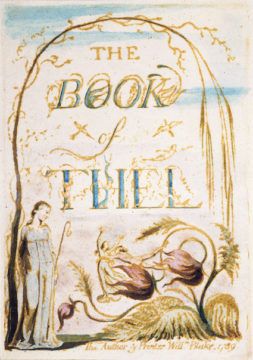 Copse and cosmos
 “My first experience home-brewing was before it was legal,” says Jim Koch, cofounder and chairman of Boston Beer Company, maker of Sam Adams. “I did it with my dad. He brought home some yeast … then he brought home some hops, and we made a beer. And I thought it was so cool when the yeast brought the beer to life, and it started to bubble and you got that foam on the top of it, and it had that wonderful bready, ester-y smell, and I was in love.”
 The evidence that pairing music with wine can enhance one’s tasting experience continues to mount since


 Let’s talk about voter suppression. Not about whether it’s good or bad or legal or moral (you can get more than enough of that virtually 24/7), but about what practical implications it might have.