by Thomas R. Wells
Effective altruism is based on a very simple idea: we should do the most good we can. Obeying the usual rules about not stealing, cheating, hurting, and killing is not enough, or at least not enough for those of us who have the good fortune to live in material comfort, who can feed, house, and clothe ourselves and our families and still have money or time to spare. Living a minimally acceptable ethical life involves using a substantial part of our spare resources to make the world a better place. Living a fully ethical life involves doing the most good we can. —Peter Singer
It is almost universally agreed that the persistence of extreme poverty in many parts of the world is a bad thing. It is less well-agreed, even among philosophers, what should be done about it and by who. An influential movement founded by the philosopher Peter Singer argues that we should each try to do the best we can by donating our surplus income to charities that help those in greatest need. This ‘effective altruism’ movement has two components: i) encouraging individuals in the rich world to donate more; and ii) encouraging us to donate more rationally, to the organisations most efficient at translating those donations into gains in human well-being.
Unfortunately both components of effective altruism focus on what makes giving good rather than on achieving valuable goals. Effective altruism therefore does not actually aim at the elimination of global poverty as is often supposed. Indeed, its distinctive commitment to the logic of individualist consumerism makes it constitutionally incapable of achieving such a large scale project. Effective altruism is designed to fail. Read more »
 If, for a long time now, you’ve been getting up early in the morning, setting off to school or your workplace, getting there at the required time, spending the day performing your assigned tasks (with a few scheduled breaks), going home at the pre-ordained time, spending a few hours doing other things before bedtime, then getting up the next morning to go through the same routine, and doing this most days of the week, most weeks of the year, most years of your life, then the working life in its modern form is likely to seem quite natural. But a little knowledge of history or anthropology suffices to prove that it ain’t necessarily so.
 It’s official: Lilly Singh, the YouTube phenomenon,
 Marlène Huissoud. A3 Drawings 8, 2020.
 Patriotism is a contested ideal in the culture war which bubbles away in the UK. It’s worth examining not only as an idea in itself but also with regards to how it is understood and expressed in the present cultural context of the UK. It seems to me that the debate is dominated by two ends of a spectrum, both misguided. At one end there are those who find the word itself too problematic to be worth salvaging. It is, they would argue, despite claims to the contrary, unavoidably linked to its ugly cousin, nationalism, with its xenophobic and jingoist associations.

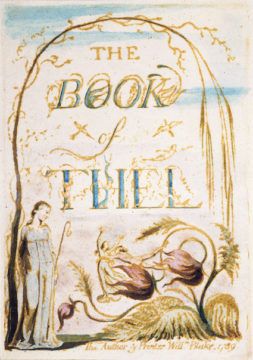 Copse and cosmos
 “My first experience home-brewing was before it was legal,” says Jim Koch, cofounder and chairman of Boston Beer Company, maker of Sam Adams. “I did it with my dad. He brought home some yeast … then he brought home some hops, and we made a beer. And I thought it was so cool when the yeast brought the beer to life, and it started to bubble and you got that foam on the top of it, and it had that wonderful bready, ester-y smell, and I was in love.”
 The evidence that pairing music with wine can enhance one’s tasting experience continues to mount since