
by Thomas O’Dwyer
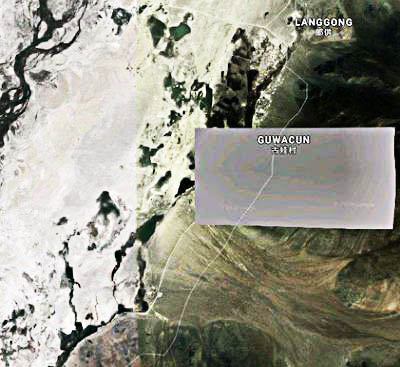
Truth may be the first casualty of war or, nowadays, of politics, but few of us would have thought of using a map to look for lies. But thanks to Google Maps and other geographic meddlers, there may now be fewer lies in a Donald Trump speech than on the face of the good Earth. It’s not hard to find places Google doesn’t want you to see, but not all are as obvious as its satellite image of a part of southern Tibet. There, the entire village of Guwacun lies under an unsubtle grey rectangle. Such geographical censorship goes far beyond pandering to mandarins in some Chinese ministry of paranoia. Take democratic, advanced, high-tech Israel, for example. Only low-resolution images of the entire country and the surrounding Palestinian territories are available online. Google alone is not to blame for this — America is. In 1997, the US government passed a law called the Kyl–Bingaman Amendment. This law prohibited American authorities from granting a license for collecting or disseminating high-resolution satellite images of Israel. The US mandated censorship of commercial satellite images for no other country in the world except Israel.
The largest global sources of commercial satellite imagery include online resources, such as Google and Microsoft’s Bing. Since they are American, the US has used the “Israel images amendment” as a powerful tool for suppressing information. Hence, images of Israel on Google Earth are deliberately blurred. Strangely, anyone in the world can zoom in on crisp and detailed pictures of the Pentagon or GRU headquarters in Moscow, but all one can see of Tel Aviv’s public central square and gardens is a fuzzy grey blur. This odd restriction has frustrated archaeologists and other scientists who depend on satellite imagery to survey areas of interest to their disciplines. It does, however, enable Israel to conceal practices in the occupied Palestinian territories that attract international censure. These include expanding Israeli settlements in the West Bank and Golan Heights, demolitions of Palestinian homes, and abuses of power by the military in clashes with Gaza. Read more »

 When I finished my residency in 1980, I chose Medical Oncology as my specialty. I would treat patients with cancer.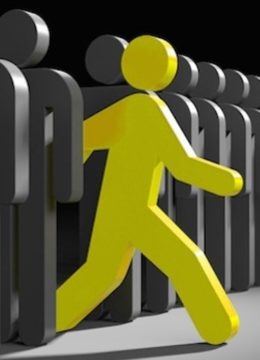

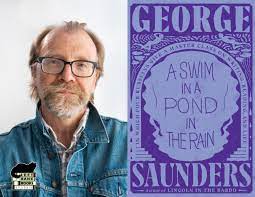 George Saunders’ recent book, A Swim in a Pond in the Rain, is the most enjoyable and enlightening book on literature I have ever read.


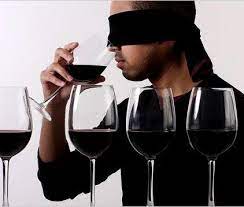 It seems as if everyone in the wine industry proclaims that wine tasting is subjective. Wine educators encourage consumers to trust their own palates. “There is no right or wrong when tasting wine,” I heard a salesperson say recently. “Don’t put much stock in what the critics say,” said a prominent winemaker to a large audience when discussing the aromas to be found in a wine. The point is endlessly promoted by wine writers. Wine tasting is wholly subjective. There is no right answer to what a wine tastes like and no standards of correctness for judging wine quality.
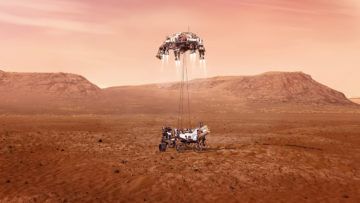 On February 18, 2021, NASA landed Perseverance rover on the surface of Mars. Perseverance is the latest of some twenty probes that NASA has sent to bring back detailed information about our neighboring planet, beginning with the Mariner spacecraft fly-by in 1965, which took the first closeup photograph. Though blurry by today’s standards, those grainy images helped ignite widespread wonder and fantasy about space exploration, not long before Star Trek also debuted on television. By the 1970s, science-fiction storytelling was moving from the margins of pop-culture into the mainstream in film and television—and so followed generations of kids, like myself, who grew up expecting off-world adventurism and alien encounters almost as much as we anticipated the invention of video-phones and pocket computers and household robots, as our conceptual bounds for the human story were pushed ever farther outward.
 Delita Martin. Rain Falls From The Lemon Tree. 2020