by R. Passov
I went into a store the other day. An old man helped me pick out a pair of running shoes and, while doing so, thanked his friend for stopping by to ask how his health issue was coming along. The friend asked in such a way as to let it be known that the issue was something both fatal and not in a place that you would ever point to in public.
The old man who helped me to find the right running shoe, though infirm, had a doggedness about him. It wasn’t enough for me to say a pair fit comfortably. I had to demonstrate which meant jogging on a tired strip of astroturf set off against a far wall. I’m 67 years of age and not accustomed to running in front of an audience. And yet, I ran.
I ran in a store that had been frustrating to find. On a long street in a neighborhood that, once filled with small enterprises providing footholds to working class families dreaming of their next generation’s college graduations, looks like a stretched rubber band of mostly empty store fronts. Somewhere in that bland row of cheap, merchant glass is a hard-to-find half door under an awning shared with some other business not anywhere near retail running shoes.
You run on your toes, the old man said, as though it were the equivalent of saying that I’m not really a runner. And you pronate and the shoes you’re asking for are not the right shoes and your size is not an eleven but instead an 11.5. I ran in different pairs of shoes until he was satisfied.
As I was running, I felt a hard sadness that comes from knowing that shoe store will go the way of the old man, will be another loss in a long line and the old man knows this. He knows just as he’s dying of cancer, his brand of commerce is being strangled by Amazon. Read more »

 Wine tasting is a great seducer for those with an analytic cast of mind. No other beverage has attracted such elaborate taxonomies: geographical classifications, wine variety classifications, quality classifications, aroma wheels, mouthfeel wheels, and numerical scores. To taste wine, in this dominant model, is to decode—to fix a varietal essence, to pin down terroir as if it were a stable identity, to judge typicity (i.e. its conformity to a norm) as though it were the highest aesthetic ideal. The rhetoric of mastery in wine culture depends on this illusion of stability: Cabernet must show cassis and graphite, Riesling must taste of petrol and lime, terroir speaks in a singular tongue waiting to be translated.

 A good weather colloquialism can be quite suggestive. Take


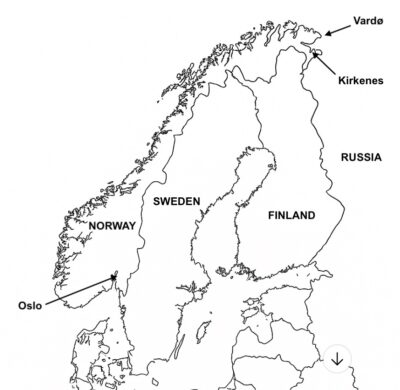 It’s different in the Arctic. Norwegians who live here make their lives amid long cold winters, seasons of all daylight and then all-day darkness, and with a neighbor to the east now an implacable foe.