by Akim Reinhardt and Jennifer Ballengee

First Discussant: For anti-abortion extremists, abortion is a fetish. It’s a symptom that covers a repressed, secret, and socially unacceptable desire. What desire? I’m not sure; it’s their fetish, not mine. But whatever it may be, it drives anti-abortion protestors to scream about saving lives, to hold up posters of fully-formed fetuses (rather than the mass of cells you see in an ultrasound at six weeks or so), and to demand that we save those unformed lives. However, those images of fully-formed fetuses are a lie. They are visual metaphors which, as metaphors do, compare two unlike things: “life” in its social, meaningful context, and the bare life of any cell mass, whether an amoeba, plant, worm, or human. The “sacred” aspect of the human—which lends it the claim to human rights, or gives it its meaning in punishment or execution or “life”—is not innate but imagined. However, if we were to admit that we’re a mass of cells like any other life form, then we’d all have to be vegetarians, or cannibals.
The Respondent: I agree that anti-abortion extremism is a fetish, a form of idolatry where supplicants worship a non-sentient globule for its spiritual and even magical powers. I call this the Fetus Fetish. It’s actually more of an embryo fetish, but I like alliterations. Perhaps it’s not surprising since the vast, vast majority of extremists are very religious and typically espouse Christian notions of a divinely formed soul within every human being upon conception, leading them to entangle embryos with ideas about the sacred. That seems pretty straightforward. What grabs me is your implication that anti-abortion extremism is grounded in a form of religious speciesism. That only by replacing honest observation and rational thought with supernatural religiosity could one conclude that a tiny collection of microscopic, embryonic cells is somehow more worthy of a sacred life than an adult chicken, or that even a twenty-week old fetus, which despite the miracles of modern medical technologies absolutely cannot live outside a woman’s womb, is somehow on a par with, much less the better of, an adult cow or pig or dog. All you have to do is look an adult dog or pig in the eye to recognize you’re dealing with a mature, highly developed, self-sustaining, thinking mammal whose existence has infinitely more in common with your own than does an embryo or early stage fetus. Yes, either eat all the animals or none of them; or at least use that dichotomy as a starting point for some deep thought about your place in the universe. Read more »
 Elections have consequences. Sometimes those consequences may be unintended, but they are always there. Elections have consequences. You can’t say it too many times because too many voters don’t act if they believe it. They should. Elections have consequences.

 I recently started a new job. The process of looking and interviewing for this job was unlike any other I’ve been through because I now live on the Caribbean island of Grenada. I moved here during the height of the pandemic when everyone was working from home. When I told my plans to the company I was working for then, their only comment was that I needed to stay domiciled in the US, which I have. But now that we’ve all gone back to some kind of post-COVID normalcy (even if variants are still coming at us hard and fast), I wasn’t sure how to approach a new company with my slightly unusual living situation. My initial thoughts were that I get through a first interview before bringing it up, but that seemed not only disingenuous but also pointless; they were going to have a problem with it, or they weren’t. Putting off the reveal was just a waste of everyone’s time. And so, I mostly led with this news. Amazingly, no one cared.
  In the early 1990’s I was a visiting fellow at St Catherine’s College and an academic visitor at Nuffield College in Oxford. At Nuffield College at that time two friends from my Cambridge student days were Fellows, Jim Mirrlees and Christopher Bliss. (I think Jim was mostly away during my visit, and graciously asked me to use his large office at Nuffield). The other person I used to see there off and on was Tony Atkinson who became the Warden of Nuffield shortly afterward. I knew Tony since our student days in Cambridge. Like me he also moved from one Cambridge to the other, to MIT, roughly around the same time. Both of us were heavily influenced by our teacher James Meade, though Tony never did a Ph.D. (as used to be the old British tradition—neither James Meade nor Joan Robinson had a Ph.D.) Tony did not follow Meade in the latter’s work on international trade, as I did, but in other respects he broadly followed on the footsteps of Meade, apart from sharing Meade’s personal characteristics of modesty, decency and a positive vision of the future. Tony was certainly among the best economists of my generation, with pioneering work on inequality, poverty, public policies, redistributive taxation, and welfare. He was also an advocate of Universal Basic Income. I had co-authored a chapter for the Handbook of Income Distribution that he co-edited with François Bourguignon, a French development economist friend of mine.
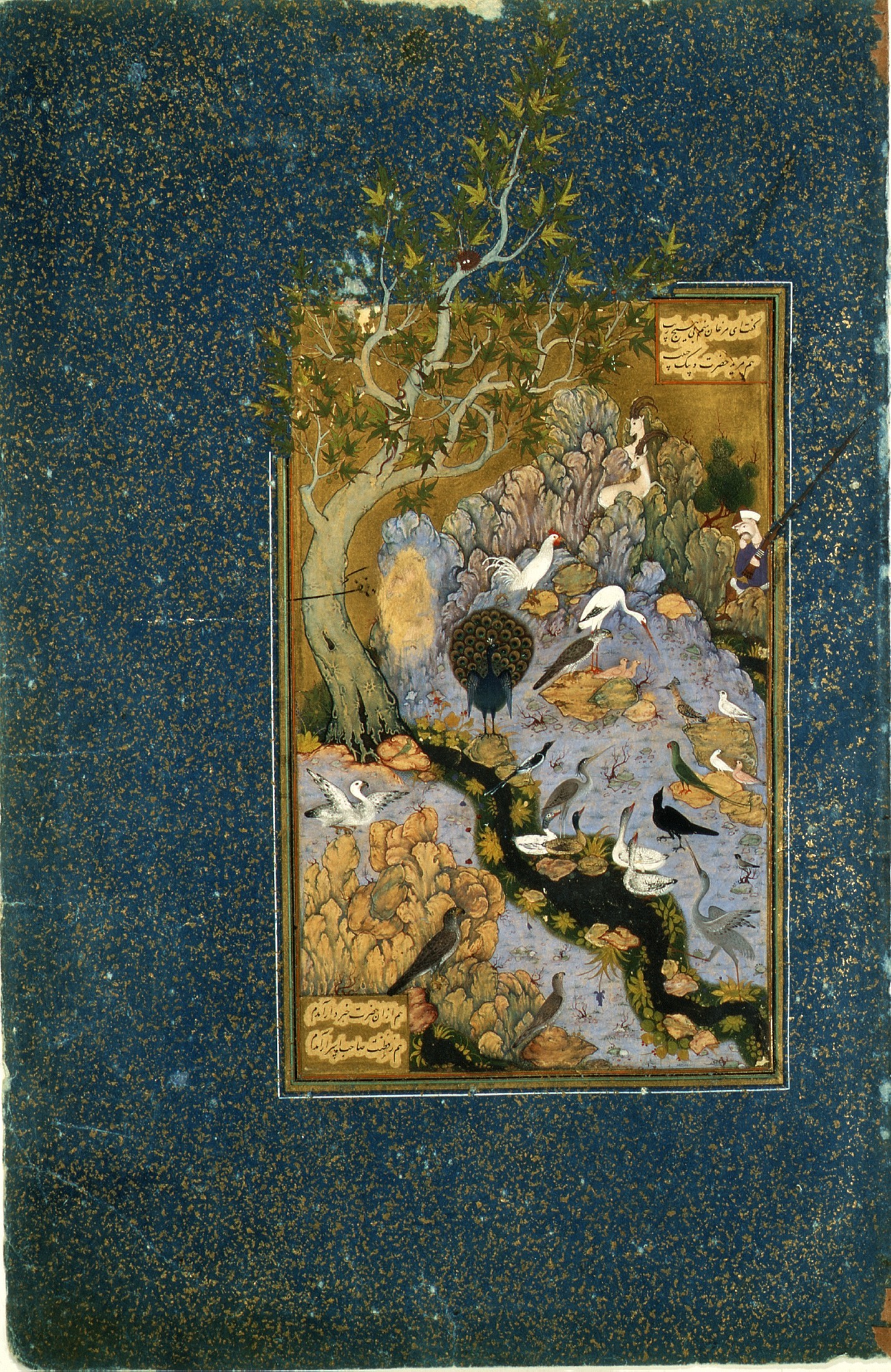 Habiballah of Sava. Concourse of The Birds, ca. 1600
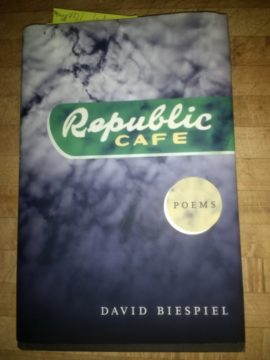 We sit in David Biespiel’s Republic Café: all of us together in the public space of democracy. It appeared in 2019, as American fascism made its perennial strut, less disguised than usual. At that point we’d endured two years of it. Lies spewed from the Leader’s mouth like flies from an open sewer, his followers enacting Hannah Arendt’s crisp formulation: