
by Ethan Seavey

The extant Kin of the Colonizer are paralyzed but that doesn’t stop them from running their mouths. They yap and yell and are filled with angst and guilt. Their rage fuels something, but that rage is only easy to find when they are pinned up against that Last True American Colonialist. Otherwise they surround themselves with each other and in there it is hard to be mad.
They hop in a rental car and they cross fields of naked-armed trees talking about that mythical land that once existed, before this one had paved it over. How beautiful New York state must have once been, before there were cameras to capture it. They cross the border into Canada and talk borders, how wide and unmanageable, how purposefully desolate, how torturous to cross without a white face. Their white lips talk of white powers and their pink tongues get lost and meander in circles. They ask if Canada is any “better” than the US and they see parallels but such vast differences that the question asked in the first place is deemed irrelevant.
At Niagara Falls they are like everyone else. They watch the falls in mostly silence. They take pictures and selfies. They walk up the cement pathway slowly and turn around every few steps. Again they talk about how it used to be. A sacred site for hundreds of years before white settlers. Then, a spiritual experience for earlier white settlers. They talk about how it is now: a strip of skyscraping hotels towering high over the wonder, dwarfing its excellence in order to give a white man in a business suit a better view. They notice the cemented pathways and the bridges spanning and the boats crossing and the people crowding and the spirit fading or already gone. They find the road lined with ferris wheels and go-carts and haunted houses and kitschy white nostalgia. Read more »

 About a third of the way through a first-year humanities honors course, one of my more engaged and talkative students pulled me aside after class for a private chat. She waited, clearly anxious, while the rest of her classmates filed out and then turned to me with her eyes already filling up with tears.
 My father, the son of Italian immigrants, was a member of the working class. There were things within reach, and things that were not in reach, and he accepted this. He never pushed his children to broaden their horizons, and would have been satisfied to see them in traditional working-class vocations. When I came home from school eager to show off my grades, he poked fun at me. The prospect of pursuing an intellectual career was alien to him; in his view, taking out student loans to go to college or university was a way for banks to trap the “little guy.” When I presented him with the papers, he refused to sign. There was no discussion. I eventually moved out and managed to get my BFA anyway, and when I wound up as a finalist for a Fulbright, the doctor who performed the general checkup required by the awarding commission—I was still covered by my father’s Blue Cross plan, but only because I was still technically a dependent and it didn’t cost him anything—took him aside and told him that a Fulbright would be “quite a feather in your daughter’s cap.”
 Sughra Raza. Just a Street Corner. Boston, 2022.




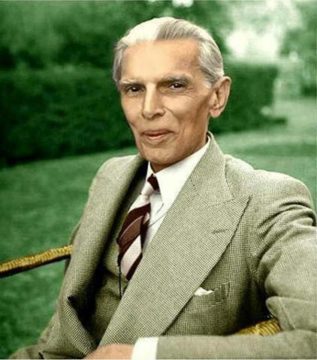 Mohammed Ali Jinnah’s Last Visit to Kashmir 10 May – 25 July 1944
 No metaphor for cancer does it justice. As a medical oncologist and cancer researcher, I struggle constantly with how people perceive cancer. Until a person suffers from it or sees a loved one suffer from the devastation of this disease, cancer remains an abstract term or concept. But it is an abstract concept that kills 10 million people around the world every year. Ten million people every year. How do we get people to understand that this is a lethal disease that deserves attention. That deserves more funding. That deserves more minds thinking about how to stop the continual suffering that metastatic cancer causes.
 Ideas often become popular long after their philosophical heyday. This seems to be the case for a cluster of ideas centring on the notion of ‘lived experience’, something I first came across when studying existentialism and phenomenology many years ago. The popular versions of these ideas are seen in expressions such as ‘my truth’ and ‘your truth’, and the tendency to give priority to feelings over dispassionate factual information or even rationality. The BBC is running a radio series entitled ‘I feel therefore I am’ which gives a sense of the influence this movement is having on our culture, and an NHS trust has apparently advertised for a ‘director of lived experience’.
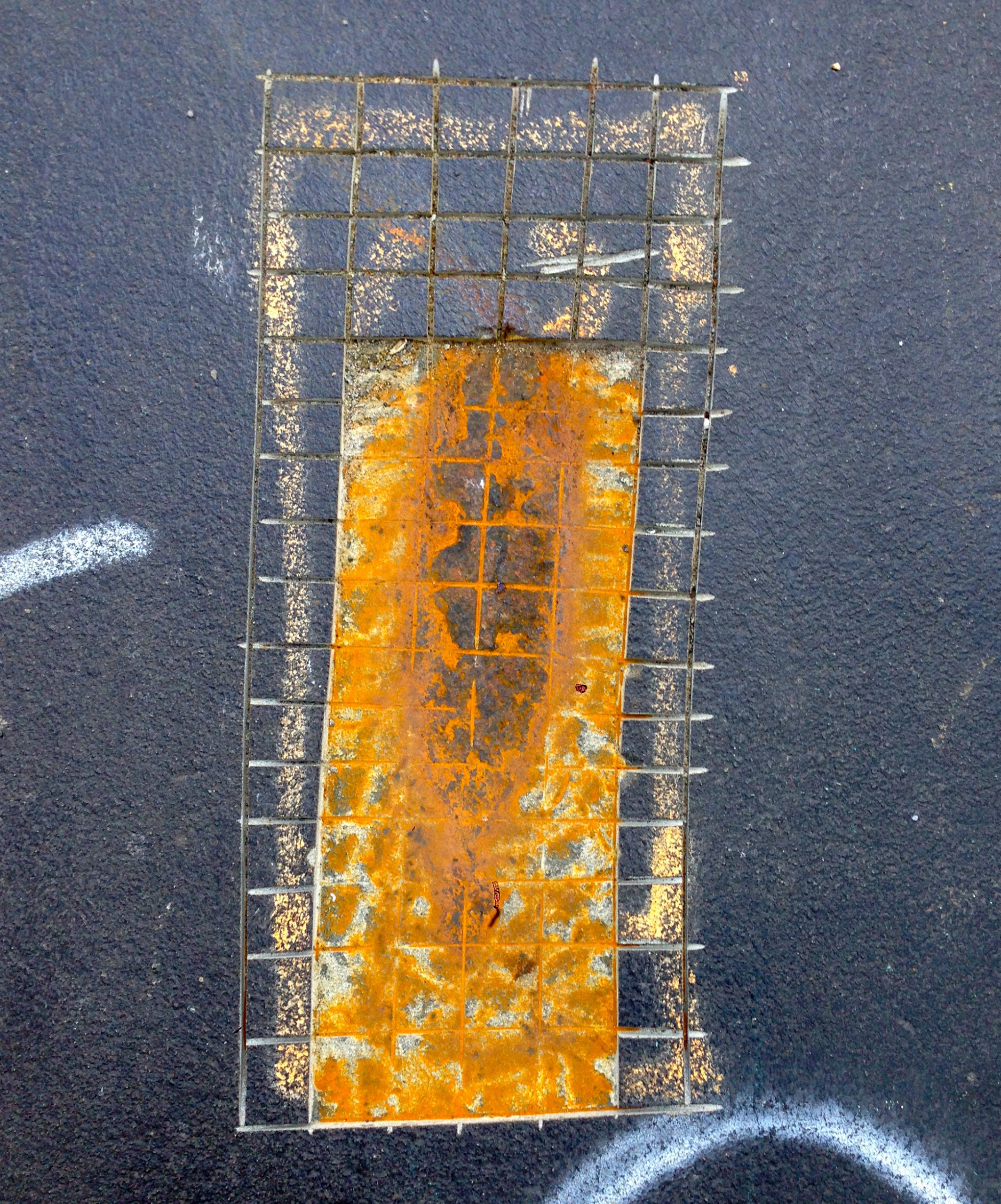 Sughra Raza. Pavement Expressionism. June 2014.