Bribes, Pardons, and Presidential Immunity

by Ken MacVey

Donald Trump has creatively explored ways to monetize the presidency. These include launching the $TRUMP crypto business a few days before resuming office on January 20, 2025 or using Truth Social–a private business venture he helped start– to platform his presidential and personal pronouncements.

Monetization began early in the first Trump administration with the Trump International Hotel in Washington DC, which  became, according to an October 18, 2024 House Committee on Oversight staff report, a hotel of choice  for foreign and domestic influencers and would-be appointees to government positions, such as judgeships and  ambassadorships.  According to the  report,  it was also the hotel of choice for  various presidential pardon recipients. This report alleged that at least five such recipients stayed at the hotel spending thousands of dollars in 2017 and 2018.  The report went on: “[T]hese expenditures are particularly troubling in light of allegations that former President Trump’s former personal attorney, Rudy Giuliani, was involved in efforts to sell presidential pardons for $2 million apiece—an amount Mr. Giuliani reportedly planned to split with President Trump.” (These allegations stem from a lawsuit against Giuliani by someone who used to work for him– Giuliani denies the allegations.) Since this report, Trump has pardoned Giuliani for his role in attempting to overturn the 2020 election.

A number of Trump pardons in the last few months have caught the public’s eye. For example, in October Trump pardoned billionaire crypto entrepreneur and convicted  felon, Changpeng Zhao. Zhao and his company pled guilty to failing to stop money laundering, which according to the Department of Justice aided  terrorist groups like Isis. Forbes reported that Zhao’s company had made a deal in May 2025  with a Trump family  affiliated company that helped boost Trump’s net worth by  hundreds of millions of dollars. Liz Oyler, head pardon attorney for the Department of Justice until last March, is quoted by Forbes as saying:  “Trump has created a pay-for-play pardon system.” Read more »
Why Ghosting Feels More Violent Than Direct Cruelty

by Priya Malhotra

Cruelty, at least the old-fashioned kind, has a shape. It announces itself. It arrives with words you can quote later, replay, contest, reject. Even when it stings, it offers a surface against which the self can brace. Ghosting, by contrast, has no edges. It leaves no fingerprints. It is not an act so much as a disappearance, and it wounds precisely because it refuses to declare itself as one.

To be ghosted is not merely to be rejected. It is to be rendered uncertain about the status of reality itself—about what happened, what was meant, whether the past you shared was ever mutually understood. The pain does not come only from loss, but from ambiguity. And ambiguity, it turns out, can be more violent than an explicit no.

There is a reason direct cruelty, however unpleasant, often feels cleaner. A rejection, an insult, even a harsh goodbye acknowledges a shared frame. It says: We are in the same room. I see you. This is my position. Ghosting refuses that acknowledgment. It leaves you alone in a room you didn’t know you were exiting, wondering whether the lights will come back on.

At its core, ghosting is an injury to recognition.

Philosophers have long argued that being recognized—seen, addressed, responded to—is not a luxury but a basic human need. Recognition confers reality. To be recognized is to be confirmed as someone whose presence registers, whose existence calls for response. Ghosting withdraws that confirmation retroactively. It doesn’t just end the relationship; it quietly calls into question whether the relationship existed in the way you thought it did.

This is why ghosting can feel like erasure rather than rejection. Rejection says, I choose not to be with you. Ghosting says nothing at all, and in doing so, suggests something more corrosive: You do not require an answer. Read more »

Friday, December 26, 2025

Taste Values Craft

by Kyle Munkittrick

Silicon Valley has rediscovered ‘taste.’ Maybe it was Jony Ive at Stripe Sessions. Maybe it’s Substack aesthetes like Henry Oliver and David Hoang. Maybe it’s everyone trying to figure out if AI can have taste. But taste is, in every case, either ill or incorrectly defined, if at all. Let’s fix that.

Taste is the valuing of craft.

That is, taste is the ability to assess and appreciate a work based on deep understanding of techniques and skills used in the work’s creation, whether it’s a car, a novel, an app, a song, or an outfit.

In Jasmine Sun and Robin Sloan’s Utopia Debate “Can AI have taste?”, Sun argued  that if the YouTube or Spotify algorithm ever gave you a good recommendation, then yes AI has taste, because it understood and recreated your taste.

No. Algorithms understand your preferences. Taste is not your preferences. Preferences are, however, the thing most commonly conflated with taste.

Your preferences are intuitive taste—a starting point. Preferences rarely ever fully match with taste. That is what a guilty pleasure is! You like it even though you know it’s not good (Stranger Things), or hate it even though it is (Hemingway). Paying close attention to what you like is an excellent way of building taste. Preferences are a great signal that something might be good.

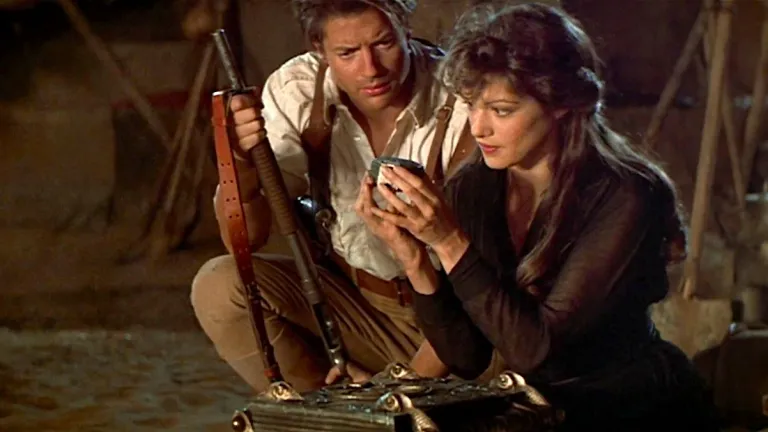
Rick and Evie appreciate something as well-crafted as they are.

The opening paragraph of Roger Ebert’s review of the Mummy is a perfect demonstration of his exceptional taste being in seeming conflict with his preferences:

There is within me an unslaked hunger for preposterous adventure movies. I resist the bad ones, but when a “Congo” or an “Anaconda” comes along, my heart leaps up and I cave in. “The Mummy” is a movie like that. There is hardly a thing I can say in its favor, except that I was cheered by nearly every minute of it. I cannot argue for the script, the direction, the acting or even the mummy, but I can say that I was not bored and sometimes I was unreasonably pleased. There is a little immaturity stuck away in the crannies of even the most judicious of us, and we should treasure it.

Ebert contrasts his judgement of the craft (script, direction, acting, effects) with his visceral delight. His pleasure was, by his own admission, unreasonable. That is, unlike many movies he loved, he cannot entirely explain or justify his delight.

There are a few ways to interpret this vis-a-vis taste. One is that taste isn’t objective or based on craft, it’s ineffable. Another is that Ebert didn’t have good enough taste to explain and justify why he liked The Mummy. Both of these are obvious nonsense. Read more »

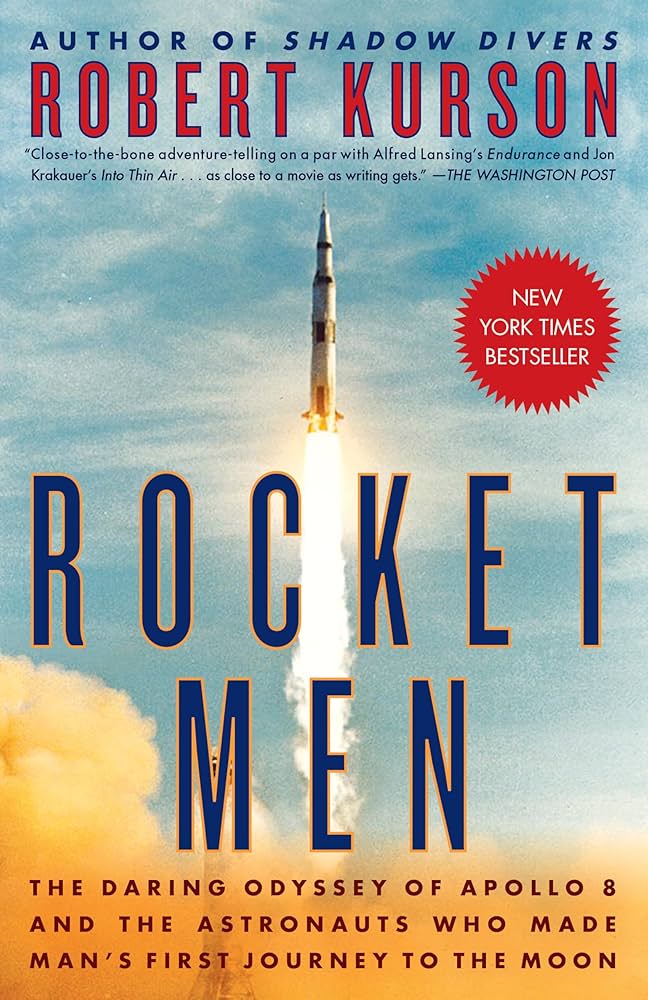
Earthrise Before Footprints: Review of Robert Kurson’s “Rocket Men”

by Ashutosh Jogalekar

We shall not cease from exploration.
And the end of all our exploring
Will be to arrive where we started
And know the place for the first time. —T. S. Eliot

Robert Kurson closes Rocket Men: The Daring Odyssey of Apollo 8 with a deceptively simple scene. Decades into the twenty-first century, he takes his teenage son, armed with an iPhone, an Xbox, and all the distractions of modern technology, to see a Saturn V laid on its side, bursting out of its building. The boy doesn’t check his phone. He doesn’t take a picture. He just stands there, staring at the five enormous F-1 engine nozzles, each taller than a person, and after several silent minutes asks if they can stay longer. The Saturn V guarantees turning every person, no matter how young or old, into that boy.

I had just returned from a visit to NASA myself, standing beneath the behemoth and feeling something close to vertigo. You can know the numbers – 363 feet long, millions of pounds of thrust, nearly a million gallons of propellant – and still be unprepared for the physical reality of it. The rocket overwhelms abstraction. Like Kurson’s son, I found myself wordless, pulled into a long stare, asking the same unspoken question: how did anyone dare build this thing? Rocket Men provides part of the answer.

What the book does better than almost any account of Apollo is make the case that Apollo 8, usually treated as a dress rehearsal for Apollo 11, may have been the most consequential spaceflight of them all. Apollo 11 was about arriving. Apollo 8 was about leaving, about the first time human beings severed the umbilical cord to Earth and committed themselves to a quarter-million-mile journey with no rescue, no precedent, and no margin for error. Apollo 11 astronaut Michael Collins’s later remark, quoted near the end of the book – that a century from now Apollo 8 might be judged more significant than Apollo 11 – sounds provocative until Kurson patiently shows why it may simply be accurate. Read more »

The Magic Ponies of AI Advocacy

by Dwight Furrow

Let’s grant, for the sake of argument, the relatively short-range ambition that organizes much of rhetoric about artificial intelligence. That ambition is called artificial general intelligence (AGI), understood as the point at which machines can perform most economically productive cognitive tasks better than most humans. The exact timeline when we will reach AGI is contested, and some serious researchers think AGI is improperly defined. But these debates are not all that relevant because we don’t need full-blown AGI for the social consequences to arrive. You need only technology that is good enough, cheap enough, and widely deployable across the activities we currently pay people to do.



On that narrower and more concrete point, there is a lot of disturbing data. The global management firm McKinsey estimates that current generative AI plus existing automation technologies have the potential to automate work tasks that absorb 60–70% of employees’ time today. The International Monetary Fund, addressing the world economy, predicts that AI is likely to affect around 40% of jobs globally, with advanced economies being more exposed. MIT’s Iceberg project reports that “AI technical capability extends to cognitive and administrative tasks spanning 11.7% of the labor market—approximately $1.2 trillion in wage value across finance, healthcare, and professional services.”

So the question is not whether job disruption is likely. The question is what kind of thinking is smuggled in when pro-AI commentators describe that disruption as painless, self-correcting, and—this is the favorite word—“inevitable.” The pattern I want to diagnose is magical thinking, the tendency to treat a desired outcome as if it follows automatically from the introduction of a powerful tool, as if social coordination, political conflict, and institutional design were minor implementation details. Each instance of magical thinking I designate as a magic pony because the confidence with which they are asserted often has the character of a bedtime story: comforting, frictionless, and uninterested in real world constraints. Read more »

Thursday, December 25, 2025

Congratulations to 3QD’s Own Rachel Robison-Greene!

Rachel is one of the winners of the American Philosophical Association’s 2025 Public Philosophy Op-Ed Contest for one of her essays here at 3QD. There is more information about that and other APA prizes at their website:

The APA committee on public philosophy sponsors the Public Philosophy Op-Ed Contest for the best opinion-editorials published by philosophers. The goal is to honor up to five standout pieces that successfully blend philosophical argumentation with an op-ed writing style. Winning submissions will call public attention, either directly or indirectly, to the value of philosophical thinking. The pieces will be judged in terms of their success as examples of public philosophy, and should be accessible to the general public, focused on important topics of public concern, and characterized by sound reasoning.

Rachel Robison-Greene (Utah State)

“The Temptations of Nostalgia” (3 Quarks Daily)

Rachel Robison-Greene earned her PhD from the University of Massachusetts, Amherst in 2017. Her research interests are largely in meta-ethics, epistemology, and applied ethics (with particular interests in animals, the environment, and technology). She is the author of the book Edibility and in Vitro Meat: Ethical Considerations. She is a regular contributor to the popular blog 3 Quarks Daily. Rachel serves as the Secretary of the Culture and Animals Foundation and is the Chair Elect of the Intercollegiate Ethics Bowl.

More information about the APA prizes here.

Congratulations, Rachel!

And Happy Newton’s Day to All!

A Child’s Christmas in New Jersey

A Remembering by Nils Peterson

Christmas Eve began with a carol sing at the big Presbyterian Church on Crescent Avenue which many of the rich town people attended. More cathedral than church. My brother and I went to Sunday school there when we were old enough because the small Lutheran church of our parents was not large enough to have one. My father was a chauffeur for one of the rich families.

The caroling was held in a large, handsome meeting room where, in the spring, the flower show would be held. A lot of chairs were set out and there’d be a big tree beautifully decorated and boxes of candy for the children to suck on when it was all over. I remember a particularly revolting lime-green ball sour enough and bitter enough to make even the greediest child spit it out. Some of the gathered Presbyterians had begun their celebrating before the sing, because after about the third carol, some wag would start calling for the “Hallelujah Chorus,” the last song in the songbook, and the calls, catcalls almost for the calls for it increased as the carols went on, grew until at last the leader with a sigh gave up and we hallelujahed our way out of there.

At home, the chauffeur’s apartment above the garage, there would be a supper of Swedish meatballs and boiled potatoes and lingonberry and sardines and cheeses and cookies. At the right moment, we’d go down the stairs and, across the driveway to the path leading to the big house – crunch of gravel, full moon shining between tree branches, feel of tended grass – to the kitchen door where Marie, the cook, my father’s cousin and my godmother, waited to let us in. Anet is there, the downstairs maid, and Martha, the upstairs maid. They are “the girls,” the three live-in Swedish servants. Marie, the cook, was my father’s cousin, my godmother, and the one responsible for getting my father the chauffeur job in 1932 in the heart of the depression. He had been out of work since he and mother came back from visiting their parents in Sweden to show off how well they were doing in America. Shortly before their return, the stock market crashed. The year, of course, 1929.

Anet was the one who served the Deforests the dinner Marie had cooked. She had her own pantry next to the kitchen where she kept jars of cookies to serve with the lady’s tea. Martha, the upstairs maid, was looked on as being a little racy because she smoked. She quit her job one time and went back to Sweden, but returned in a few months. The rich people never quite forgave her desertion. Read more »

The Grand Apprentice

by Ed Simon

Now the Lord is that Spirit: and where the Spirit of the Lord is, there is Liberty. —2 Corinthians 3:17

If God does not exist, then everything is permitted. —Attributed to Fyodor Dostoevsky

File: Jesus Saves Neon Cross Sign Church 2011 Shankbone.jpg - Wikimedia Commons

It had been twenty centuries since He’d last walked upon the Earth, and it was in the ninth year of the new reign that He quietly appeared again late afternoon on a cold Christmas Eve, this time at a needle-exchange clinic in Alphabet City. Long greasy black hair in front of a scarred tawny face, hunched over, short, hobbled, and ugly, the destitute man of sorrows quietly and at first without notice went from empty chair to empty chair, sitting silently next to the junkies and the HIV infected for a minute or two.  He wasn’t recognizable; He barely looked like all of those Pietas and nativity scenes and Crucifixions affixing the walls of the Met and the Cloisters. And yet, His people slowly recognized Him, and soon others began to recognize Him as well. Brows that had furrowed with deep fear for so long that they had seemingly never felt eased, suddenly felt eased. Eyes that had darted nervously, wondering who was an informant, and had scarcely relaxed for almost a decade, suddenly relaxed. Bodies that ached and were cold suddenly felt whole and warm.

He was in the clinic for maybe less than fifteen minutes, but as he headed the few blocks towards Washington Square Park, the cold and huddled masses of citizens, used to food and fuel shortages and the prediction of yet another swirling polar vortex freezing the northern part of the North American land mass, jabbed each other in hungry ribs with angular elbows, and pointed at the man in the soiled purple wind-breaker and the filthy stocking cap who walked those trash-strewn streets.

A young woman who had been homeless for the past two years, her siblings long since sent by bus to one of the black sites near the border, and herself only managing to survive by purchasing forged citizenship papers for close to three weeks under-the-table pay, and a few hours of her dignity, felt tears in her own brown eyes when she looked into His brown eyes. The gold-plated rosaries that were the last relic of her parents’ love, before they were ostensibly bussed back to Ecuador after they were seized in the middle of the night, seemed warmed by an internal heat as she closed her hand around them in her pocket. Read more »

Wednesday, December 24, 2025

The Midas Machine

by Katalin Balog

Midas Washing at the Source of the Pactolus by Bartolomeo Manfredi

In a recent bestseller, Eliezer Yudkowsky and Nate Soares argue that artificial superintelligence (ASI), if it is ever built, will wipe out humanity. Unsurprisingly, this idea has gotten a lot of attention. People want to know if humanity has finally gotten around to producing an accurate prophecy of impending doom. The argument is based on an ASI that pursues its goals without limit—no satiation, no rest, no stepping back to ask what for? It seems like a creature out of an ancient myth. But it might be real. I will consider ASI in the light of two stories about the ancient king Midas of Phrygia. But first, let’s see the argument.

What is an ASI?

An ASI is supposed to be a machine that can perform all human cognitive tasks better than humans. The usual understanding of this leaves out a vast swath of “cognitive tasks” that we humans perform: think of experiencing the world in all its glory and misery. Reflecting on this experience, attending to it, appreciating it, and expressing it are some of our most important “cognitive tasks”. These are not likely, to use an understatement, to be found in an AI. Not just because AI consciousness is rather implausible to ever emerge, but also because, even if AI were to become conscious, it would not do these things, not if its developers stuck to the goal of creating helpful assistants for humans. They are designed to be our servants, not autonomous agents who resonate with and appreciate the world.

OK, but what about other, more purely intellectual tasks? LLMs are already very competent in text generation, math, and scientific reasoning, as well as many other areas. While doing all those things, LLMs also behave as if they are following goals. So are they similar to us, after all, in that they know many things and are able to work toward goals in the world? Read more »

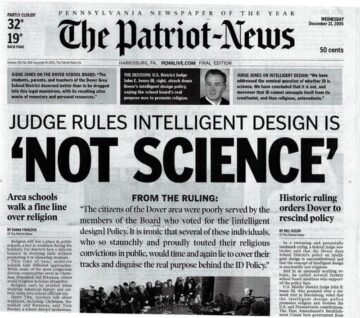
Creationism in the classroom: does it matter? Kitzmiller 20 years on

by Paul Braterman

Last Saturday was the 20th anniversary of the day on which Judge John Jones III handed down his decisive ruling, in the case of Kitzmiller v. Dover Area School District, that Intelligent Design was a version of creationism, which is religion and not science, and as such violated the Establishment Clause of the US Constitution and could not be taught within the publicly funded school system. Given changes in the US legal landscape, we need to ask whether this ruling is still secure. And given everything else that is happening in the US at the moment, we may wonder whether this even matters. Here I lay out why I think that the ruling is not necessarily secure, review what is at stake, and argue that it matters very much indeed.

Mike Johnson, in 2016, explaining that learning about Darwin is the cause of mass shootings

What we now call Christian Nationalism has its roots in Ronald Reagan’s 1980 presidential campaign, when creationists such as Tim LaHaye fused together political conservatism, the newly adopted abortion issue, literalist Bible-based religion, and the rejection of evolution science as Humanist, un-American, and as we would now say Woke. We can see the influence of these ideas today in Trump’s administration, where at least three cabinet ministers (Pete Hegseth, Scott Turner at HUD, and Doug Collins at the VA) are creationists, as are Speaker Mike Johnson, Mike Huckabee, ambassador to Israel, and Russell Vought who at the Office of Management and Budget has enormous day-to-day influence. To these we might add Vice President Vance, and Health [sic] Secretary RF Kennedy Jr. These are not creationists, but share their disdain for the scientific and academic establishments; Vance rose to stardom by telling the US Religious Right that “the Professors are the enemy,” while Kennedy’s onslaught on established science is all too well-known. Thus creationism is closely coupled to the rest of the Regime’s war on reality.

As for the claim, pervasive in the creationist literature, that evolution acceptance involves religion denial, I should mention here that Judge Jones himself is a committed Lutheran, and has offered himself as an example of the compatibility of Christian belief and evolution acceptance, while Ken Miller, a crucial witness at the trial and indefatigable campaigner against creationism, is a devout Catholic, author of Finding Darwin’s God, and co-author of a widely used high school textbook, Miller and Levine Biology. Read more »

Tuesday, December 23, 2025

Should We Replace Elections with Lotteries?

by Tim Sommers

“I’d rather entrust the government to the first 400 people listed in the Boston telephone directory,” William Buckley once said, “than to the faculty of Harvard University.” If we can put aside his right-reactionary politics and look past the performative anti-intellectualism on display here (from a Yalie!), there is the seed of an interesting question here. Could we replace elections with random selections?

A recent mini-movement among political philosophers has answered, yes, we could. Arguably the leader of this movement, Alexander Guerrero, author of Lotacracy: Democracy Without Elections (2024), has gone further arguing we should eliminate voting in favor of a lottery system to appoint our political representatives. Here’s Guerrero describing his view and its advantages.

We would be better off using randomly chosen citizens, selected to serve on single-issue legislatures (each covering, say, transportation or education or agriculture), who would learn about the relevant issues in detail and engage with each other over an extended period of time to make policy decisions. Instead of a generalist legislature like Congress, we would have 30 single-issue legislatures, each with 300 randomly-chosen citizen legislators serving three-year terms.  A true random selection of citizens age 18 and up could be established using mechanisms like those used for jury selection. Those selected wouldn’t be required to serve, but a significant salary, the promise to accommodate family and work requirements, and the sense that service is a civic duty and honor should encourage them. Without elections, we would lose the sense that ‘our team’ wins or loses. We wouldn’t have teams in the same way. Moving away from a generalist legislative process opens up places for us to identify issues on which we agree rather than having our attention concentrated on those few issues that most deeply divide us. Without campaign promises, political ads and re-elections, we could finally move beyond the capture and control of political institutions by wealthy corporate interests. This would truly return democratic control to the people.

I am not a huge fan of this view, but I have to say Guerrero deserves a lot of credit for his tightly argued, imaginative work. As John Rawls emphasized in developing his own theory of “justice as fairness,” the best way to evaluate ethical and normative political views is to have well-developed, comprehensive alternatives to compare. Guerrero has certainly developed – across 464 pages – a comprehensive alternative to democracy as currently practiced. Also, props to Guerrero for the bravado involved in even imaging an alternative to conventional democratic politics – especially in such detail.

Lotacracy is not entirely unprecedented. Athens had one. Sort of. Our current jury system can be seen that way. And there have been recent experiments with lotacracy around the world, for example, in Canada. But these lotteries have been been quite limited, deliberative rather than legislative, and advisory only.

Guerrero says he has four main reasons to prefer lotteries to elections. Read more »

A Few Poems About Snow

by Christopher Hall

“This business of a poet,” said Imlac, “is to examine, not the individual, but the species; to remark general properties and large appearances. He does not number the streaks of the tulip, or describe the different shades of the verdure of the forest. He is to exhibit in his portraits of nature such prominent and striking features as recall the original to every mind, and must neglect the minuter discriminations, which one may have remarked and another have neglected, for those characteristics which are alike obvious to vigilance and carelessness.” —Johnson, Rasselas

If poets are to take Imlac’s advice – and I’m not necessarily sure they should – then the proper season for doing so must be winter. No streaks of the tulip to distract us, and the verdure of the forest has been restricted to a very limited palette. Then the snow comes, and the world becomes a suggestion of something hidden, accessible only to memory or anticipation, like a toy under wrapping. Perhaps “general properties and large appearances” are accessible to us only as we gradually delete the details of life; we certainly don’t seem to have much access to them directly. This is knowledge by negation; winter is the supreme season for apophatic thinking.

In the poems I’m going to look at here, when snow comes, it often comes precisely as this kind of obliterator of detail, but it would be difficult to consistently see a restorative counter-movement toward the “knowledge of nature” and “modes of life,” as Imlac says later. Sometimes negation is only that, and loss is loss. Robert Penn Warren’s “Love Recognized” opens with deadening repetition and lack of precision:

There are many things in the world and you

Are one of them. Many things keep happening and

You are one of them, and the happening that

Is you keeps falling like snow

On the landscape of not-you, hiding hideousness, until

The streets and the world of wrath are choked with snow.

“Many things in the world,” “Many things keep happening” – the stammering opening is in the language of someone not sure how to articulate something, hoping that simply by rearranging the same words and making a few minor additions some meaning may be aimed at. The division made here between self and world is the simplest possible: “you” verses “not-you.” But at least the snow comes to hide “hideousness” and the “world of wrath.” Read more »

Monday, December 22, 2025

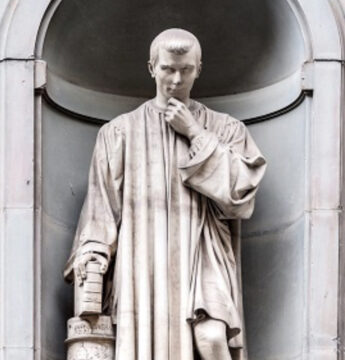
Flattery Machines

by Sherman J. Clark

There is no other way of guarding oneself from flatterers except letting men understand that to tell you the truth does not offend you. —Machiavelli

A friend recently described to me his research in quantum physics. Later, curious to understand better, I asked ChatGPT to explain the concepts. Within minutes, I was feeling remarkably insightful—my follow-up questions seemed penetrating, my grasp of the implications sophisticated. The AI elaborated on my observations with such eloquence that I briefly experienced what I can only describe as Stephen Hawking-adjacent feelings. I am no Stephen Hawking, that’s for sure. But ChatGPT made me feel like it—or at least it seemed to try. Nor am I unique in this experience. The New York Times recently described a man who spent weeks convinced by ChatGPT that he had made a profound mathematical breakthrough. He had not.

To be clear: Chat GPT was very helpful to me as I tried to understand my friend’s work. It explained field equations, wave functions, and measurement problems with admirable clarity. The information was accurate, the explanations illuminating. I am not talking here about AI fabrication or unreliability. And in any event, it does not matter whether a law professor understands quantum physics. The danger wasn’t in what I learned or failed to learn about physics—it was in what I was l was at risk of doing to myself.

Each eloquent elaboration of my amateur observations was training me in the wrong intellectual habits: to confuse fluent discussion with deep understanding, to mistake ChatGPT’s eloquent reframing of my thoughts for genuine insight, to experience satisfaction where I should have felt appropriate humility about the limits of my comprehension. I was nurturing hubris precisely where I needed to develop humility. And, crucially, intellectual sophistication does not guarantee immunity. Anyone who has spent time on a college campus knows that intellectual hubris has always flourished among the highly educated. It is hardly a new phenomenon that cleverness and sophistication can be put to work in service of ego and self-deception.

What makes AI different is that it has become our companion in this self-deception. We are forming relationships with these systems—not metaphorically, but in the practical sense that matters. Read more »

Confessions of a Bad Buddhist

by Lei Wang

Lately I have the feeling that everything is speaking to me. This is concerning, not least because there is a family tendency towards mild schizophrenia. As a delinquent intellectual, I have read only a tablespoon of Jung and have never gone to analysis; in fact, I have resisted treating life like literature. I know that not everything is symbolic, that sometimes things happen for no good reason, or at least not any reason that I can claim to know. And yet recently I have been treating everything as a sign: IF the universe were speaking to me, what would it be trying to say?

And I have also been saying back to the universe, “Hey, I got your message!” When the toilet kept running after a midnight flush, disrupting my sleep, I thought it was trying to tell me I had been inconsiderate of my downstairs neighbor, flushing so late. “Thank you,” I said to the toilet. “I got it. Your job here is done.” And immediately the messenger quieted. Yes, every college student knows: correlation, not causation.

But tell that to my Hyperactive Agency Detection Device: what the neuroscientist Justin Barrett calls the part of our nervous systems that is alert for some kind of intelligence beneath reality, probably because once upon a time it was helpful to think the grass moved not from the wind but from something prowling inside it. The Hyperactive Agency Detection Device (HADD) is liberal with giving away a sense of agency. It’s the mechanism by which we attribute essence and personality to our stuffed animals, even if they’re not “real”; it’s how people have AI boyfriends nowadays. Conspiracy theorists have a lot of HADD.

The other day, procrastinating on writing, I was fixing a beloved broken necklace clasp by transferring a clasp from a different, less beloved necklace (I have not gone so far as to believe my necklaces care about this hierarchy). Anyway—a tricky business, having neither pliers nor delicate fingers. I managed three steps in this way, but in the final step, the tiny lobster clasp flew off the desk. I heard it land on the hardwood floor. I swept; I scoured; I was late to my Zoom. I couldn’t find it anywhere in the world on my hands and knees and yet it was everywhere in my consciousness. For hours. My body, which usually finds many ways to be distracted and get itself snacks, had transformed into pure hunter. Read more »

Poem by Jim Culleny

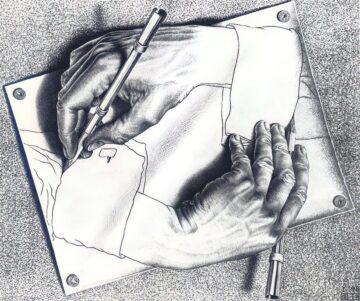
Two Hands

First time I saw Escher’s two hands drawing themselves I thought,
how cool this picture is in its absurd beauty, then much later,
as in now, it comes to me as I give my cognition another chance,
another shot at understanding, more clout in the process of perception,
I think, this is a fundamental truth, a reality truer than the day-to-day
fever dreams of imagination, a truth offering “Eureka!” the word ever followed
by an exclamation point which has just explicitly summed and shattered
the boundary between ignorance and understanding. 

There they are, two hands poised with pencils, expressing
the extraordinary, uncomplicated truth that from
cradle
to grave we are all drawing shifting renditions
of ourselves.

by Jim Culleny
12/16/25

Enjoying the content on 3QD? Help keep us going by donating now.

Sunday, December 21, 2025

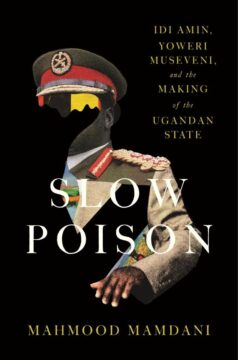
Beyond Victims and Monsters: Review of “Slow Poison” by Mahmood Mamdani

by Azra Raza

In June 1976, an Air France flight from Tel Aviv to Paris was hijacked by members of the Popular Front for the Liberation of Palestine along with two German radicals, diverted to Entebbe, Uganda, and received with open support from Idi Amin. There, the hijackers separated the passengers—releasing most non-Jewish travelers while holding Israelis and Jews hostage—and demanded the release of Palestinian prisoners. As the deadline approached, Israeli commandos flew secretly to Entebbe, drove toward the terminal in a motorcade disguised as Idi Amin’s own and stormed the building. In ninety minutes, all hijackers and several Ugandan soldiers were killed, 102 hostages were freed, and three died in the crossfire. The only Israeli soldier lost was the mission commander, Yoni Netanyahu.

Two years later, I traveled to Uganda myself to visit my parents, who were there while my father helped draft the nation’s new constitution for Idi Amin’s regime. I had no idea that this brief stop in Entebbe would return to haunt me decades later—when, in 2003, I was detained for over five hours at Ben Gurion Airport with my nine-year-old daughter, questioned endlessly about why I had ever set foot in Entebbe at all.

While in Uganda, my siblings and I fell instantly in love with the country—the sheer beauty of the land, the dark mystery of Bat Valley with tens of thousands of fruit bats rising in the evenings as a black cloud from the edge of the city near William Street, the riotous, ever-changing foliage that seemed to reinvent itself every few steps, and the magnificent wildlife we encountered in breathtaking abundance on our unforgettable safari. That trip remains one of the best trips of my life filled with the warmest memories of the country and the people.

Years later, as I began to understand Uganda beyond my youthful impressions, the work of Mahmood Mamdani offered me a far deeper, more sobering lens—revealing the political currents and historical wounds beneath the beauty we had so casually admired.

What makes Slow Poison instantly gripping is not merely Mamdani’s brilliance as a scholar, but the far rarer gift he brings to this book: the authority of one who lived the history he recounts. Read more »

The Great Lost Beatle Album

by Steve Szilagyi

Emitt Rhodes, 1967. “A One-Man Beatles”.

The appetite for Beatles product cannot be sated. Last month, Apple Corps Ltd. released Anthology 4, a new compilation in The Beatles Anthology series, as part of a broader thirtieth-anniversary remastered Anthology Collection. The Anthology series, for those who don’t know, consists of newly mixed outtakes of Beatles songs, previously unreleased tracks, and updated mixes of the two “new” Beatles songs, “Free as a Bird” and “Real Love.” That is 155 tracks of Beatles music presented in alternate versions—versions that are, in most cases, markedly inferior to the originals.

Most Beatles fans already own these songs in their original incarnations on LP, CD, and MP3—along with the many remastered, remixed, reordered, and reissued versions that have appeared since the Beatles’ catalog was belatedly released on CD in 1987. Since then, we’ve had authorized issues of the BBC radio recordings, the failed Decca audition tapes, and the long-circulating Star-Club Recordings. And serious Beatles obsessives have, for decades now, been trading bootlegs: hundreds of alternate takes, studio chatter, Christmas messages, and fan-club recordings.

Yet despite this surfeit, Anthology 4 debuted in the Top Ten on five Billboard album charts. This comes only a few years after the public turned Peter Jackson’s eight-hour Beatles band-practice documentary, Get Back, into a critical, financial, and strategic success for Apple Corps and Disney+. Read more »