
by Kyle Munkittrick
Silicon Valley has rediscovered ‘taste.’ Maybe it was Jony Ive at Stripe Sessions. Maybe it’s Substack aesthetes like Henry Oliver and David Hoang. Maybe it’s everyone trying to figure out if AI can have taste. But taste is, in every case, either ill or incorrectly defined, if at all. Let’s fix that.
Taste is the valuing of craft.
That is, taste is the ability to assess and appreciate a work based on deep understanding of techniques and skills used in the work’s creation, whether it’s a car, a novel, an app, a song, or an outfit.
In Jasmine Sun and Robin Sloan’s Utopia Debate “Can AI have taste?”, Sun argued that if the YouTube or Spotify algorithm ever gave you a good recommendation, then yes AI has taste, because it understood and recreated your taste.
No. Algorithms understand your preferences. Taste is not your preferences. Preferences are, however, the thing most commonly conflated with taste.
Your preferences are intuitive taste—a starting point. Preferences rarely ever fully match with taste. That is what a guilty pleasure is! You like it even though you know it’s not good (Stranger Things), or hate it even though it is (Hemingway). Paying close attention to what you like is an excellent way of building taste. Preferences are a great signal that something might be good.
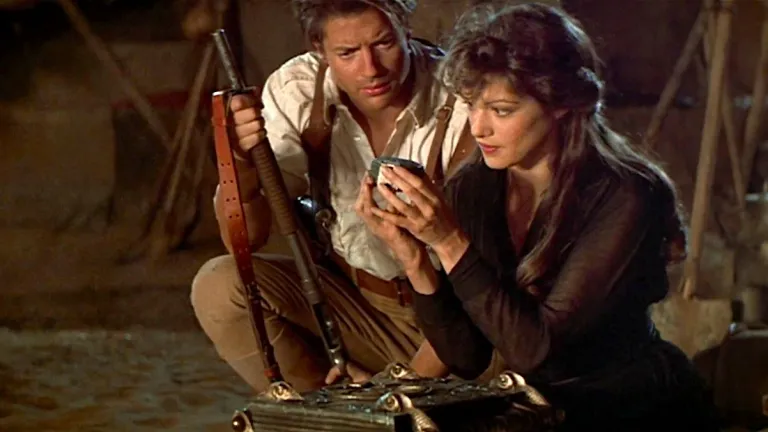
The opening paragraph of Roger Ebert’s review of the Mummy is a perfect demonstration of his exceptional taste being in seeming conflict with his preferences:
There is within me an unslaked hunger for preposterous adventure movies. I resist the bad ones, but when a “Congo” or an “Anaconda” comes along, my heart leaps up and I cave in. “The Mummy” is a movie like that. There is hardly a thing I can say in its favor, except that I was cheered by nearly every minute of it. I cannot argue for the script, the direction, the acting or even the mummy, but I can say that I was not bored and sometimes I was unreasonably pleased. There is a little immaturity stuck away in the crannies of even the most judicious of us, and we should treasure it.
Ebert contrasts his judgement of the craft (script, direction, acting, effects) with his visceral delight. His pleasure was, by his own admission, unreasonable. That is, unlike many movies he loved, he cannot entirely explain or justify his delight.
There are a few ways to interpret this vis-a-vis taste. One is that taste isn’t objective or based on craft, it’s ineffable. Another is that Ebert didn’t have good enough taste to explain and justify why he liked The Mummy. Both of these are obvious nonsense.
Ebert’s delight is hard to articulate because it’s based on tacit knowledge. Tacit knowledge, which great taste is built on, must often be first-hand experience or observation-based rather than written. It is difficult, if not nearly impossible, to articulate. Thus, Ebert had two options: 1) a pedantic and ultimately futile drill-down into why, precisely, The Mummy is actually quite good (e.g. shots like this one) 2) to share, as he did, his visceral child-like delight as a proxy for that tacit knowledge and as an expression of his taste. Ebert, trusting his skill as a writer to convey his delight, chose the latter. In doing so, he invites those who’ve not yet developed their taste to begin their journey.
The Mummy belongs to a class of films that are “better than they have any right to be.” Another is Mad Max: Fury Road. To enjoy it, which almost everyone does, you don’t need taste. Preferences for action movies draw you in, which allows you to also be exposed to Miller’s master classes in craft: screen ‘writing’, cinematography, coloring, world-building, and editing. Exposure to excellence develops taste. Taste is understanding why something is excellent, which both allows you to appreciate it all the more and to value it even if you don’t like it.
But taste is not merely a capability; it must be exercised.
Robin Sloan, contra Sun, argued that taste is “courageous decisions amid finite options.” Sloan is wrong about finitude, but is right about courageous decisions. AI struggles (currently) to have taste because it has no reputation to stake on its opinions. It cannot make courageous decisions, nor can it rise to defend excellent craft. Taste is always applied.
Taste results in and is demonstrated by choosing well. This is why taste is separate not just from preference, but also criticism, style, and design.
Criticism is not taste. Critics translate their taste into essays or videos that help others judge what to spend time on. Critics pass judgement on a work, yes, but they then must explain themselves, articulating why work succeeds or fails on the grounds of craft. In doing so, good critics translate their taste, thereby teaching it. Style is not taste. It is the result of taste. Stylish people are able to judge the craft of wardrobe and then execute on that, for others and themselves. Designers, be it technology, fashion, or visuals, are similar. Designers transform their taste into products that people use and, hopefully, enjoy. Design is how it works and feels to use, not just how it looks.
The very best applications of taste — beautiful criticism, exceptional style, meticulous design — often change public opinion, defending and celebrating the misunderstood, the different, and the new. Good taste is virtuous.
In being a virtue, taste comes with duty. While bad taste can be a lack of skill or experience, it is more often failure of duty. This can manifest in at least three ways: politics, populism, and snobbery.
Politics can blind one’s taste. Politics hides masterpieces that disagree with it or cheers dreck that agrees. The canon is an attempt to enshrine taste, to highlight that which has stood the test of time. The best art, the highest craft, touches the universal. Politics almost never does. There are phenomenal works of art that are also highly political—Dr. Strangelove, Huck Finn, Guernica—but succeed on the merits of their craft first and the message resonates through time, even as politics and parties change.
Claiming that a work is good just because it is morally right (based on your politics) is ultimately just preferences in disguise. It is not a recognition of craft. It is against good taste to hold one’s nose to praise something poorly made for its ‘message’. Worse, it undermines and discredits your ability to celebrate the rare few excellent political works when they do come along. Do not abdicate your taste to politics.
Similarly, taste should not succumb to the collective preferences of populism. Rebecca Yarros’ Fourth Wing is stupendously popular, as are the sequels. This does not make them good. They are, in fact, terrible in terms of craft. The characters are either cliche or goal-less plot machines, the world-building and romantic tension is entirely built on Lost-style mystery boxes, and despite that, you can see what’s coming from a million miles away. On a pure reading level, however, it’s fun as hell. It’s not quite The Mummy, but it’s close. Certainly on par with the Mission Impossible and Avatar franchises, which are both exceedingly stupid and also perhaps among the last remaining reasons to see movies in a real theater. It would, however, be a kind of dereliction of duty to say Fourth Wing is a good book. It’s an entertaining book, exceptionally so. But it still must be said that it is a poorly crafted book.
“Let people enjoy things!” is the barbarian’s retort. You’re a snob! Stop. I can point out the failures of craft without telling you that you shouldn’t like it or judging you if you do. This is the courage Sloan was talking about. Good taste can and often must contradict popular opinion.
Thus, finally, we come to snobbery. A snob is someone with good taste who has made the same mistake as an amateur: confusing taste with preference. Snobs make one of two mistakes, both of which are abdications of the duties of good taste. The first is to judges a person for what they like and appreciate. No. Taste judges works, not people. Further, good taste teaches. No one is born with taste and no one has good taste in all things. The snob forgets this.
The second form of snobbery is mistaking popularity as a sign of lack of craft. This is a fallacy. Seinfeld, The Beatles, Georgia O’Keeffe, the iPhone, and The Lord of the Rings are all extremely popular. To say they lack craft is treasonous to taste. We are shown, once again, the value of the canon; it serves as a bulwark of taste against the tides of mass opinion in all its forms.
“But,” the savvy snob asks, “isn’t ceding ground to poor taste itself a demonstration of a lack of taste? An abandonment of virtue, done out of a misguided attempt to spare feelings?” The snob has a point. The virtue of taste demands we neither be snobs nor pretend things are good because they are liked. What are we to do?
The answer is: be like Ebert. We all have our indefensible pleasures. Courageously celebrate that which you irrationally love. Fourth Wing is a badly written book that I enjoyed reading.
Taste is a form of authority, but to be virtuous, it must also be vulnerable and open. Taste is not armor, it is a syllabus. To dismiss or demean those who do not yet have good taste means you do not sufficiently value your craft. Taste is what allows both curation and the canon to be worthy of the name. It is a privilege to have taste, yes, but also a responsibility to bring it to others, not to keep them out. The best taste is almost a kind of evangelism.
As Corey Beasley points out the virtue of taste is that it can get us talking to one another:
“Taste, then, brings the Intellectual into conversation with the larger popular culture (surely an important world for an intellectual to understand), and taste brings the Populist into conversation with ideas and forms that would rarely, if ever, be permitted to find expression in popular culture. In either scenario, the mind expands. The nice thing, too, about art is that you don’t need to like it for it to change your life.”
Taste is the virtue of valuing craft, with both the power and the duty that entails. Taste is meant to be applied, shared and explored. Develop good taste, bring others on your journey, and celebrate it wherever you find it.
***
Enjoying the content on 3QD? Help keep us going by donating now.