
by Paul Braterman
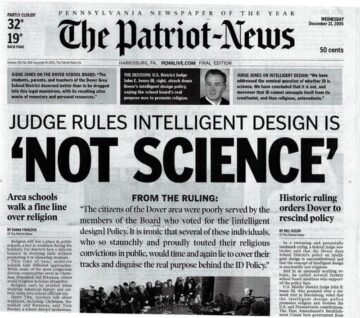 Last Saturday was the 20th anniversary of the day on which Judge John Jones III handed down his decisive ruling, in the case of Kitzmiller v. Dover Area School District, that Intelligent Design was a version of creationism, which is religion and not science, and as such violated the Establishment Clause of the US Constitution and could not be taught within the publicly funded school system. Given changes in the US legal landscape, we need to ask whether this ruling is still secure. And given everything else that is happening in the US at the moment, we may wonder whether this even matters. Here I lay out why I think that the ruling is not necessarily secure, review what is at stake, and argue that it matters very much indeed.

What we now call Christian Nationalism has its roots in Ronald Reagan’s 1980 presidential campaign, when creationists such as Tim LaHaye fused together political conservatism, the newly adopted abortion issue, literalist Bible-based religion, and the rejection of evolution science as Humanist, un-American, and as we would now say Woke. We can see the influence of these ideas today in Trump’s administration, where at least three cabinet ministers (Pete Hegseth, Scott Turner at HUD, and Doug Collins at the VA) are creationists, as are Speaker Mike Johnson, Mike Huckabee, ambassador to Israel, and Russell Vought who at the Office of Management and Budget has enormous day-to-day influence. To these we might add Vice President Vance, and Health [sic] Secretary RF Kennedy Jr. These are not creationists, but share their disdain for the scientific and academic establishments; Vance rose to stardom by telling the US Religious Right that “the Professors are the enemy,” while Kennedy’s onslaught on established science is all too well-known. Thus creationism is closely coupled to the rest of the Regime’s war on reality.
As for the claim, pervasive in the creationist literature, that evolution acceptance involves religion denial, I should mention here that Judge Jones himself is a committed Lutheran, and has offered himself as an example of the compatibility of Christian belief and evolution acceptance, while Ken Miller, a crucial witness at the trial and indefatigable campaigner against creationism, is a devout Catholic, author of Finding Darwin’s God, and co-author of a widely used high school textbook, Miller and Levine Biology.
According to its website, the mission of the Thomas More Law Center is to
Preserve America’s Judeo-Christian heritage; Defend the religious freedom of Christians; Restore time-honored moral and family values; Protect the sanctity of human life; Promote a strong national defense and a free and sovereign United States of America. The Law Center accomplishes its mission through litigation, education, and related activities.
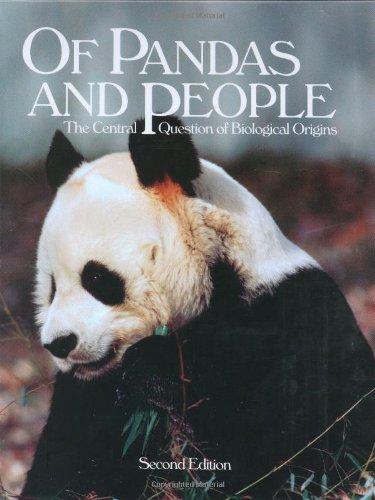
This places it firmly within the Christian Nationalist movement, as I described it earlier. As for Intelligent Design, it is the view that nature in general, and the appearance of new groups of living things in particular, is controlled by an unspecified designer (or Designer). This view is clearly incompatible with evolution science. To quote Pandas,
Most significantly, all design proponents hold that the major groups of organisms had their own origins.
The identity of this designer is not specified, although the Discovery Institute, which is a major promoter of Intelligent Design, seems more recently to be abandoning the pretence that the designer is anything other than God.
The board accepted copies of Pandas for the school, and also ordered the biology teachers to read to their classes a statement declaring among other things that
Because Darwin’s Theory is a theory, it is still being tested as new evidence is discovered. The Theory is not a fact. Gaps in the Theory exist for which there is no evidence. A theory is defined as a well-tested explanation that unifies a broad range of observations.
Intelligent design is an explanation of the origin of life that differs from Darwin’s view. The reference book Of Pandas and People, is available for students to see if they would like to explore this view in an effort to gain an understanding of what intelligent design actually involves.
Very courageously, teachers refused to present such nonsense to their classes, since that would violate their professional ethic, and the statement was then read out by the school superintendent.
A group of outraged parents, among them Tammy Kitzmiller, promptly took the School District to court, invoking the Establishment Clause, and their cause was embraced by the American Civil Liberties Union and the National Center for Science Education, who assembled a formidable coalition of expert witnesses. The ensuing trial has been the subject of several books, and a PBS documentary, Judgement Day, still available on YouTube, in which some of the participants play themselves. There is also a moving compilation here of short statements by some of those involved.

Of Pandas and People had its own interesting evolutionary history. The academic editor, Charles Thaxton, was an Old Earth creationist, who had testified in Kansas State hearings to his rejection of common descent, while the co-authors, Dean Kenyon and Percival Davis,2Barbara Rorrest and Paul R. Gross, Creationism’s Trojan Horse: The Wedge of Intelligent Design, Oxford University Press, 2004. page 275 were Young Earth creationists. The original title was Biology and Creation, and its target was the creationist market that appeared to be opening up when, in 1981, the State of Louisiana passed a law saying that if evolutionary science is to be taught, creation science should be taught as well. This law was challenged by a group of parents, teachers, and ministers, on First Amendment grounds, with support from numerous scientists including 77 Nobel Prize winners, and in the 1987 case Edwards v. Aguillard, the Supreme Court upheld their challenge 7-2. In doing so they invoked the Lemon test, which requires a secular purpose for government activity, and opposes government activity which advances (or indeed impedes) religion.
Nothing daunted, the authors simply changed the original title to Of Pandas and People, and partly rewrote the text, replacing “creation science” and “creationism” with “intelligent design”. During the discovery phase of the Kitzmiller trial, the plaintiffs obtained copies of the intermediate drafts, one even containing the expression “cdesign proponentsists”. The Missing Link!
It is also noteworthy that the Pandas (1989) was the first book to refer repeatedly to “intelligent design,” predating the work of Phillip Johnson and the Discovery Institute in the 1990s. Thaxton and Kenyon are currently listed as Fellows of the Discovery Institute’s Center for Science and Culture, which exists to promote Intelligent Design, while simultaneously maintaining that this is a different thing from creationism.
The Discovery Institute has repeatedly defended Pandas, and several Discovery Institute Fellows, including Stephen Meyer and William Dembski, provided expert witness statements in preparation for the Kitzmiller trial although, with the honourable exception of Michael Behe, they withdrew without giving evidence after a complicated dispute with the Thomas More Law Center.
Judge Jones now has understandable concerns about the direction of the US legal system itself. In his 2005 judgement, he also used the Lemon test, but this is no longer in effect. As he noted in 2022,
While applying the Lemon test is hardly perfect, I found it to be a sound and logical way to evaluate the case that came before me.
As a result of the recent Kennedy decision [which permitted prayer by a high school coach after games], federal judges are now directed to utilize a history-based approach in place of the more structured Lemon test when deciding cases. I would respectfully submit, as one who used the Lemon test and found it to be soundly crafted, that this new approach will lead to increasingly disparate decisions by lower court judges that will be based on ad hoc analysis and excessively subjective findings.
The result will necessarily be that the line of separation between church and state will become increasingly blurred. I am quite sure that this is precisely what the majority intended, but I would submit that we are about to enter an era where, like it or not, we will see the Supreme Court allow much more religion in the public square. Not an earthquake to be sure, but at least an aftershock of major proportions.
Remember that the 1987 case Edwards v. Aguillard had also been decided on the basis of the Lemon test
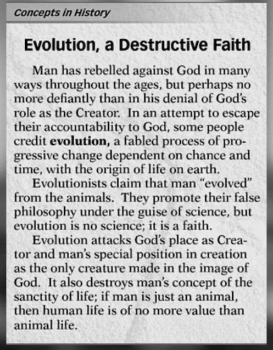
Very recently, Judge Jones has told us that the case was so clear that he would rule the same today. I note however that other judges might feel differently, and that the case was made much easier to decide by what he had referred to as the School District board’s “breathtaking inanity” (the existing board members were soundly defeated in an election that took place while the judgement was being written). Moreover, the increasing use by Republican-dominated States, which is where creationism tends to be strongest, of school vouchers which parents can use at their discretion, could provide a pathway whereby public money, and pupils who would otherwise be publicly educated, are funnelled towards private schools not bound by the Establishment Clause. In Alabama, this is already leading to the use in these schools of textbooks from Bob Jones University and Abeka, whose offerings explicitly describe evolution as scientifically incorrect, satanically inspired, and motivated by the wish to justify immorality. Unsurprisingly, the Abeka texts also play down the evils of slavery, and explain the rise of the Ku Klux Klan as an understandable reaction to the incompetence of State governments dominated by freedmen.

I had forgotten how bad Pandas actually is. Its title is a reference to the fact that the term “panda” is applied to two very different animals, the giant panda which is a bear, and the red panda, which is more closely related to raccoons. Although they are only distantly related, both these species have separately evolved a false thumb, a striking example of convergent evolution. All this has been known for over a century, with recent confirmation by DNA phylogenies, but for some strange reason the book chooses to present this as evidence of the inadequacy of evolution science, in favour of Intelligent Design.
The book is obsessed with Darwin (died 1882), whose name appears in some shape or form 262 times in its 144 pages, repeatedly describes current evolution science as Darwinian (a little bit like describing current atomic theory as Daltonian), and completely misrepresents recent scientific findings to make them appear contrary to evolutionary thinking, when in fact the very opposite is true.
This obsession with Darwin runs throughout the entire creationist literature. It has the rhetorical effect of trivialising the work of thousands of other scientists, facilitating the reiteration of objections that were valid in 1859 but long since resolved, and enabling mined quotes from Darwin to be presented as criticisms of present-day evolution science.
Arguments such as those in the book have attracted more attention from philosophers than they deserve. Around the time of the trial, I had a long email correspondence with the noted philosopher, Alvin Plantinga, towards the end of which he said that Behe, Dembski, and Thaxton, advocates of three different versions of Intelligent Design, had produced arguments that required an answer. In reply, I said that I totally agreed with him; the answer was, in each case, that they were wrong. Prof Plantinga did not reply.
For many reasons, I think it is important to put forward a sampling of the book’s many errors, which I do here in an Appendix. The Discovery Institute (see e.g. here and here) continues to maintain that Kitzmiller was wrongly decided, and to promote Pandas on its website.
I thank Glenn Branch, Wesley Elsberry, Joe Felsenstein, John Harshman, Kim Johnson, Nick Matzke, and Larry Moran, for helpful comments and personal reminiscences. However, the responsibility for any errors and omissions is entirely my own
Appendix: The book starts off by exploiting the confusion, universal in the creationist literature, between the admittedly unresolved problem of the origin of life, and the validity of the evidence for evolution. This is just like questioning our enormous body of knowledge about how languages evolve, because the origin of language itself remains obscure. There is the predictable heavy focus on the limitations of the Urey-Miller experiment, which demonstrates how easily the building blocks of life can arise (but admittedly nothing more), with the unfounded objection that molecular oxygen was present on Earth from the earliest times (it wasn’t).
We have the question-begging analogy between the DNA code, and the use of symbolic codes (language) in communication, although it was clear by the late 1960s that around 90% of the human genome lacks function. Overall probabilities of changes involving more than one gene are miscalculated by pretending that all the changes have to happen at once, and there is no awareness of the new opportunities offered by gene duplication (which by 1970 had been the subject of an entire text), or of how one change alters the fitness landscape to permit others.
The book concedes the reality of formation of new species, but compares it to the limited degree of change accomplished by animal breeders, and asserts that it can only occur “within the existing higher level blueprint of the organism’s whole genome.” This is obviously a preparation for the theory of variation within “created kinds,” developed in the 1940s by the Young Earth creationist Frank Lewis Marsh to explain how all the animals could have fitted into Noah’s Ark. The chapter on The Fossil Record predictably focuses on gaps, and claims that
the various taxa are not connected to one another. There is no gradual series of fossils leading from fish to amphibians, or from reptiles to birds… Fish have all the characteristics of today’s fish from the earliest known fish fossils, reptiles and the record have all the characteristics of present-day reptiles, and so on.
To be fair, the spectacular discoveries of Tiktaalik, and of the sequence leading from a hoofed mammal to whales, still lay in the future, but even in its own time, and indeed long before, the claims in this passage had been soundly refuted. The intermediate position of Archaeopteryx between reptiles and modern birds was recognized by 1870, although it remains unclear whether Archaeopteryx is on the direct line leading to modern birds, or merely a close cousin.
After quote-mining Darwin, the book does indeed discuss Archaeopteryx, pointing out that it has modern style feathers, but “eight [unspecified] reptilian features,” incompatible in some unstated way with “current Darwinian [sic] theory.” So after lamenting the absence of intermediate fossils, the book immediately rejects the most noted and venerable example, on the grounds that its properties are intermediate.
Next is the evidence from the fossil record for punctuated equilibrium, misrepresented in order to lay the groundwork for claims of separate creation, with the assertion that the search for natural causes of the formation of new taxa, and the appeal to Intelligent Design as ad hoc explanation, make comparable use of philosophical assumptions. Sure enough, in a later chapter the dotted lines by which the book at this point represents the formation of new taxa is simply removed, on the grounds that the actual birth of the new taxon was not observed, and replaced by de novo appearance. Thus the branching tree of life is replaced by a series of parallel lines, with utter disregard for all the evidence for common ancestry.
A chapter on homology refers to the “body plan” shared more or less completely by all mammals, without mentioning that this is most easily explained by common descent. It also blurs the crucial distinction between homology and analogy, by invoking such superficial similarities as that between the European wolf and the marsupial Tasmanian wolf. Worse. we are told that the existence of analogies is an argument against evolution by natural processes, because
This amounts to the astonishing claim that are random, undirected process of mutation and natural selection somehow hit upon identical features several times in widely separated organisms.
Here we have one of the central fallacies of creationist reasoning. Mutation may be random, but natural selection is the very opposite, pushing change in the direction of increased fitness. And similar challenges are likely to evoke similar evolutionary responses, as we see.
We also have here what might politely be referred to as extreme selection bias, since on detailed examination, analogous features are anything but “identical.” The streamlined shape of a whale, as the book points out, is analogous to the streamlined shape of a shark, but the analogy is so superficial that whales swim by moving their tails up and down, while sharks swim by moving them from side to side.
Worst of all are the two chapters on Biochemical Similarities. These use the then newly available comparisons of amino acid sequences in the protein cytochrome-c in different organisms to construct what would be, if true, a fatal argument against the evolutionary account. Here the authors say, in detailed discussion (p. 140), that
In this and countless other comparisons, it has proved impossible to arrange protein sequences in a macro evolutionary sequence corresponding to the expected transitions from fish to amphibian to reptile to mammal. There is no hint of intermediate in these data. All are virtually every distant from the dogfish. This is truly amazing, because amphibia are usually considered intermediate between fish and mammals.
This is what they were referring to in their earlier claim (p. 40) that
Major advances in molecular biology have given us new quantifiable data on the similarities and differences in living things. We must never give the impression that our present scientific knowledge has provided all the answers, but we can say that the data have not served to support a picture of the organic world consistent with Darwinian evolution. [Emphasis added]
The same argument had occurred earlier in Michael Denton’s 1985 Evolution – A Theory in Crisis.
Indeed, if it really were true that sequence data really had “not served to support” the evolutionary narrative, that would have been a fatal objection. So what’s wrong with this argument?
It is based on a fundamental confusion between ancestral and existing species. The authors are committing what I have referred to as the Frozen Frog Fallacy, which makes the naïve common-sense assumption that since amphibians are older than reptiles, present-day amphibians will have been less affected at the molecular level by the passage of time. But time does not stand still, and amphibians, just as much as reptiles, have been evolving since the time that amphibians and reptiles parted company.
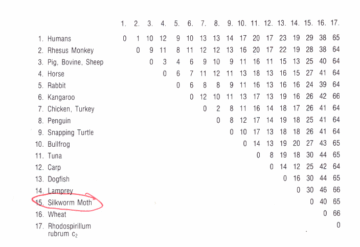
Left: differences in cytochrome-c, as reported by Pandas. Note that for any chosen pair, the number of differences should relate to the time since last common ancestor, as found.
Consider what has happened since dogfish and mammals last shared a common ancestor. First we have the split between cartilaginous fish and bony fish, some 460 million years ago (times given by Timetree, as an average of published estimates). 430 million years ago, amphibians emerged from bony fish, and gave rise in turn to reptiles, 350 million years ago, while the split between reptiles and mammals (actually, “reptile” is not a well-defined biological term, but that does not matter here) occurred some 30 million years later. But if you compare a dogfish with a tuna, or a frog, or a turtle, or a pig, Timetree will in each case give you the same evolutionary distance of 460 million years, because that is how long ago the entire evolutionary line that gave rise to present-day bony fish, amphibians, reptiles, pigs, and you and me split from the line that gave rise to dogfish and other sharks.
Forgive me for labouring this point, but such errors are central to the book’s entire argument. Contrary to their claims, the data overwhelmingly support a picture of the organic world completely consistent with what they insist on calling “Darwinian” evolution, and difficult to explain in any other way. What they do not support is the authors’ flawed reasoning, understandable in first-year undergraduates, but inexcusable in textbook writers.
Footnotes
- 1Specifically the 2nd edition, 1993, henceforth Pandas, which is the version that I discuss here.
- 2Barbara Rorrest and Paul R. Gross, Creationism’s Trojan Horse: The Wedge of Intelligent Design, Oxford University Press, 2004. page 275