Cosmic inflation: ‘Spectacular’ discovery hailed

Jonathan Amos at the BBC:

Bicep1Researchers believe they have found the signal left in the sky by the super-rapid expansion of space that must have occurred just fractions of a second after everything came into being.

It takes the form of a distinctive twist in the oldest light detectable with telescopes.

The work will be scrutinised carefully, but already there is talk of a Nobel.

“This is spectacular,” commented Prof Marc Kamionkowski, from Johns Hopkins University.

“I've seen the research; the arguments are persuasive, and the scientists involved are among the most careful and conservative people I know,” he told BBC News.

The breakthrough was announced by an American team working on a project known as BICEP2.

This has been using a telescope at the South Pole to make detailed observations of a small patch of sky.

The aim has been to try to find a residual marker for “inflation” – the idea that the cosmos experienced an exponential growth spurt in its first trillionth, of a trillionth of a trillionth of a second.

More here.

A PASSAGE TO PAKISTAN: A WARY BANGLADESHI’S VISIT TO A FAMILIARLY FOREIGN LAND YIELDS PLEASANT SURPRISES

K. Anis Ahmed in Newsweek Pakistan:

ScreenHunter_563 Mar. 18 11.05In 1971, my father—a Bengali—was still an officer in the Pakistan Army and he had been posted to the western side of the country. My mother, only 25 at the time, faced the prospect of traveling alone with both my brother, barely a year and a half, and me—practically a newborn—2,000 kilometers from her home in Dhaka. So she did the smart thing; she left me with my grandparents to go set up home first. My grandmother would follow in a few weeks and deposit me with my parents. Before that trip could take place though, war broke out.

The story of my family is not atypical of what many Bangladeshi families went through in 1971. My father’s youngest brother, a 17-year-old in Jessore, left home one morning with the hope of crossing the border to join the Mukti Bahini; he was never found again. Another uncle spent most of the nine months of war on the run, a hunted man. My mother’s brother walked all the way past the border to join the famous camp of Khaled Mosharraf. He came back to Dhaka with two grenades in his pockets, but was arrested by the Pakistani Army before he could carry out his operation. Fortunately, he suffered no worse than imprisonment. Another uncle was also captured, and tortured.

Everyone lived in terror and penury common to war times, and in dreadful uncertainty about the future. Despite the loss and the torment, my family was lucky. There are families who lost most of their loved ones; we lost ultimately only my father’s youngest brother.

Among those who made it back home, though, my parents and brother were the last to return. They had become interned in West Pakistan along with scores of other Bengali officers and their families during the war. For families on either side of the separated nations, the hardest part was not knowing when, or whether, they might be united again.

More here.

Monday, March 17, 2014

3QD Politics & Social Science Prize Finalists 2014

Hello,

Winner 2014 science politics (1)The editors of 3QD have made their decision. The twenty semifinalists have been winnowed down to six, and three wildcard entries added. Thanks again to all the participants.

Once again, Carla Goller has provided a “trophy” logo that our finalists may choose to display on their own blogs.

So, here it is, the final list that I am sending to Mark Blyth, who will select the 1st, 2nd, and 3rd prize winners: (in alphabetical order by blog name here)

  1. Corey Robin: Jews Without Israel
  2. Family Inequality: State of Utah falsely claims same-sex marriage ban makes married, man-woman parenting more likely
  3. Forbes: How Putin Invented The New Authoritarianism
  4. Los Angeles Review of Books: I Am Malala : The Girl Who Stood Up For Education and Was Shot by the Taliban
  5. Pandaemonium: In Defense of Diversity
  6. Social Pulses: Democratic Austerity: Semi sovereign states, semi sovereign peoples
  7. The New Yorker: The Trial of Pervez Musharraf
  8. The Philosopher's Stone: How to Do History
  9. U.S. Intellectual History Blog: Not Everyone Wants to Hear Lee Atwater Sing the Blues

We'll announce the three winners on March 24, 2014.

Good luck!

Abbas

P.S. The editors of 3QD will not be making any comments on our deliberations, or the process by which we made our decision, other than to simply say that we picked what we thought were the best posts out of the semifinalists, and added three others which we also liked.

Sunday, March 16, 2014

Major announcement coming! Gravitational Waves in the Cosmic Microwave Background?

Sean Carroll in Preposterous Universe:

Bicep2Major announcement coming! That much is clear, from this press release: on Monday at noon Eastern time, astronomers will “announce a major discovery.” No evidence from that page what the discovery actually is. But if you’re friends with a lot of cosmologists on Facebook/Twitter (or if you just read the Guardian), you’ve heard the rumor: the BICEP2experiment has purportedly detected signs of gravitational waves in the polarization of the cosmic microwave background radiation. If it’s true (and the result holds up), it will be an enormously important clue about what happened at the very earliest moments of the Big Bang. Normally I wouldn’t be spreading rumors, but once it’s in the newspapers, I figure why not? And in the meantime we can think about what such a discovery would mean, regardless of what the announcement actually turns out to be (and whether the result holds up). See also Richard Easther, Résonaances, Sesh Nadathur, Philip Gibbs, Shaun Hotchkiss, and Peter Coles. At a slightly more technical level, Daniel Baumann has a slide-show review.

Punchline: other than finding life on other planets or directly detecting dark matter, I can’t think of any other plausible near-term astrophysical discovery more important than this one for improving our understanding of the universe. It would be the biggest thing since dark energy. (And I might owe Max Tegmark $100 — at least, if Planck confirms the result. I will joyfully pay up.) Note that the big news here isn’t that gravitational waves exist — of course they do. The big news is that we have experimental evidence of something that was happening right when our universe was being born.

More here.

Tony Benn, 1925-2014

Tony-Benn-011 (1)

Patrick Wintour and Rowena Mason in The Guardian:

Tony Benn – the lodestar for the Labour left for decades, orator, campaigner, diarist and grandfather – has died aged 88 after a long illness, his family has announced.

Tributes poured in for one the country's most extraordinary and controversial MPs, who, in what he described as the blazing autumn of his career outside Westminster, came to be regarded as an anti-establishment voice for democracy.

Although he said self-deprecatingly in one of his later interviews: “All political careers end in failure; mine just happened to end earlier than most,” many regarded his final decades outside Westminster with greatest affection.

In a statement, his children Stephen, Hilary, Melissa and Joshua said: “It is with great sadness that we announce that our father Tony Benn died peacefully early this morning at his home in west London surrounded by his family.

“We would like to express our heartfelt thanks to all the NHS staff and carers who have looked after him with such kindness in hospital and at home.

“We will miss above all his love which has sustained us throughout our lives. But we are comforted by the memory of his long, full and inspiring life and so proud of his devotion to helping others as he sought to change the world for the better.

More here.

The Conscience of Syria

Yassin-web2

Danny Postel and Nader Hashemi interview with Yassin al-Haj Saleh in Boston Review:

For many in the West, the situation in Syria looks very confusing. On August 31, 2013, for example, President Obama said the “underlying conflict in Syria” was due to “ancient sectarian differences.” It is often heard – both in official foreign policy circles and among leftists and antiwar activists – that there are “no good guys” in the Syrian conflict, that all sides are equally bad, and therefore there is no one to support. What do you think of this stance? How would you respond to those who say there is no one to support in Syria?

Actually I find it confusing that many people in the West find our situation in Syria confusing. Is it a matter of information and knowledge? I tend to think that it is a matter of politics. Confusion could be a function of a certain position toward our struggle: inaction, which in my opinion is the worst kind of action, not from our perspective as Syrians but also from a regional and international perspective, not to mention humanity and human solidarity with the oppressed.

Sectarian differences? What a subtle analysis! When an armed structure uses the supposedly national army, media organs, and resources to kill its own people when they oppose its tyrannical rule—this can hardly be considered a sectarian conflict. We’re not talking about just any structure—we’re talking about the repressive state apparatus of the Assad regime. It thus becomes absurd to explain the Syrian struggle in sectarian terms. To the best of my best knowledge, states are not sects, are they?

I am by no means turning a blind eye toward sectarian tensions and conflicts in Syrian society. Many writers, myself included, have written about sectarianism in Syria. My main conclusion is that sects are politically manufactured entities, and sectarianism is a political tool for controlling people, a strategy for political domination.

More here.

Depression is a Choice

500px-The_Great_Asset_Bubble.svg

Steve Waldman over at his website (image from wikimedia commons):

We are in a depression, but not because we don’t know how to remedy the problem. We are in a depression because it is our revealed preference, as a polity, not to remedy the problem. We are choosing continued depression because we prefer it to the alternatives.

Usually, economists are admirably catholic about the preferences of the objects they study. They infer desire by observing behavior, listening to what people do more than to what they say. But with respect to national polities, macroeconomists presume the existence of an overwhelming preference for GDP growth and full employment that simply does not exist. They act as though any other set of preferences would be unreasonable, unthinkable.

But the preferences of developed, aging polities — first Japan, now the United States and Europe — are obvious to a dispassionate observer. Their overwhelming priority is to protect the purchasing power of incumbent creditors. That’s it. That’s everything. All other considerations are secondary. These preferences are reflected in what the polities do, how they behave. They swoop in with incredible speed and force to bail out the financial sectors in which creditors are invested, trampling over prior norms and laws as necessary. The same preferences are reflected in what the polities omit to do. They do not pursue monetary policy with sufficient force to ensure expenditure growth even at risk of inflation. They do not purse fiscal policy with sufficient force to ensure employment even at risk of inflation. They remain forever vigilant that neither monetary ease nor fiscal profligacy engender inflation. The tepid policy experiments that are occasionally embarked upon they sabotage at the very first hint of inflation. The purchasing power of holders of nominal debt must not be put at risk. That is the overriding preference, in context of which observed behavior is rational.

I am often told that this is absurd because, after all, wouldn’t creditors be better off in a booming economy than in a depressed one? In a depression, creditors may not face unexpected inflation, sure. But they also earn next to nothing on their money, sometimes even a bit less than nothing in real terms. “Financial repression! Savers are being squeezed!” In a boom, they would enjoy positive interest rates.

That’s true. But the revealed preference of the polity is not balanced. It is not some cartoonish capitalist-class conspiracy story, where the goal is to maximize the wealth of exploiters. The revealed preference of the polity is to resist losses for incumbent creditors much more than it is to seek gains. In a world of perfect certainty, given a choice between recession and boom, the polity would choose boom. But in the real world, the polity faces great uncertainty.

More here.

Trapped at the border of impulse and conscience

Namit Arora in The Sunday Guardian:

ScreenHunter_558 Mar. 16 18.32What sort of a Pakistan was this that had entered their village like some maddened bull, trampling humanity under its hooves and turning everything upside down?” wonders an anguished man in Savage Harvest: Stories of Partition by Mohinder Singh Sarna (1923-2001), translated from Punjabi and introduced by his son and diplomat, Navtej Sarna. On both sides of the new western border between India and Pakistan, an orgy of violence had broken out in towns and villages. It was Hindus and Sikhs vs. Muslims, with both sides pillaging, raping, and killing, leaving a million dead, 12-18 million refugees, and a still-poisoned well of politics in the region.

Over the decades, Partition has produced many popular and critical narratives: its causes, villains, avoidable mistakes, its defining features and aftermath. While such narratives can never be immune from subjective perspective, much of it — despite notable work from scholars like Gurharpal Singh, Ian Talbot, Urvashi Butalia, Perry Anderson, Gyanendra Pandey, and Jan Breman — remains mired in crude nationalistic politics, taboos, and mythologies of India, Pakistan, and Great Britain.

In 2011 for instance, when Jaswant Singh, former defense minister of India and a senior member of BJP, wrote a book in which he blamed Nehru more than Jinnah for Partition and even praised many aspects of Jinnah's personality, the BJP expelled him from the party and banned his book in Gujarat. This happened despite the fact that Singh was articulating an increasingly common view among scholars.

More here.

The only question is when, not if, humanoid robots will work, play and war beside us

Michael Belfiore in Aeon:

ScreenHunter_557 Mar. 16 18.16Robots in the real world usually look nothing like us. On Earth they perform such mundane chores as putting car parts together in factories, picking up our online orders in warehouses, vacuuming our homes and mowing our lawns. Farther afield, flying robots land on other planets and conduct aerial warfare by remote control.

More recently, we’ve seen driverless cars take to our roads. Here, finally, the machines veer toward traditional R U R territory. Which makes most people, it seems, uncomfortable. A Harris Interactive poll sponsored by Seapine Software, for example, announced this February that 88 per cent of Americans do not like the idea of their cars driving themselves, citing fear of losing control over their vehicles as the chief concern.

The main difference between robots that have gone before and the newer variety is autonomy. Whether by direct manipulation (as when we wield power tools, or grip the wheel of a car) or via remote control (as with a multitude of cars and airplanes), machines have in the past remained firmly under human control at all times. That’s no longer true and now autonomous robots have even begun to look like us.

More here.

The unflinching fiction of Ludmilla Petrushevskaya

William Deresiewicz in The Nation:

Deresiewicz_dreadandwonder_ba_img_0We are likely to hear a lot more of this woman. Some October, perhaps, from the Nobel Prize committee. She certainly has the stature. Translated into many languages, the winner of multiple major awards, not only is she Russia’s leading dramatist by wide agreement, she is also its leading author of fiction, the mother of contemporary women’s writing in the country. In the words of Anna Summers, her English translator, “She is the only living Russian classic. No one comes near.” Students study her in high schools. Scholars write their dissertations on her both in Russia and abroad. Her seventieth birthday was marked by an official national celebration. As for her plays, which are staged around the world, a handful are typically running in Russia at any given time, and one, Moscow Choir, has been a staple of the White Nights cultural festival in St. Petersburg for over twelve years. Still going strong at 75, an accomplished singer, performer and painter to boot, she is also co-scenarist of Tale of Tales, repeatedly selected as the greatest animated film of all time. In The Cambridge Introduction to Russian Literature, only two post-Stalinist writers are given sections of their own. One is Aleksandr Solzhenitsyn. The other is Ludmilla Petrushevskaya.

That we are still so unfamiliar with her in America is partly her own doing, in several senses.

More here.

Loving Animals to Death

James McWilliams in The American Scholar:

ScreenHunter_556 Mar. 16 18.03Bob Comis of Stony Brook Farm is a professional pig farmer—the good kind. Comis knows his pigs, loves his pigs, and treats his pigs with uncommon dignity. His animals live in an impossibly bucolic setting and “as close to natural as possible.” They are, he writes, so piggy that they are Plato’s pig, “the ideal form of the pig.” Comis’s pastures, in Schoharie, New York, are playgrounds of porcine fun: “they root, they lounge, they narf, they eat, they forage, they sleep, they wallow, they bask, they run, they play.” And when the fateful day of deliverance arrives, “they die unconsciously, without pain or suffering.”

Comis’s patrons—educated eaters with an interest in humanely harvested meat—are understandably eager to fill their forks with Comis’s pork. To them, Comis represents a new breed of agrarian maverick intent on bucking an agricultural-industrial system so bloated that a single company—Smithfield Foods—produces six billion pounds of pork a year. Comis provides a welcome alternative to this industrial model, and if the reform-minded Food Movement has its way, one day all meat will be humanely raised and locally sourced for the “conscientious carnivore.”

Except for one problem: Comis the humane pig farmer believes that what he does for a living is wrong. Morally wrong. “As a pig farmer, I lead an unethical life,” he wrote recently on The Huffington Post. He’s acutely aware that he “might indeed be a very bad person for killing animals for a living.” Comis’s essential objection to his line of work is that he slaughters sentient and emotionally sophisticated beings. His self-assessment on this score is unambiguous.

More here.

Réflexion autour du bassin

From lensculture:

Lens I was captivated by this dream-like photo series, Reflexion Autour du Bassin (Reflection Around the Basin) by Alain Laboile. For me, it's Tim Walker mixed with Tim Burton with a bit of Ryan McGinley thrown in.
The photos seem like storybook illustrations. There's a carefree spirit about each one. It's like taking a trip into the mind of a child and appreciating its many twists and turns.

— Alice Yoo, My Modern Metropolis

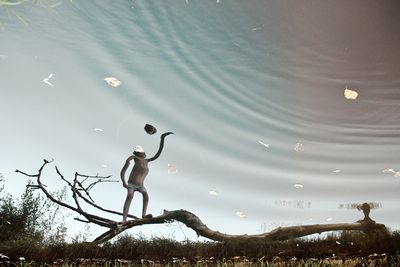
Pictures: A series of fanciful dream-like images, all created as reflections on the surface of a swimming pond in rural France.

More here.

The ultimate guide to debunking right-wingers’ insane persecution fantasies

Robert Boston in Salon:

Beck_robertson_bachmann-620x412Certain words should not be tossed around lightly. Persecution is one of those words. Religious right leaders and their followers often claim that they are being persecuted in the United States. They should watch their words carefully. Their claims are offensive; they don’t know the first thing about persecution. One doesn’t have to look far to find examples of real religious persecution in the world. In some countries, people can be imprisoned, beaten, or even killed because of what they believe. Certain religious groups are illegal and denied the right to meet. This is real persecution. By contrast, being offended because a clerk in a discount store said “Happy Holidays” instead of “Merry Christmas” pales. Only the most confused mind would equate the two. We have worked hard in the United States to find the right balance concerning religious-freedom matters. Despite what the religious right would have Americans believe, this is not an issue that our culture and legal systems take lightly. Claims of a violation of religious freedom are usually taken very seriously. An entire body of law has evolved in the courts to protect this right. The right of conscience is, appropriately, considered precious and inviolable to Americans.

Far from being persecuted, houses of worship and the religious denominations that sponsor them enjoy great liberty in America. Their activities are subjected to very little government regulation. They are often exempt from laws that other groups must follow. The government bends over backward to avoid interfering in the internal matters of religious groups and does so only in the most extreme cases. What the religious right labels “persecution” is something else entirely: it is the natural pushback that occurs when any one sectarian group goes too far in trying to control the lives of others. Americans are more than happy to allow religious organizations to tend to their own matters and make their own decisions about internal governance. When those religious groups overstep their bounds and demand that people who don’t even subscribe to their beliefs follow their rigid theology, that is another matter entirely. Before I delve into this a little more, it would be helpful to step back and take a look at the state of religious liberty in the United States today. Far from being persecuted, I would assert that religion’s position is one of extreme privilege. Consider the following points.

More here.

Sunday Poem

Physiology of Kisses

The kiss begins………………….in the center of the belly
and travels upward…………..through the diaphragm and
throat along fine filaments ………………which no forensic scientist
has ever been able to find.

From the hard flower………..of the kisser's mouth,
the kisses leave the body……….in single file,
into the reciprocal mouth…..of the kiss recipient,
which for me is Kath.

What can I say? My kisses make her happy and I need that.
And sometimes, bending over her,
I have the unmistakable impression
………………………….that I am watering a plant.

gripping myself softly………….by the handle,
tilting my spout……………………….forward
pouring what I need to give
……………………into the changing shape of her thirst.

I keep leaning forward……………..to pour out
what continues to rise up
from the fountain………………….of the kisses
which I, also,…………………….am drinking from.
.

by Tony Hoagland
from Sweet Ruin
University of Wisconsin Press, 1993

Saturday, March 15, 2014

Nate Silver on the Launch of ESPN’s New FiveThirtyEight

A_560x0

Joe Coscarelli in New York Magazine:

So you’re on the record about hating most pundits and columnists and the big proclamations and narratives that come with them. There’s been no shortage of those directed at you in the lead-up to the site. What do you see as the big false narratives surrounding FiveThirtyEight at the moment?

One thing that’s a little false is that people think this is all about predictions. That’s a part of it, but not most of it, really. That’s really just one tool in our arsenal. We think the first step in using data is that you have to collect data, you have to organize it, and you have to explain the relationships. Only then, in rare cases, do you feel like you have a good enough understanding to generalize it into predictions about the way the world really works.

People also think it’s going to be a sports site with a little politics thrown in, or it’s going to be a politics site with sports thrown in. I understand why people say that — what we’ve been known for, plus ESPN, plus ABC News. But we take our science and economics and lifestyle coverage very seriously.

We are repositioning FiveThirtyEight away from being a politics site. It’s a data journalism site. Politics is one topic that sometimes data journalism is good at covering. It’s certainly good with presidential elections. But we don’t really see politics as how the site is going to grow. It’s very seasonal in terms of traffic. If you’re trying to get politics traffic outside of election years, you’re mostly looking toward hardcore partisans, and we, frankly, don’t want to write that content to appeal to hardcore partisan readers. Not to say we don’t have political views, but that’s not what we’re all about, really. The growth is in sports and economics and science. That said, we have another election coming up in November and 2016.

More here.

One of Europe’s most remarkable literary talents explains the autobiography that made his name

From The Economist:

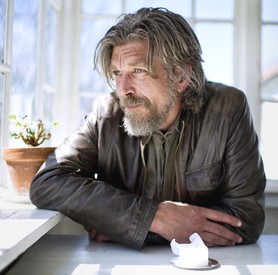
ScreenHunter_555 Mar. 15 20.33The man standing on the platform at Ystad station, in southern Sweden, looks more like a grunge rocker than a literary superstar: long hair, beard, scuffed boots, glowing cigarette, hat pulled down against the bitter cold. His white van is so grimy that it is almost black. The stereo blasts out at full volume. There is a fearsome-looking dog cage in the back.

Karl Ove Knausgaard tries to reassure his guest. He turns the music off. He chats about the latest Bill Bryson. The dog turns out to be a soppy spaniel that he bought for his children. But the grunge keeps reasserting itself. Mr Knausgaard smokes like a fiend in his garden study (though not in his impeccably tidy house) and keeps an electric guitar and a drum kit next to his desk. What also reasserts itself repeatedly is the sense that this is a man in the grip of a huge literary talent.

Mr Knausgaard is the author of one of the most idiosyncratic literary works of recent years: a six-volume, 3,500-page autobiography called “My Struggle”, after Hitler’s “Mein Kampf”. It starts with a portrait of his father’s alcohol-soaked death, ends with a meditation on Hitler and takes the author through the cycle of his life. Mr Knausgaard is now 45.

“My Struggle” turned him into a superstar in his native Norway. One in ten Norwegians have read some of the book, and companies have introduced “Knausgaard-free days” in order to keep people’s minds on work. It has also turned him into something of a pariah, not just because he called the book “My Struggle”, but also because he lays bare the lives of everyone around him. His father’s side of the family refuse to speak to him. Ordinary Norwegians regard him with horror as well as fascination. He is now an exile from both fame and scandal, living in tiny Osterlen, where nobody gives a damn about literary celebrities.

More here.