on magic

UrlLouis B. Jones at Threepenny Review:

As for magic’s nonexistence in the world, I think I haven’t missed it. Maybe there was—there surely must have been—one afternoon in childhood when (getting out of a sugary Disney movie, emerging into an Illinois parking lot’s dirty old snow) a pang of loss, or of exile, gave me pause. But mostly I’m an uncomplaining citizen of a desolate world. It’s possible I’ve never properly mourned magic’s departure, or grieved it. Because magic: what a wonderful life ingredient to have to forswear, to renounce and call tawdry!

If I’m able to be so peaceful in my disillusionment, the reason must be that I still do believe in magic, deep in the nerves and tissues, where all assumptions lie. Of course I know that the flourish of the playing-cards over the green baize will have seeded one faker in the fifty-two. I know the lady doesn’t really get sawn in half, and, moreover, I wonder if, after the show, she might be faced with the professional dilemma of whether as hired assistant she’d be a bad sport if she declined the invitation to visit the tuxedoed wizard’s dressing room for a drink, or a joint, and for whatever is supposed to ensue. That the great athletes are on steroids, that the spoon didn’t really bend, that the yogis on YouTube aren’t really levitating, that the gentle Galilean didn’t, on the third day, rise again, yes, yes, we all know what to mistrust. But, deep at an unexaminable level of muscle-memory, I still move and behave with a Master-of-the-Universe assurance.

more here.
How much meat is too much?

0Bee Wilson at The London Review of Books:

Vegetarians themselves often argue that they make us feel uncomfortable because their existence is a reminder of the cruelty and carnage that the rest of us refuse to see; there’s probably some truth in this. But I suspect that the root of our hostility is more basic. It isn’t so much that they remind us of the slaughterhouse – meat itself does a pretty effective job there – as that they make a mockery of our unthinking preferences. What we’re protecting when we ridicule vegetarians isn’t our own ignorance about the way meat is produced – however it’s done, killing animals for food isn’t nice – but our taste for it: the smell of sausages sizzling in a pan, the charred umami crust of a good steak, the pink tender pieces of a rack of lamb. Meat tastes good, ergo vegetarians must be idiots.

It sounds a little selfish, though, to say that we’re prepared to squander the world’s resources and see animals die to satisfy our taste for savoury dinners, so we think up other excuses. We say we eat only small quantities or only free-range and ‘happy meat’ (unless we are buying take-out curry or a sandwich, when different moral rules seem to apply). We talk of ‘cuisine’ or ‘tradition’ or how it’s ‘in our nature’ as human omnivores to eat meat. When all else fails, we invoke what nutritionists call ‘the wisdom of the body’: we’d be happy to go vegetarian, if only our bodies weren’t telling us they needed meaty replenishment.

more here.

Richard Hofstadter and America’s New Wave of Anti-Intellectualism

David Masciotra at The Daily Beast:

1394497702381.cachedTwenty-first century philistines, suffering from a lack of imagination and curiosity, have seized upon understandable economic anxieties since the financial crash of 2008, to shepherd an increasingly large flock of American sheep into the livestock freight carrier Pulitzer prize winning historian, Richard Hofstadter, called “anti-intellectualism.”

Anti-Intellectualism in American Life—one of Hofstadter’s best, among many great books – was a pile of dynamite in 1963, when it was first published and blew a sizable hole in the house of America’s self-comforting delusions of intellectual superiority. In 2014, one can only hope that some of its initial blast still reverberates, as media commentators, university administrators, and even the President, have exposed themselves as adherents to what Hofstadter indicted as the “lowest common denominator criterion” of thought and “technician conformity” of lifestyle. Suspicion, and often outright hatred, of ideas is making American culture as riveting as oatmeal. By reading Hofstadter, one learns that the resurgence of a new anti-intellectualism isn’t new, at all. In fact, Hofstadter identified the particularly poisonous strain of the virus that now infects the American mind and kills the imagination.

More here.

Infrared: A new renewable energy source?

Caroline Perry at the website of the Harvard School of Engineering and Applied Sciences:

Redglow_sqWhen the sun sets on a remote desert outpost and solar panels shut down, what energy source will provide power through the night? A battery, perhaps, or an old diesel generator? Perhaps something strange and new.

Physicists at the Harvard School of Engineering and Applied Sciences (SEAS) envision a device that would harvest energy from Earth’s infrared emissions into outer space.

Heated by the sun, our planet is warm compared to the frigid vacuum beyond. Thanks to recent technological advances, the researchers say, that heat imbalance could soon be transformed into direct-current (DC) power, taking advantage of a vast and untapped energy source.

Their analysis of the thermodynamics, practical concerns, and technological requirements will be published this week in the Proceedings of the National Academy of Sciences.

“It’s not at all obvious, at first, how you would generate DC power by emitting infrared light in free space toward the cold,” says principal investigator Federico Capasso, the Robert L. Wallace Professor of Applied Physics and Vinton Hayes Senior Research Fellow in Electrical Engineering at Harvard SEAS. “To generate power by emitting, not by absorbing light, that’s weird. It makes sense physically once you think about it, but it’s highly counterintuitive. We’re talking about the use of physics at the nanoscale for a completely new application.”

More here.

A Different Pakistan

Hugh Eakin in the New York Review of Books:

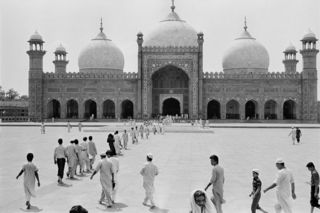
Eakin-1_jpg_600x630_q85Rarely has an event framed around books and ideas felt so urgent. A few weekends ago, a group of writers, artists, and editors gathered in Lahore, the capital of Pakistan’s Punjab heartland, to defend the written word. People turned up from every part of the country to hear them—Karachi and Islamabad, but also Balochistan and the remote tribal regions along the Afghan frontier. Sometimes filling the aisles and stairways of the three venues where the gathering was held, they listened to debates on everything from the future of the novel to the future of Pakistan.

In an age in which international literary festivals have become commonplace, there is very little ordinary about the Lahore LitFest, starting with the location. “PK! What are you doing there?” a US immigration official wondered, when I set out from New York. My barber asked me if I had a bullet-proof vest. Even in the Middle East, in places that have plenty of tension of their own, a Pakistani destination seems to raise red flags. “It would be a shame if you got yourself kidnapped,” an Arab journalist who covers political unrest told me, during a visit to the Arabian Peninsula two days before my journey on to Lahore.

To anyone who has actually been there, such reactions may seem grossly unfair. With a sizable liberal elite, a strong tradition in publishing and the arts, and an old city filled with extraordinary Mughal architecture, Lahore arguably has more in common with the leading cities of India and Europe than with the dark image of Pakistan shown almost daily in the news.

More here.

Growing Up Together: Love through the lens of Fellini

Chris Knapp in The Paris Review:

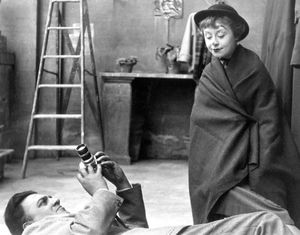
Giulietta-Masina4-1024x803Among the central occupations of Fellini’s work is what he wants from the women in his life. Near the end of , his alter ego speaks of a kind of Ideal Woman:“She’s beautiful … young, yet ancient … child, yet already woman. Authentic, complete. It’s obvious she could be his salvation.” Between the breathy declaiming and ’s famouslayers of metafiction, you get the idea that even Fellini sees this isn’t exactly a healthy attitude. Still, throughout his work, the search for an ideal of womanhood is represented in a series of large and buxom temptresses: Anita Ekberg, Sandra Milo, Eddra Gale in an especially memorable dance sequence as La Saraghina. But pulling his films off the shelf one by one, my wife and I agreed the problem was most nearly solved, onscreen and in life, by his wife and best collaborator, the tiny and brilliant Guilietta Masina.

…Maybe it’s all married people who wonder how anyone ever finds each other. Giulietta Masina met her husband in the role of Pallina, in a radio serial he’d written about newlyweds; he didn’t visit the studio, but based on the sound of her voice when the serial aired, Fellini invited her to lunch in a fancy district of Rome. This was early spring. She was enrolled at La Sapienza and she was accustomed to coffee dates with broke fellow students—she brought along extra money in case he came up short, and ordered nothing but minestrone, while Fellini himself ate ravioli and ham. It was 1943—the war, Fellini said later, “made everything more urgent”—and by October they were married, in a secret ceremony in her aunt’s apartment, where he was soon installed, hiding indoors in the daytime to avoid the ubiquitous German patrols rounding up boys his age for service or labor. Fellini was twenty-three and Masina was twenty-two. In Fellini’s estimation, “Giulietta was really older, because she was more mature and better educated. She came from a more sophisticated background.” Still, he called her Lo Spippolo: a small, tender thing.

…Gelsomina was the role that made Masina’s career, and La Strada was the film that made Fellini’s. Of all the parts he wrote for her, Fellini said, “the character of Gelsomina is the one I most based on the character of Giulietta.” It’s easy to take the claim the wrong way: Gelsomina is childlike to the point of deficiency. And some of her expressive habits are in fact based on pictures Fellini had seen of Masina at eight or ten years old. But it was the woman he shared his life with that inspired him: “As a person, she was still that sheltered girl who looked with awe at the mysteries of life … She was open to finding delights, her own nature remained young, innocent and trusting.”

More here.

What happened when? How the brain stores memories by time

From PhysOrg:

Mem Before I left the house this morning, I let the cat out and started the dishwasher. Or was that yesterday? Very often, our memories must distinguish not just what happened and where, but when an event occurred—and what came before and after. New research from the University of California, Davis, Center for Neuroscience shows that a part of the brain called the hippocampus stores memories by their “temporal context”—what happened before, and what came after. “We need to remember not just what happened, but when,” said graduate student Liang-Tien (Frank) Hsieh, first author on the paper published March 5 in the journal Neuron. The hippocampus is thought to be involved in forming memories. But it's not clear whether the hippocampus stores representations of specific objects, or if it represents them in context. Hsieh and Charan Ranganath, professor in the Department of Psychology and the Center for Neuroscience, looked for hippocampus activity linked to particular memories. First, they showed volunteers a series of pictures of animals and objects. Then they scanned the volunteers' brains as they showed them the same series again, with questions such as, “is this alive?” or “does this generate heat?” The questions prompted the volunteers to search their memories for information. When the images were shown in the same sequence as before, the volunteers could anticipate the next image, making for a faster response. From brain scans of the hippocampus as the volunteers were answering questions, Hsieh and Ranganath could identify patterns of activity specific to each image. But when they showed the volunteers the same images in a different sequence, they got different patterns of activity.

In other words, the coding of the memory in the hippocampus was dependent on its context, not just on content. “It turns out that when you take the image out of sequence, the pattern disappears,” Ranganath said. “For the hippocampus, context is critical, not content, and it's fairly unique in how it pulls things together.” Other parts of the brain store memories of objects that are independent of their context, Ranganath noted. “For patients with memory problems this is a big deal,” Ranganath said. “It's not just something that's useful in understanding healthy memory, but allows us to understand and intervene in memory problems.”

More here.

Wednesday, March 12, 2014

Accidents will happen: An excerpt from “Command and Control”

Eric Schlosser in The Bulletin of the Atomic Scientists:

NEASHsac_3152_420pxThe Mark 36 was a second-generation hydrogen bomb. It weighed about half as much as the early thermonuclears—but 10 times more than the new, sealed-pit bombs that would soon be mass-produced for SAC [the Strategic Air Command]. It was a transitional weapon, mixing old technologies with new, featuring thermal batteries, a removable core, and a contact fuze for use against underground targets. The nose of the bomb contained piezoelectric crystals, and when the nose hit the ground, the crystals deformed, sending a signal to the X-unit, firing the detonators, and digging a very deep hole. The bomb had a yield of about 10 megatons. It was one of America’s most powerful weapons.

A B-47 bomber was taxiing down the runway at a SAC base in Sidi Slimane, Morocco, on January 31, 1958. The plane was on ground alert, practicing runway maneuvers, cocked but forbidden to take off. It carried a single Mark 36 bomb. To make the drill feel as realistic as possible, a nuclear core had been placed in the bomb’s in-flight insertion mechanism. When the B-47 reached a speed of about 20 miles an hour, one of the rear tires blew out. A fire started in the wheel well and quickly spread to the fuselage. The crew escaped without injury, but the plane split in two, completely engulfed in flames. Firefighters sprayed the burning wreckage for 10 minutes—long past the time factor of the Mark 36—then withdrew. The flames reached the bomb, and the commanding general at Sidi Slimane ordered that the base be evacuated immediately. Cars full of airmen and their families sped into the Moroccan desert, fearing a nuclear disaster.

More here.

RIP Nils Horner

And another 3QD friend also died yesterday. He too will be missed. This is Matthew Rosenberg in the New York Times:

ScreenHunter_550 Mar. 12 15.23Two men shot a Swedish reporter on a crowded street in Kabul on Tuesday, in a rare assassination-style killing of a Westerner that raised new questions about the safety of the large international presence expected to remain here after American-led combat forces depart this year.

The reporter, Nils Horner, 51, a longtime foreign correspondent for Swedish Radio, was shot two blocks from the wreckage of a restaurant where suicide attackers killed 21 people, most of them foreigners, in January. Col. Najibullah Samsour, a senior police official, said that Mr. Horner was standing outside another restaurant talking to security guards when a pair of men in what was described as traditional clothing walked up.

One of the men then drew a pistol and fired a shot into the journalist’s face, Colonel Samsour said. The men fled, and no arrests had been made by day’s end. A spokesman for the Taliban, Zabiullah Mujahid, denied that the group was involved, and no claim of responsibility was reported.

Another Afghan security official said the killer’s pistol was fitted with a silencer.

The daylight attack was the first time in years that a Westerner appeared to have been specifically targeted and killed in Kabul.

More here.

RIP Matthew Power

3QD friend Matthew Power died yesterday. He will be missed. This is Noam Cohen in the New York Times:

MattMatthew Power, a celebrated journalist whose writing took readers down the Mississippi with modern-day hobos, to the scenes of international disasters and inside the Lower East Side apartment where Allen Ginsberg spent his last days, died on Monday in Uganda. He was 39.

He was reporting on an explorer who is walking the length of the Nile when he was overcome by the heat and died, presumably of heatstroke, his wife, Jessica Benko, said.

A contributing writer at Harper’s Magazine, Mr. Power also wrote for other publications, including GQ, The New York Times and Men’s Journal, which had sent him to Uganda. His articles were in annual anthologies like “Best American Travel Writing” and “Best American Spiritual Writing,” and he was a three-time finalist for the Livingston Award for Young Journalists in international reporting.

For two Harper’s articles he visited the scene of incidents abroad that captured the attention of most Americans only briefly: the destruction of Buddha statues by the Taliban in 2000, and the collapse of a mammoth garbage dump in Quezon City, the Philippines, during heavy rains, leading to the deaths of hundreds of people living in shanties nearby.

More here. Harper's Magazine has made all his writings for them available for free here.

What do Robert Frost’s letters reveal?

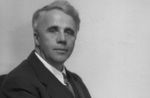
Robert-frost-processedAdam Plunkett at Poetry Magazine:

It’s hard to shake the feeling, after reading the first volume of Robert Frost’s letters, recently published by Harvard University Press, of having come to know him somehow less than you would have after reading just the poems from those years. How could this be? Factually invaluable, the letters show much of Frost’s tortuous road from ambition to accomplishment, from newspaperman, factory worker, two-time Ivy League dropout, and middling poultryman to transatlantically acclaimed nature poet. But the more you learn about his personal life, the more it can obscure his inner life. You begin to lose him as the man becomes mannered, the private man becomes a public man, and his privacy retains its intimate vulnerability almost only in his very public poems.

Take, for example, “The Road Not Taken,” a poem written during the early excitement of his fame. Frost read it at the Phi Beta Kappa induction at Tufts in 1915, in what was likely the first of countless ingenuous ceremonial botchings of the deeply vexed and mischievous poem, only to complain to his dear friend Edward Thomasthat no one had gotten the joke. The last stanza (“the sigh”) “was a mock sigh, hypocritical for the fun of the thing,” he wrote. “I doubt if I wasnt [sic] taken pretty seriously. Mea culpa.”

And yet even this admission, written in earnest to Frost’s closest friend, obscures as much as it reveals.

more here.

the question of animal consciousness

AnguishJohn Jeremiah Sullivan at Lapham's Quarterly:

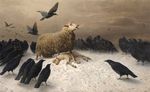
The modern conversation on animal consciousness proceeds, with the rest of the Enlightenment, from the mind of René Descartes, whose take on animals was vividly (and approvingly) paraphrased by the French philosopher Nicolas Malebranche: they “eat without pleasure, cry without pain, grow without knowing it; they desire nothing, fear nothing, know nothing.” Descartes’ term for them was automata—windup toys, like the Renaissance protorobots he’d seen as a boy in the gardens at Saint-Germain-en-Laye, “hydraulic statues” that moved and made music and even appeared to speak as they sprinkled the plants. This is how it was with animals, Descartes held. We look at them—they seem so full of depth, so like us, but it’s an illusion. Everything they do can be attached by causal chain to some process, some natural event. Picture two kittens next to each other, watching a cat toy fly around, their heads making precisely the same movements at precisely the same time, as if choreographed, two little fleshy machines made of nerves and electricity, obeying their mechanical mandate.

Descartes’ view drew immediate controversy. Writers such as the naturalist John Ray, in The Wisdom of God Manifested in the Works of the Creation(1691), protested on behalf of “the common sense of mankind” that if “beasts were automata or machines, they could have no sense, or perception of pleasure, or pain…which is contrary to the doleful significations they make when beaten, or tormented.”

more here.

on W.G. SEBALD’S A PLACE IN THE COUNTRY

Black-sebaldColin Dickey at The Quarterly Conversation:

Though his life was tragically cut short at the height of his creative powers, W. G. Sebald has been steadily churning out work since his death. Sebald’s posthumous publications have, by and large, followed a now-standard pattern: first were the works already or nearly finished and ready for print (On the Natural History of Destruction, After Nature), then the uncollected essays which offered polished, self-contained pieces (Campo Santo), then the book of interviews, along with the books of minor poetry for which he was not primarily known (Unrecounted, Across the Land and the Water). This last, released in 2012, would seem to have been the beginning of the end of this vast reserve—Sebald’s minor poetry is interesting at times, but far below the quality of his prose works or his masterful poetic work After Nature. Reaching the end of a finite supply, it would seem that the only place left to go would be to journals, fragments of essays, or other ephemera.

Instead, 2014 sees the release in the United States of A Place in the Country: a full prose work published originally in German in 1998, between The Rings of Saturn andAusterlitz—in other words, at the height of Sebald’s literary career. The book is a series of essays on five writers (Johann Peter Hebel, Jean-Jacques Rousseau, Eduard Mörike, Gottfried Keller, and Robert Walser) and one painter (Jan Peter Tripp), the product of what he describes, in the foreword, as an “unwavering affection for Hebel, Keller and Walser,” which in turn “gave me the idea that I should pay my respects to them before, perhaps, it may be too late.” A haunting phrase, given his death only three years after the book’s publication—but one that also accurately sums up the admiration and homage that runs through the book, a writer engaging with his forebears and tracing his own literary genealogy through the past two centuries.

more here.

Rasputin: A short life

Keith Gessen in The Guardian:

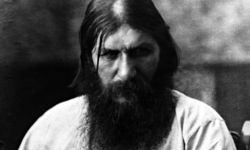
Rasputin-009Grigory Rasputin was a Siberian peasant turned holy man with incredible charisma, bad teeth, questionable hygiene (he claimed that he once went six months without changing his underwear), and a strong animal odour – like a goat's (according to the French ambassador). He used these various attributes to ingratiate himself with the royal family of Russia and become, for about a year toward the end of the Romanov dynasty, the de facto power behind the throne. While doing all this he seduced thousands of women and still managed to get stone drunk several nights a week. It's an inspiring story, though it ends badly, and no wonder that the expatriated French actor Gérard Depardieu has played Rasputin in not one but two biopics in the last two years.

…Rasputin took advantage of the Russian tradition of the wandering peasant holy man, walking from village to village and reputed to have a direct connection with God (even Tolstoy, toward the end of his life, visited one). He also exploited the loneliness and isolation of the last Romanov couple, Nicholas and Alexandra – the tsar a polite, indecisive man and the tsarina a German-born and English-bred granddaughter of Queen Victoria (“The tsarina was as happy ordering chintzes from the latest Maples catalogue as she was cultivating mystics,” writes Welch), who never quite adjusted to Russian life or shed her accent (she communicated with Nicholas in English). And, finally, he made use of the vexed condition of the couple's son, Alexis, the heir to the Russian throne, who had inherited (from Queen Victoria) a terrible disease: haemophilia. Nicholas and Alexandra kept vigilant watch over the boy, employed two sharp-eyed sailors to accompany him everywhere and commandeered an army of doctors to try to make him well. None of them could do anything; as Welch points out, they may easily have done more harm than good, prescribing, for example, the new wonder drug aspirin, which we now know is an anti-coagulant, the exact opposite of what a haemophiliac needs. The disease was torture for both the boy and his mother. During bleeding episodes Alexis would suffer excruciating pain, and his mother, an empress but also, she knew, the carrier of the disease, would sit by him, helpless.

More here.

Genome sequencing stumbles towards the clinic

Erika Check Hayden in Nature:

WEB_475158105Sequencing a person’s entire genome can reveal potentially life-saving information about the presence of mutations associated with diseases. But there are drawbacks — a study published this week finds that current sequencing technology does not always capture the complete genome, and illustrates the challenges of interpreting what the results mean for an individual patient1. “There are many steps that have to be worked out to ensure that we gain the most health-care benefit,” says William Feero, a physician at the Maine Dartmouth Family Medicine Residency in Fairfield, Maine, who was not involved in the study. Researchers at Stanford University in California, examined whether a whole-genome scan could identify disease risks in healthy people — a use of the technology that is within financial reach as the cost of sequencing drops. The team of doctors, genetic counsellors and scientists report today in the Journal of the American Medical Association that it sequenced the whole genomes of 12 people with no diagnosed genetic diseases, looking for genetic mutations that might cause disease. Every patient was found to have 2–6 such mutations, and one woman found out that she carried a mutation in the gene BRCA1, which is linked to greater risk of ovarian and breast cancer. She opted to have her ovaries removed as a result.

But the researchers, led by cardiologists Euan Ashley and Thomas Quertermous, also found that between the two genome sequencing services they used — Illumina, based in San Diego, California, and Complete Genomics, based in Mountain View, California — 10–19% of genes known to be linked to disease were not adequately sequenced. So doctors might have missed finding harmful mutations in these genes. The two services also disagreed two-thirds of the time about the presence of a particularly worrisome type of mutation — the addition or deletion of parts of genes linked to disease. Deciding what these results meant for patients was not easy. The study clinicians often disagreed about what patients should do in light of the findings about their genomes — for instance, whether a particular mutation meant that the patient should undergo further testing.

More here.

Tuesday, March 11, 2014

Trespassing in the library of a dead genius

John Kaag in Harper's:

ScreenHunter_549 Mar. 11 15.44Dozens of times over the past four years, I’ve made the drive from my home in Boston to a long-forgotten library in the middle of New Hampshire, accessible only by dirt road and hidden behind White Mountain pines. It once belonged to William Ernest Hocking, the last great idealist philosopher at Harvard, and though it contains irreplaceable volumes, it was known until recently only to a few of Hocking’s relatives and one very fastidious thief. And me.

I had come to Chocorua, New Hampshire, in 2009, to help plan a conference on William James. But I’m not a particularly dedicated philosopher and in general bore easily, so I soon found myself elsewhere: specifically, considering the virtues of theSchnecken at a German pastry shop. And this is where I found, browsing the scones, a man of ninety, wiry and sharp, who introduced himself as Bun Nickerson. Nickerson moved slowly, like most old philosophers do, but unlike most old philosophers his hobble wasn’t a function of longstanding inactivity. Instead, he explained, it was from farming and professional skiing.

I’m normally hesitant to say what I do for a living — “I teach philosophy” is often prelude to awkward silence — but Nickerson found my profession intriguing, because he’d grown up in a little house on a corner of a philosopher’s land. “Doctor Hocking’s land,” as he put it. Today, philosophers have arguments, office hours, books, articles, committee meetings, and the occasional student. Few of us have “land.” Nickerson made Hocking’s sound impressive and permanent, like the proper realm of a philosopher king: one stone manor house, six smaller summer cottages, two large barns, and one fishing pond with three beaver hutches, all situated on 400 acres of field and forest. Most seductively, Nickerson mentioned a library. Getting to see it struck me as a very good reason to skip out on my conference-planning responsibilities, so I climbed into Nickerson’s pickup and we bumped our way up the hill.

More here.