Thursday Poem

Oligodendroglioma

Seventeen letters across.
Draw it on paper,
write it down. Caterpillar,
centipede. See, it moves

off the page, and
drops, a soft tractor
under leaf or tissue.
Now expand the tree,

find your terminology –
Neoplasm, Brain –
on a lower branch
crawling with information

like cells appear well-defined,
compact, and rounded.
Actually, avascular.
Macroscopically, a pinkish smear.

Imaging studies show, how
they grow outwards from
white matter into grey matter.
Chemosensitive, yes.

Median age at diagnosis,
40-50 years. Either
sex. Shave your hair.
In a week or so.

Depends on size,
location. Ordinarily, no.
She wanted everything I had
on Oligodendroglioma.
.

by Andrew Steinmetz
from The Fiddlehead. No. 128, Winter 2003

Oligodendroglioma

Wednesday, March 19, 2014

An Interview with Kenneth Roth, Executive Director of Human Rights Watch

Jessica Kuhn at the Fletcher Forum of World Affairs:

FLETCHER FORUM: As Executive Director of Human Rights Watch since 1993, you’ve no doubt been witness to a multitude of global conflicts, crises, and challenges. And yet it seems that there is an almost unprecedented amount of crises around the world in 2014—from Syria to the Central African Republic to Ukraine. From your perspective, are today’s conflicts and crises fundamentally different or more intractable than those of the past twenty years? Has Human Rights Watch had to adjust the way it carries out its work to reflect these new realities?

Roth2KENNETH ROTH: This is a tumultuous moment, but I wouldn’t say the problems we confront are radically different from those we have seen in the past. However, the world confronting those problems is different. In addition to investigating and reporting on rights abuses in some ninety countries, Human Rights Watch works in key capitals to generate pressure on abusive governments to curb their human rights violations. At the height of the Cold War, much of that work was directed toward enlisting the influence of the United States. For the past two decades, we have built the capacity to do the same thing in the European Union, as we have opened advocacy offices in Brussels as well as the key European capitals of Berlin, London, and Paris. We have also built up our capacity at the United Nations in New York and Geneva.

However, as non-Western nations have gained in relative influence, we have established a series of advocacy centers in such places as Brazil, India, Japan, and South Africa. Many of these countries do not have a history of promoting human rights in their foreign policies, but at home they are now thriving democracies. By working with local civil society and encouraging the national media to focus on their government’s foreign policy, we are working to bring that foreign policy more in line with the values informing their domestic policy. Our aim is to increase our capacity to exert influence on abusive governments from an ever-wider range of powerful international actors.

More here.

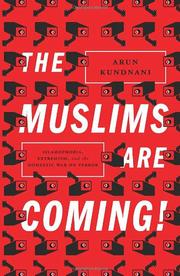
The Muslims are Coming!

Tanjil Rashid reviews the book by Arun Kundnani in the Financial Times:

MuslimsIn Our Man in Havana, Graham Greene tells the story of a vacuum cleaner salesman turned British secret agent. His incompetence results in the absurdity of diagrams for cleaner parts being mistaken on high as a blueprint for a Soviet plot, while official money is ploughed into inventing threats to the UK’s own interests.

In The Muslims are Coming!, a critique of counterterrorism policy by Arun Kundnani, the west’s “domestic war on terror” at times resembles a Greene novel populated by a cast of counterterrorism warriors even unlikelier than a hawker of Hoovers in Havana.

Take, for example, Shahed Hussain, an American petrol pump attendant with a trade in fake drivers’ licences, whom the Federal Bureau of Investigation roped into ensnaring Muslims into terror plots against US targets – planned and financed by the US government itself.

As Judge Colleen McMahon stated in 2011 when sentencing one of Mr Hussain’s catches: “Only the government could have made a terrorist out of [James] Cromitie, a man whose buffoonery is positively Shakespearean in scope.” It is a pity the judgment is not quoted in full, for it succinctly exemplifies Kundnani’s argument. “[The government] created acts of terrorism out of his fantasies of bravado and bigotry,” she said, “and then made those fantasies come true.”

More here.

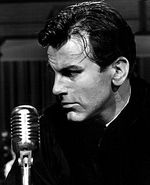
The curious career of Maximilian Schell

ID_PI_GOLBE_SCHELL_AP_001Stefany Anne Golberg at The Smart Set:

The curious career of Maximilian Schell ended last month when he died at the age of 83. Maximilian Schell was most famous for playing Nazis. But he spent the other half of his career playing Jews. After the Second World War, there was no shortage of film and television roles for German-speaking actors. An actor could play, for instance, the classic psychopathic wartime Nazi; the quiet concealed postwar Nazi; the subversive Nazi; the sympathetic confused Nazi; the hilarious bumbling Nazi. The world could not satisfy its hunger for watching Nazis onscreen. We wanted to see them cross-examined, punished, caught in the act. We wanted to bear witness to them, see them doing anything at all – shine their shoes, perform the most unexceptional tasks. We wanted to see the Jews too – brave, downtrodden and then, in later years, compromised, lost. Maximilian Schell had everything the roles required – he was dashing, intense, German-speaking, with a talent for portraying seductive emotional violence.

Maximilian Schell’s acting obsession began with his first film Children, Mothers, and a General (1955), in which Schell played a Nazi deserter fleeing from the Russian front.

Schell made a second film in 1955 called The Plot to Assassinate Hitler, with a small role as a co-conspirator in the plot. Schell would debut in Hollywood as a Nazi soldier in the 1958 film The Young Lions (which starred a platinum-blonde Marlon Brando, also a Nazi). He would go on to perfect his Nazi personas in The Condemned of Altona (1962) – as a disturbed Nazi war criminal living in the basement of his family’s mansion – and inCounterpoint (1968), as a music-loving Nazi general who forces an imprisoned conductor to create a symphony for his captors.

more here.

on magic

UrlMarina Warner at Threepenny Review:

Shakespeare uses verbal magic, cantrips and ditties, nonsense songs and verses throughout the plays, but in Othello he gives a glimpse of how powerful a spell becomes when it’s no longer oral, but fixed in material form. The fatal handkerchief is no ordinary hanky; it’s a love spell, and it was made with gruesome and potent ingredients (mummified “maiden’s hearts”) by a two-hundred-year-old sibyl in Egypt—Egypt being the birthplace and pinnacle of magic knowledge. “In her prophetic fury,” Othello tells Desdemona, this crone “sew’d the work.” His mother kept it to ward off the evil eye from her marriage and secure the love of her husband, Othello’s father, and Othello has passed it on to his wife to the same ends. Unlike the witches’ broth in Macbeth, Othello the Moor’s silk handkerchief is made to last; in one sense it is a text, woven to keep active and working through time.

Muslim practices are frequently scoffed at for their superstition, but in many respects they resemble both Judaic and Catholic ritual trust in the power of the word, especially transfused into things—into relics or paper or stones or…clothes. They were charmed with many kinds of conjuration, formulaic repetitions with not a word changed or out of place from the Qur’an, the sayings of the Prophet and other texts established by custom: the ninety-nine epithets of god, the stories of the saints.

more here.

Does de man’s past explain his criticism?

140324_r24764_p233Louis Menand at The New Yorker:

So when it was learned, in the spring of 1987, three and a half years after de Man’s death, that he had written during the war for two Belgian newspapers controlled by the Nazis more was at stake than the reputation of a deceased academic. The articles were found by a Belgian graduate student named Ortwin de Graef; he informed two former students of de Man’s, and they spread the news among the de Manians, all of whom were stunned. For the few people who knew, or thought they knew, anything about de Man’s past—de Man was always highly discreet about personal matters—the revelation upended the image they had formed. There was a vague understanding that de Man had had a complicated war, but it was assumed that this was because of his antipathy to the German occupiers, not, as it now appeared, the other way around.

At a conference at the University of Alabama in October, 1987, a group that included some of de Man’s former students and colleagues decided to publish all the wartime journalism—some two hundred articles, most of them column-length, that de Man wrote for the two German-controlled papers, plus pieces he published in other venues between 1939 and 1943—along with a companion volume of thirty-eight scholarly responses.

more here.

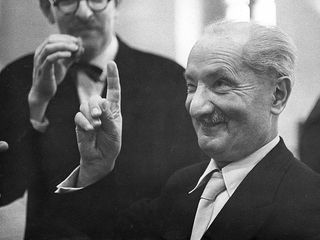
In defence of Heidegger

Jonathan Rée in Prospect:

Heidegger-cropThe German philosopher Martin Heidegger died nearly 40 years ago, but his work has never stopped making the headlines: not because of his ideas, but because of his association with Nazism. The latest stage of the controversy (well covered here and here by Jonathan Derbyshire) has been occasioned by prepublication hype for an edition of the Schwarzen Hefte, a 1000 page transcript of the little notebooks bound in black covers, in which he jotted down observations for most of his life. According to the pre-publicity, these notebooks show that Heidegger was a deep-dyed anti-Semite, and suggest that no self-respecting thinker should touch him with a bargepole. I can’t say that I agree.

1. In the first place, it’s common knowledge that, as well as being a member of the Nazi party for many years, Heidegger was an anti-Semite. Not a violent one, but the sort of cultural anti-Semite (DH Lawrence, TS Eliot, Ezra Pound) often found in the 1920s and 30s, not only in Germany but throughout Europe and America. For good measure, I guess he was also a womaniser and a male chauvinist pig. The question is whether these facts are a reason for avoiding his works, or whether we can in fact read him without putting our political purity in danger.

More here.

Buckminster Fuller: Poet of Geometry

From Kurzweil AI:

Buckminster-Fuller-Poet-of-Geometry-by-Cole-Gerst-posterBuckminster Fuller was a renowned 20th century inventor and visionary born in Milton, Massachusetts on July 12, 1895. Dedicating his life to making the world work for all of humanity, Fuller operated as a practical philosopher who demonstrated his ideas as inventions that he called “artifacts.” Fuller did not limit himself to one field but worked as a “comprehensive anticipatory design scientist” to solve global problems surrounding housing, shelter, transportation, education, energy, ecological destruction, and poverty.

Throughout the course of his life Fuller held 28 patents, authored 28 books, received 47 honorary degrees. And while his most well know artifact, the geodesic dome, has been produced over 300,000 times worldwide, Fuller’s true impact on the world today can be found in his continued influence upon generations of designers, architects, scientists and artists working to create a more sustainable planet. Illustrator and author, Cole Gerst, brings Fuller’s work into vivid, full-color view. Buckminster Fuller: Poet of Geometry includes hundreds of detailed illustrations spanning Fuller’s entire life. This book not only shows how important Fuller was during his lifetime, but how his ideas are even more relevant today than ever.

More here.

Is the BBC still “hideously white”?

Farrukh Dhondy in New Statesman:

BbcThe movement of labour from the ex-colonies to Britain began in earnest in the late Fifties and early Sixties. There were no social or political plans, no vision for their integration into British society. They were left to find or form their own ghettos, to work the night shifts and the Underground, clean the streets, nurse the sick in hospitals, conduct the buses of the big cities and, in time, set up the mosque-and-mill enclaves of the midlands and the north and, aided by municipal socialism, the crime-prone vertical slums of London. The first liberal impulse of the broadcasters was directed towards the Asian peasantry, the Indians and Pakistanis who came in the largest numbers from the Punjab, from Mirpur in what is now Pakistani Kashmir and from Bangladesh, then East Pakistan. The BBC’s first instinct was “integration” – teaching the newcomers to accommodate to British ways and British society – how to get about using the language, how not to bargain at supermarket counters but pay the price that the till rang up and elementary rules of etiquette. They ran programmes with well-intentioned, patronising titles such as Apnaa Hi Ghar Samajhye which means Consider It Your Home – “it” meaning Britain. There were other programmes in which white and Asian neighbours befriended each other and cultures rubbed along with pointed explanation, again with the aim of instructing the immigrant to feel at home. A famous programme was Padosi, Hindustani for Neighbours – years before the Ozzies named their soap.

Television didn’t consider that West Indians needed instructional programming to assist the assimilation. Black (or was it “coloured”?) characters went straight into situation comedies in bit or secondary parts. One or two Asian characters crept into Newcomers, a soap whose “native” writers, unfamiliar with the idiom of the newcomers relied on the uncertain advice of the rare black or Asian Rada-trained actor.

More here.

Wednesday Poem

First Circle

1.
the flat end of sorrow here
two crows fighting over New Year’s Party
leftovers. From my cell, I see a cold
hard world.
2.
So this is the abcess that
hurts the nation –
jails, torture, blood
and hunger.
One day it will burst;
it must burst.
3.
When I heard you were taken we
speculated, those of us at large
where you would be
in what nightmare will you star?
That night I heard the moans
wondering whose child could now
be lost in the cellars of oppression.
Then you emerged, tall, and bloody-eyed.

It was the first time
I wept.
4.
The long nights I dread most
the voices from behind the bars
the early glow of dawn before
the guard’s steps wake me up,
the desire to leap and stretch
and yawn in anticipation
of another dark home-coming day
only to find that
I cannot.
riding the car into town,
hemmed in between them
their guns poking me in the ribs,
I never had known that my people
wore such sad faces, so sad
they were on New Year’s Eve,
so very sad.
.

by Kofi Awoonor

Tuesday, March 18, 2014

Toward a definition of Southern literature that goes beyond twang

600_Alec_Soth_NYC39690Ed Winstead at Guernica:

Before I ever saw or heard a recording of Robert Penn Warren, I had imagined, based solely on having read his award-winning novel of shifty Louisiana political types when I was pretty young, that he had a very distinct accent. The kind of accent belonging to someone who, when describing a favorite friend or colleague to a third party, might settle on the word august. The sort of person who laughs hearty baritone laughs and is always reaching deep into a jacket pocket for their pipe, less to puff on than to have something to gesture with while using the word august. Warren, who in 1947 won the Pulitzer Prize for All The King’s Men, was born in Guthrie, Kentucky, in April of 1905. And he certainly did have an accent, though I discovered on hearing a recording of him (he was reciting some of his poetry) that its inflexions and cadences didn’t jibe at all with what I’d imagined. A day or two after first hearing his voice, the memory of it began to revert to my impressionistic substitute. Shortly thereafter it was all that was left.

I have never had much of an accent myself and am often asked, when it’s discovered that I’m Southern and come from a town in central North Carolina, why that is. I say that I don’t know because I don’t.

more here.

modern versions of transcendence

Malik_rothko_468wKenan Malik at Eurozine:

One does not, of course, have to be religious to appreciate religiously inspired art. One can, as a non-believer, listen to Mozart's Requiem or Nusrat Fateh Ali Khan's qawwli, look upon Michaelangelo's Adam or the patterns of the Sheikh Lotfollah Mosque in Isfahan in Iran, read Dante's Divine Comedy or Lao Zi'sDaode Jing, and be drawn into a world of awe and wonder. Many believers may question whether non-believers can truly comprehend the meaning of religiously-inspired art. We can, however, turn this round and ask a different question. What is it that is “sacred” about sacred art? For religious believers, the sacred, whether in art or otherwise, is clearly that which is associated with the holy and the divine. The composer John Tavener, who died at the end of last year, was one of the great modern creators of sacred music. A profoundly religious man – he was a convert to Russian Orthodoxy – Tavener's faith and sense of mysticism suffused much of his music. Historically, and in the minds of most people today, the sacred in art is, as it was with Tavener, inextricably linked with religious faith.

There is, however, another sense in which we can think about the sacred in art. Not so much as an expression of the divine but, paradoxically perhaps, more an exploration of what it means to be human; what it is to be human not in the here and now, not in our immediacy, nor merely in our physicality, but in a more transcendental sense. It is a sense that is often difficult to capture in a purely propositional form, but which we seek to grasp through art or music or poetry.

more here.

The Double Life of Paul de Man

Brooks_1-040314_jpg_600x996_q85Peter Brooks at the New York Review of Books:

The question remains: What did the burden of the past mean for de Man’s intellectual development? The opponents of “deconstruction” were quick to pounce on the “revelations” as an explanation: de Man’s views about the disconnect between word and world came from his need to deny history and politics, to shut himself up in an echo chamber where language had no reference outside itself. That is as unsubtle about de Man’s writings as it is about the relation of the present to a haunting past. De Man’s work resists simplification, and also systematization—as he said himself, he was not a philosopher, but a philologist—and it evolved over time. One can say, in the most general terms, that it is united by a suspicion of ideology as a mystification that takes the seductions of rhetoric as something in which to believe. He wrote: “What we call ideology is precisely the confusion of linguistic with natural reality, of reference with phenomenalism.”3

Most of his work is dedicated to a kind of askesis, a clearing of the terrain of literary study of the ideological and indeed theological presuppositions he found there. He argued in “The Return to Philology,” written for the TLS, that one should study the structure of language prior to the meanings it produces. Literature should be taught as “a rhetoric and a poetics prior to being taught as a hermeneutics and a history.”

more here.

An Open Letter to Ms. Arundhati Roy Concerning B. R. Ambedkar’s Annihilation of Caste

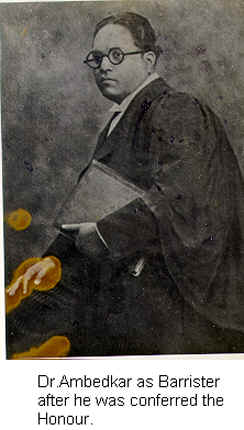
Ambedkar_Barrister

A Dalit organization on Arundathi Roy's introduction to Annihilation of Caste after excerpts from her introduction were published in Caravan and Outlook:

We are writing this letter to clarify our position on the rumors spreading in New Delhi about the cancellation of the launch of the book, Dr. B. R. Ambedkar's Annihilation of Caste, introduced by you and published by Navayana. The rumors claim that Dalit activists and intellectuals in Hyderabad have allegedly stalled the event of book launch. It is said that an event at EFL University and other events were cancelled because of the threats of Dalit activists. You know well that the memorial meeting (of Mudasir Kamran) at EFL University you were supposed to address was not permitted by the EFL University Vice Chancellor. The book launch events atSundaraiah Vijnana Kendra and La Makaan were cancelled by the publisher Navayana.

We deny this well-designed false propaganda. We clarify in no uncertain terms that Dalit activists in Hyderabad were never in favor of stalling the event. The intention has always been to raise criticism of your role in the preparation of the edited book and also the contents of your introduction. Many Dalit activists including myself are not pleased with your introduction and the planning of the event and publicity around your book and your star status. Some activists spoke to Anand and voiced their views strongly including objections to the book launch. The intention is not to stall the event or to ban your views but to make our point that you did not do justice toAnnihilation of Caste.

More here. Roy's response.

The fact is that in Annhilation of Caste Ambedkar makes a range of references, to incidents, to philosophical concepts, to scholars and philosophers, and he cites Sanskrit slokas without translating them. The annotations try to explain all of this. How does this constitute a crime?

You say I patronize Ambedkar? I find that offensive. Why would I spend so much time reading what he wrote, and writing this introduction, just in order to patronize him? Here's what I say: “More than anything else, what Ambedkar brought to a complicated, multifaceted political struggle, with more than its fair share of sectarianism, obscurantism and skullduggery, was intelligence.”

Does this sound patronizing to you? My introduction ends by saying: “Can caste be annihilated? Not unless we show the courage to rearrange the stars in our firmament. Not unless those who call themselves revolutionary develop a radical critique of Brahminism. Not unless those who understand Brahminism sharpen their critique of capitalism. And not unless we read Babasaheb Ambedkar. If not inside our classrooms then outside them. Until then we will remain what he called the “sick men” and women of Hindustan, who seem to have no desire to get well.”

This is patronizing?

Finally, on the question of the amount of space that Gandhi occupies in my introduction. I do know, and was fully aware of the fact that there are sections of Dalit intellectuals who object to Gandhi even being mentioned when we speak of Ambedkar. I disagree.

More here.

A Tumor, the Embryo’s Evil Twin

George Johnson in The New York Times:

TumorDuring her first encounter with cancer, Susan Sontag described a tumor as a “demonic pregnancy.” “This lump is alive,” she wrote in “Illness as Metaphor,” “a fetus with its own will.” She could hardly know that the comparison would become more than a figure of speech. Since the book was published in 1978, scientists have been finding that the same genes that guide fetal cells as they multiply, migrate and create a newborn child are also among the primary drivers of cancer. Once the baby is born, the genes step back and take on other roles. But through decades of random mutations, old embryological memories can be awakened and distorted. What is born this time is a tumor. “Cancer proceeds by a science-fiction scenario,” Sontag wrote, invoking movies like “Invasion of the Body Snatchers” and “The Blob.” When Ridley Scott’s “Alien” appeared at the cinema in 1979, his imaginary space creatures, hatching their eggs inside human bodies, made her comparisons seem all the more gruesome.

There is no need, of course, for an alien impregnation. Cancer can be provoked by a carcinogen or a hormonal imbalance — or just a senseless, spontaneous mutation. Tipped from its equilibrium, a cell begins multiplying faster than it should. Two cells become four, then eight, then 16. Sontag’s demonic pregnancy, like “Rosemary’s Baby,” stirs to life. Rough similarities between the growth of a tumor and the gestation of an embryo were first suggested more than a century ago. But no one could have guessed that the parallels would turn out to be so precise. Consider the gene SHH. The name is short for sonic hedgehog. (Hedgehog genes were discovered in fruit flies and when mutated they cause the larvae to be covered with a profusion of bristles.) In a human embryo, sonic hedgehog is involved with establishing the bilateral symmetry of the brain, skeleton and other organs. Later in life it can run amok, interacting with genes like SMO (for smoothened — another fruit fly derivation) to bring on a human brain cancer called medulloblastoma and a skin cancer called basal cell carcinoma.

More here.

Neuroscape Lab visualizes live brain functions using dramatic images

From KurzweilAI:

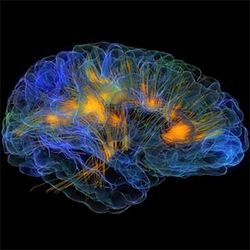
Glass-brain-320UC San Francisco neuroscientist Adam Gazzaley, MD, PhD, is hoping to paint a fuller picture of what is happening in the minds and bodies of those suffering from brain disease with his new lab, Neuroscape, which bridges the worlds of neuroscience and high-tech. Gazzaley aims to eliminate the need to immobilize subjects inside big, noisy machines or tether them to computers — making it impossible to simulate what it’s really like to live and interact in a complex world. Instead, in the Neuroscape lab, wireless and mobile technologies set research participants free to move around and interact inside 3D environments, while scientists make functional recordings with an array of technologies. Gazzaley hopes this will bring his field closer to understanding how complex neurological and psychiatric diseases really work and help doctors like him repurpose technologies built for fitness or fun into targeted therapies for their patients.

“I want us to have a platform that enables us to be more creative and aggressive in thinking how software and hardware can be a new medicine to improve brain health,” said Gazzaley, an associate professor of neurology, physiology and psychiatry and director of the UCSF Neuroscience Imaging Center. “Often, high-tech innovations take a decade to move beyond the entertainment industry and reach science and medicine. That needs to change.” As a demonstration of what Neuroscape can do, Gazzaley’s team created new imaging technology that he calls GlassBrain, in collaboration with the Swartz Center at UC San Diego and Nvidia, which makes high-end computational computer chips.

More here.

A SCIENTIFIC BREAKTHROUGH LETS US SEE TO THE BEGINNING OF TIME

Laurence Krauss in The New Yorker:

Dark-Sector-Lab-BICEP2-580.jpgAt rare moments in scientific history, a new window on the universe opens up that changes everything. Today was quite possibly such a day. At a press conference on Monday morning at the Harvard-Smithsonian Center for Astrophysics, a team of scientists operating a sensitive microwave telescope at the South Pole announced the discovery of polarization distortions in the Cosmic Microwave Background Radiation, which is the observable afterglow of the Big Bang. The distortions appear to be due to the presence of gravitational waves, which would date back to almost the beginning of time.

This observation, made possible by the fact that gravitational waves can travel unimpeded through the universe, takes us to 10-35 seconds after the Big Bang. By comparison, the Cosmic Microwave Background—which, until today, was the earliest direct signal we had of the Big Bang—was created when the universe was already three hundred thousand years old.

If the discovery announced this morning holds up, it will allow us to peer back to the very beginning of time—a million billion billion billion billion billion times closer to the Big Bang than any previous direct observation—and will allow us to explore the fundamental forces of nature on a scale ten thousand billion times smaller than can be probed at the Large Hadron Collider, the world’s largest particle accelerator. Moreover, it will allow us to test some of the most ambitious theoretical speculations about the origin of our observed universe that have ever been made by humans—speculations that may first appear to verge on metaphysics. It might seem like an esoteric finding, so far removed from everyday life as to be of almost no interest. But, if confirmed, it will have increased our empirical window on the origins of the universe by a margin comparable to the amount it has grown in all of the rest of human history. Where this may lead, no one knows, but it should be cause for great excitement.

More here.

Space Ripples Reveal Big Bang’s Smoking Gun

Dennis Overbye in the New York Times:

ScreenHunter_564 Mar. 18 14.04One night late in 1979, an itinerant young physicist named Alan Guth, with a new son and a year’s appointment at Stanford, stayed up late with his notebook and equations, venturing far beyond the world of known physics.

He was trying to understand why there was no trace of some exotic particles that should have been created in the Big Bang. Instead he discovered what might have made the universe bang to begin with. A potential hitch in the presumed course of cosmic evolution could have infused space itself with a special energy that exerted a repulsive force, causing the universe to swell faster than the speed of light for a prodigiously violent instant.

If true, the rapid engorgement would solve paradoxes like why the heavens look uniform from pole to pole and not like a jagged, warped mess. The enormous ballooning would iron out all the wrinkles and irregularities. Those particles were not missing, but would be diluted beyond detection, like spit in the ocean.

“SPECTACULAR REALIZATION,” Dr. Guth wrote across the top of the page and drew a double box around it.

On Monday, Dr. Guth’s starship came in. Radio astronomers reported that they had seen the beginning of the Big Bang, and that his hypothesis, known undramatically as inflation, looked right.

More here.