Mao’s Little Red Book: a Global History

MaoamoJohn Gray at The New Statesman:

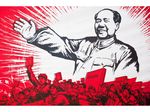
In 1968 a Red Guard publication instructed that scientists must follow Mao Zedong’s injunction: “Be resolute, fear no sacrifice and surmount every difficulty to win victory.” Expert knowledge was not valid, and might be dangerously misleading, without the great leader’s guidance. Examples of revolutionary science abounded at the time. In one account, a soldier training to be a veterinarian found it difficult to castrate pigs. Studying Mao’s words enabled him to overcome this selfish reaction and gave him courage to perform the task. In another inspirational tale, Mao’s thoughts inspired a new method of protecting their crops from bad weather: making rockets and shooting them into the sky, peasants were able to disperse the clouds and prevent hailstorms.

By the time the Red Guard publication appeared, Mao’s Little Red Book had been published in numbers sufficient to supply a copy to every Chinese citizen in a population of more than 740 million. At the peak of its popularity from the mid-1960s to the mid-1970s, it was the most printed book in the world. In the years between 1966 and 1971, well over a billion copies of the official version were published and translations were issued in three dozen languages. There were many local reprints, illicit editions and unauthorised translations.

more here.

Did Chris Marker think history is a sacred book?

Schwabsky_favouritehallucinations_ba_img_0Barry Schwabsky at The Nation:

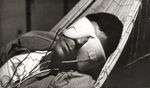
Did Marker also think history to be not only an infinite book but a sacred one? Whatever his early religious yearnings, they seem to have been forgotten or disregarded, at least by his critics, who pass over his early associations with a Catholic magazine and a Catholic publishing house, not to mention his having translated an American author best known for his acuity in writing about the lives of priests. And as late as 2003, in an interview with Libération, Marker spoke of how he’d been moved by a Japanese critic remarking that in both La jetéeand Sans soleil, his goal had been to “overcome death by prayer.” Marker seems never to have relinquished the hope that the ontological character of the image might hold some salvific potential; however irrational this hope might seem, it probably accounts for the poignant intensity of the gaze that makes his films and photographs unforgettable.

Unforgettable above all is the gallery of faces that Marker has left us—especially the female faces. It is impossible not to notice how his camera lingers more searchingly, even almost desperately, on the faces of women. In the Petite Planète series he edited in the 1950s, a woman’s face appears on the cover of each book, as if this is the key to his attachment to the world. He speaks of women as one of “my favorite hallucinations,” and it is impossible not to wonder if, in his Catholic days, he was particularly devoted to Mary.

more here.

The 100 best novels: No 36 – The Golden Bowl by Henry James (1904)

Robert McCrum in The Guardian:

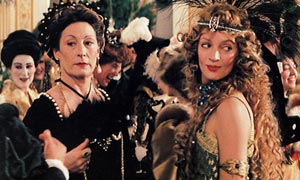
The-Golden-Bowl-005There's an old joke (which only makes complete sense in Britain) that there are three, not one, manifestations of Henry James: James the First (The Portrait of a Lady); James the Second (The Turn of the Screw); and the Old Pretender (The Wings of the Dove; The Golden Bowl). As we approach another giant in this series – for some, the only American writer of greater significance than Mark Twain or F Scott Fitzgerald – I've chosen to skip James I and II, and settle on late James, the Old Pretender, and his masterpiece, The Golden Bowl, a novel that takes its title from Ecclesiastes 12:6-7 (“Or ever the silver cord be loosed, or the golden bowl be broken, or the pitcher be broken at the fountain, or the wheel broken at the cistern… then shall the dust return to the earth as it was…”).

I've made this choice for three reasons. First, because it addresses James's essential theme, the meeting of two great cultures, English and American, and mixes it with the sinister menace of his middle period. Second, because the novel is so intensely (maddeningly, some would say) Jamesian, often hovering between the difficult and the incomprehensible. And finally, because his last novel places him where he belongs, at the very beginning of the 20th century. The Golden Bowl opens with Prince Amerigo, a charming Italian nobleman of reduced means, coming to London for his marriage to Maggie Verver, the only child of the wealthy widower Adam Verver, an American financier and art connoisseur. The plot then reprises a Henry James short story of 1891 (The Marriages), in which a father and daughter become hopelessly caught up in “a mutual passion, an intrigue”, a complex tale of treachery and betrayal made more complex by the fact that James, who suffered acutely from writer's cramp, dictated it to a typist every morning over a period of 13 months. Not since the blind John Milton dictated chunks of Paradise Lost to his daughters has a prominent writer expressed so much of his vision through the medium of the spoken word.

More here.

How to Win the Lottery (Happily)

John Tierney in The New York Times:

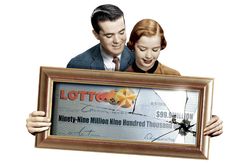
LotIf you have won the lottery, or if you plan to do so, please keep reading this column. The information is vital not just to your happiness but also to the progress of social science.

You have a chance to dispel the notion of the curse of the lottery, which is blamed whenever a big winner ends up divorced, depressed, destitute or dead. Journalists like to explain that the curse is no mere legend — the futility of winning the jackpot has been demonstrated by actual scientists with jobs at accredited universities. The evidence comes from an influential paper in 1978 reporting that lottery winners were not any happier than their neighbors or more optimistic about the future. In fact, they weren’t any more optimistic about their future happiness than a group of people who had been in accidents that left them paralyzed. It was one of the first studies testing the theory that we’re all stuck on a “hedonic treadmill,” a term coined by the paper’s lead author, Philip Brickman, for the idea that good or bad events don’t permanently affect our levels of happiness. The theory remains popular with many psychologists, and the lottery study is still one of the prime pieces of supporting evidence.

More here.

Monday, May 26, 2014

We just need 20 more readers to subscribe and we are done!

DanAzra3QD

Daniel C. Dennett and Azra Raza

It is time for 3QD's summer subscription drive. As you know, we are able to run the site only because our regular readers support us through subscriptions or one-time payments. Whichever you'd like to do, please take a couple of minutes and use the appropriate button near the top of the left-hand column to make a contribution. Please do it now!

We are trying to get just 20 more subscriptions now.

As always, thank you for your generous support!

Mohsin Hamid to Judge 4th Annual 3QD Arts & Literature Prize

UPDATE 06/23/14: Winners announced here.

UPDATE 06/12/14: Finalists announced here.

UPDATE 06/12/14: Semifinalists announced here.

UPDATE 06/03/14: Voting round is now open. Click here to see full list of nominees and vote.

Dear Readers, Writers, Bloggers,
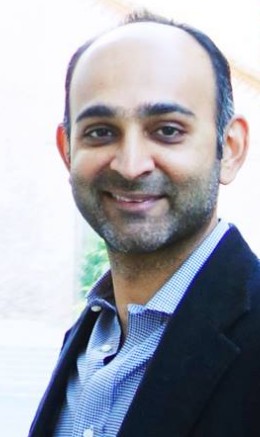
ScreenHunter_630 May. 19 10.12We are very honored and pleased to announce that Mohsin Hamid has agreed to be the final judge for our 4th annual prize for the best blog and online writing in the category of arts and literature. Details of the previous three arts and literature (and other) prizes can be seen on our prize page.

Mohsin Hamid is the author of the novels Moth Smoke, The Reluctant Fundamentalist, and How to Get Filthy Rich in Rising Asia. His award-winning fiction has been featured on bestseller lists, adapted for the cinema, shortlisted for the Man Booker Prize, and translated into over 30 languages. His essays and short stories have appeared in the New York Times, the Guardian, the New Yorker, Granta, and many other publications. Born in 1971 in Lahore, he has spent about half his life there and much of the rest in London, New York, and California.

As usual, this is the way it will work: the nominating period is now open. There will then be a round of voting by our readers which will narrow down the entries to the top twenty semi-finalists. After this, we will take these top twenty voted-for nominees, and the editors of 3 Quarks Daily will select six finalists from these, plus they may also add up to three wildcard entries of their own choosing. The three winners will be chosen from these by Mohsin Hamid.

The first place award, called the “Top Quark,” will include a cash prize of 500 dollars; the second place prize, the “Strange Quark,” will include a cash prize of 200 dollars; and the third place winner will get the honor of winning the “Charm Quark,” along with a 100 dollar prize.

(Welcome to those coming here for the first time. Learn more about who we are and what we do here, and do check out the full site here. Bookmark us and come back regularly, or sign up for the RSS Feed.)

The schedule:

May 19, 2014:

  • The nominations are opened. Please nominate your favorite blog entry by placing the URL for the blog post (the permalink) in the comments section of this post. You may also add a brief comment describing the entry and saying why you think it should win. (Do NOT nominate a whole blog, just one individual blog post.)
  • Blog posts longer than 4,000 words are strongly discouraged, but we might make an exception if there is something truly extraordinary.
  • Each person can only nominate one blog post.
  • Entries must be in English.
  • The editors of 3QD reserve the right to reject entries that we feel are not appropriate.
  • The blog entry may not be more than a year old. In other words, it must have been written after May 18, 2013.
  • You may also nominate your own entry from your own or a group blog (and we encourage you to).
  • Guest columnists at 3 Quarks Daily are also eligible to be nominated, and may also nominate themselves if they wish.
  • Nominations are limited to the first 200 entries.
  • Prize money must be claimed within a month of the announcement of winners.

June 2, 2014

  • The nominating process will end at 11:59 PM (NYC time) of this date.
  • The public voting will be opened soon afterwards.

June 9, 2014

  • Public voting ends at 11:59 PM (NYC time).

June 16, 2014

  • The finalists are announced.

June 23, 2014

  • The winners are announced.

One Final and Important Request

If you have a blog or website, please help us spread the word about our prizes by linking to this post. Otherwise, post a link on your Facebook profile, Tweet it, or just email your friends and tell them about it! I really look forward to reading some very good material, and think this should be a lot of fun for all of us.

Best of luck and thanks for your attention!

Yours,

Abbas

Sunday, May 25, 2014

How the Novel Made the Modern World

William Deresiewicz in The Atlantic:

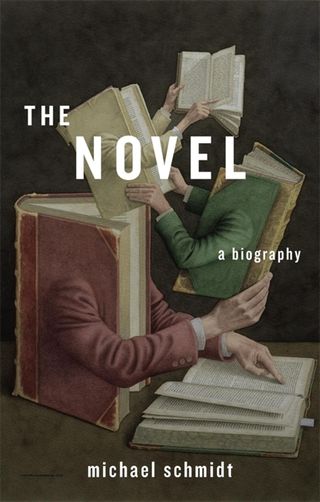
1000x2000Martin Amis once remarked, apropos of the idea of writing a book about America, that you might as well try to write one about people, or life. Or, he might have said, the English novel. Yet here we have the fruits of such an enterprise in all their cyclopedic, cyclopean glory: Michael Schmidt’s The Novel: A Biography—1,100 pages spanning nearly 30 dozen authors, starting with the pseudonymous Sir John Mandeville (he of the 14th-century Travels) and ending 45 brisk, brilliant, intimate, assured, and almost unflaggingly interesting chapters later with Amis himself.

Such an effort represents the labor of a lifetime, one would think. In fact, it is a kind of sequel to Lives of the Poets (1998), a comparably commodious compendium. Schmidt—who was born in Mexico, went to school in part in the United States, and has made his career in Britain—is himself a poet and novelist as well as an editor, publisher, anthologist, translator, and teacher. Given the fluidity with which he ranges across the canon (as well as quite a bit beyond it), one is tempted to say that he carries English literature inside his head as if it were a single poem, except that there are sections in The Novel on the major Continental influences, too—the French, the Russians, Cervantes, Kafka—so it isn’t only English. If anyone’s up for the job, it would seem to be him.

Still, 1,100 pages (and rather big ones, at that). I wasn’t sure I had the patience for it. Then I read this, in the second paragraph. Schmidt is telling us about the figures he’s enlisted as our guides along the way, novelist-critics like Henry James, Virginia Woolf, V. S. Pritchett, Gore Vidal, and many others:

They are like members of an eccentric family in an ancestral mansion … Some are full of respect, some reserved, others bend double with laughter; the rebellious and impatient slash the canvases, twist the cutlery, raise a toast, and throw the crystal in the grate. Their damage is another chapter in the story.

It wasn’t the notion that Schmidt was going to orchestrate the volume as a dialogue with and among these practitioners, though that was promising. It wasn’t the metaphor of the eccentric family per se, though that was interesting. It was the writing itself. The language was alive; the book would be alive as well. Take a breath, clear the week, turn off the WiFi, and throw yourself in.

More here.

Matt Taibbi discusses his new book, “The Divide,” and the disasters of inequality

Elias Isquith in AlterNet:

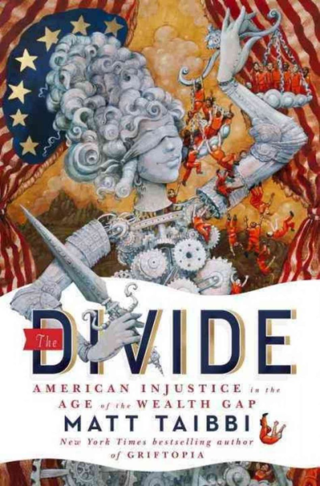
9780812993424_custom-ba58a9cf1305ca65bf6412ab0b014064c6b49cf6-s6-c30His relentless coverage of Wall Street malfeasance turned him into one of the most influential journalists of his generation, but in his new book, “ The Divide: American Injustice in the Age of the Wealth Gap,” Matt Taibbi takes a close and dispiriting look at how inequality and government dysfunction have created a two-tiered justice system in which most Americans are guilty until proven innocent, while a select few operate with no accountability whatsoever.

Salon sat down last week with Taibbi for a wide-ranging chat that touched on his new book, the lingering effects of the financial crisis, how American elites operate with impunity and why, contrary to what many may think, he’s actually making a conservative argument for reform. The interview can be found below, and has been lightly edited for length and clarity.

So, what is “The Divide”?

The book is really just about why some people go to jail and why some people don’t go to jail, and “the divide” is the term I came up with to describe this phenomenon we have where there are essentially two different criminal justice systems, one that works one way for people who are either very rich or working within the confines of a giant systemically important institution, and then one that works in another way for people who are without means. And that’s what the book is about.

More here.

The story of the Gandhis’ biggest mistake, and how it still haunts Punjab

Hartosh Singh Bal in Caravan:

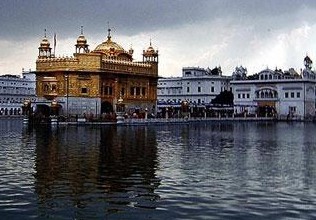
ScreenHunter_644 May. 26 11.22By the time the smoke cleared over the Darbar Sahib, hundreds of innocent bystanders had died. Bhindranwale lay murdered, and the Akal Takht, where he had set up his final defiance of Delhi, stood shattered. The operation was followed by the assassination of Indira Gandhi by her Sikh bodyguards, and the organised massacre of thousands of Sikhs by Hindu mobs, led mainly by Congress politicians. In Punjab, militancy against the Indian state reached levels unprecedented in the years before Bluestar; it took a decade for a semblance of peace to return.

Over the last thirty years, the debate over Bluestar has played out between two extreme points of view: that of radicals in Punjab and abroad, who dwell on the Congress’s role while overlooking Bhindranwale’s complicity, and that of people in the rest of India, who tend to focus on Bhindranwale with little sense of the Congress’s contribution to the tragedy. Many Indians may believe the events of that June can be consigned to the history books, but their memory remains alive in Punjab. Many Sikhs continue to view the operation, and the figure of Bhindranwale, in a markedly different light from the rest of the country. Without understanding how such distinct perspectives came to exist, it may be impossible to come to terms with the history of Bluestar.

More here.

Will Stem Cell Burgers Go Mainstream?

Lisa Winter in IFL Science:

ScreenHunter_643 May. 26 11.17Scientists are currently working on developing an alternative to conventional meat. No, this isn’t flavored soy-based tofurkey or anything like that; it’s actual meat. Instead of raising animals, researchers can use the animal’s stem cells and generate meat.

A new paper from Cor van der Weele and Johannes Tramper, both of Wageningen University in the Netherlands, explores the practical aspects of lab-grown meat and where the research stands now. The paper was published in Science & Society.

Laboratory meat admittedly doesn’t sound very enticing on the surface, but environmentalists, animal rights activists, and even NASA have been awaiting a commercially-viable alternative to conventional meat using stem cells. The product is typically referred to as “schmeat” due to the fact that it grows in sheets. Without an animal’s skeleton, the cells remain flat as they differentiate into muscle tissue.

The journey to lab meat started nearly 20 years ago when NASA was approved by the FDA to begin developing meat for use during long-term space missions. In 2008, PETA announced a prize of US$1 million to anyone who could create stem-cell derived chicken meat. The deadline of March 4, 2014 has passed without a winner awarded, but even without prize money, researchers are still hard at work.

Schmeat could also begin to make up for the large environmental drawbacks to raising livestock, as it takes a tremendous amount of food, water, and energy to raise and process all of that meat. Additionally, the methane produced in the gastrointestinal system of the livestock is adding considerably to greenhouse gas emissions. In vitro meat could reduce energy consumption by 45%, greenhouse gas emissions by 96%, and land use by 99%.

More here.

Computers, and computing, are broken

Quinn Norton in Medium:

ScreenHunter_642 May. 26 11.06Once upon a time, a friend of mine accidentally took over thousands of computers. He had found a vulnerability in a piece of software and started playing with it. In the process, he figured out how to get total administration access over a network. He put it in a script, and ran it to see what would happen, then went to bed for about four hours. Next morning on the way to work he checked on it, and discovered he was now lord and master of about 50,000 computers. After nearly vomiting in fear he killed the whole thing and deleted all the files associated with it. In the end he said he threw the hard drive into a bonfire. I can’t tell you who he is because he doesn’t want to go to Federal prison, which is what could have happened if he’d told anyone that could do anything about the bug he’d found. Did that bug get fixed? Probably eventually, but not by my friend. This story isn’t extraordinary at all. Spend much time in the hacker and security scene, you’ll hear stories like this and worse.

It’s hard to explain to regular people how much technology barely works, how much the infrastructure of our lives is held together by the IT equivalent of baling wire.

Computers, and computing, are broken.

More here.

The entire basis for Obama’s drone strategy may be wrong

Zack Beauchamp in Vox:

Standard_755.0The basic premise of the Obama Administration's drone program is that decapitation, the killing of a terrorist organization's top leadership, works. Killing al-Qaeda's leadership should, in theory, limit the organization's ability to plot attacks on the US and its allies.

But what if that's not true? That's the core finding of a just-published study in the prestigious journalInternational Security. In it, Georgia Tech professor Jenna Jordan takes a look at the history of targeting terrorist leaders and draws lessons for the fight against al-Qaeda. According to Jordan, believing that targeted killing can actually weaken al-Qaeda means assuming al-Qaeda depends on a group of charismatic leaders. But that's wrong, and that mistaken assumption has led the Obama Administration to pursue a strategy centered on targeting al-Qaeda's leadership with drones when it'd really be better to cut down on targeted killings altogether.

More here.

Joseph Conrad’s Crystal Ball

Craig Lambert in Harvard Magazine:

ConADMany call Rudyard Kipling the scribe of the British Empire, but novelist Joseph Conrad (1857-1924) may have best rendered its waning years and foreshadowed its demise. Around the turn of the last century, Conrad’s books portrayed terrorism in Europe, limned the reach of multinational corporations, and foresaw patterns of globalization that became clear only a hundred years later. The contemporary Colombian novelist Juan Gabriel Vásquez has described Conrad’s books “as ‘crystal balls in which he sees the twentieth century,’” says professor of history Maya Jasanoff. “Conrad observed the world around him from distinctive and diverse vantage points because of his own cosmopolitan and well-traveled background,” she continues. “Henry James wrote him a letter that said, ‘No-one has known—for intellectual use—the things you know, and you have, as the artist of the whole matter, an authority that no one has approached.’ James meant not only what Conrad had seen, but the depth of his insights. I would echo that.”

Born in Poland, Conrad spent 20 years of his adulthood as a merchant seaman on French, Belgian, and English ships, steaming to Africa, the Far East, and the Caribbean before settling down as an author in England. His grasp of the tensions and forces tearing apart the Victorian-Edwardian world is a counterweight, says Jasanoff, to the “widely held stereotype of the period as a golden age before everything got wrecked in the trenches of World War I. If you read what people were actually saying then, you get a strong sense of social and economic upheaval. World War I didn’t come out of a vacuum. Conrad’s novels suggest what it was like to be a person living in those times. Fiction can bring alive the subjective experience of the moment, which isn’t rendered by the kinds of documents historians usually look at.” “World War I didn’t come out of a vacuum.…Fiction can bring alive the subjective experience of the moment, which isn’t rendered by the kinds of documents historians usually look at.”

More here.

Saturday, May 24, 2014

Pakistan: Worse Than We Knew

Rashid_1-060514_jpg_600x627_q85

Ahmed Rashid reviews Carlotta Gall's The Wrong Enemy: America in Afghanistan, 2001–2014 in The NYRB (photo by Alexandra Boulat/VII):

All the recent books I have seen on the Afghan wars have recounted how the Pakistani military backed the Taliban when they first emerged in 1993, but lost its influence by 2000. Then, after a brief respite following September 11, 2001, Pakistan’s military helped to resurrect the Taliban resistance to fight the Americans. My own three books on Afghanistan describe the actions of the Pakistani military as one factor in keeping the civil war going and contributing to the American failure to win decisively in Afghanistan.*

Now in The Wrong Enemy: America in Afghanistan, 2001–2014, Carlotta Gall, theNew York Times reporter in Afghanistan and Pakistan for more than a decade, has gone one step further. She places the entire onus of the West’s failure in Afghanistan and the Taliban’s successes on the Pakistani military and the Taliban groups associated with it. Her book has aroused considerable controversy, not least in Pakistan. Its thesis is quite simple:

The [Afghan] war has been a tragedy costing untold thousands of lives and lasting far too long. The Afghans were never advocates of terrorism yet they bore the brunt of the punishment for 9/11. Pakistan, supposedly an ally, has proved to be perfidious, driving the violence in Afghanistan for its own cynical, hegemonic reasons. Pakistan’s generals and mullahs have done great harm to their own people as well as their Afghan neighbors and NATO allies. Pakistan, not Afghanistan, has been the true enemy.

Dogged, curious, insistent on uncovering hidden facts, Gall’s reporting over the years has been a nightmare for the American, Pakistani, and other foreign powers involved in Afghanistan, while it has been welcomed by many Afghans. She quickly emerged as the leading Western reporter living in Kabul. She made her reputation by reporting on the terrible loss of innocent Afghan lives as American aircraft continued to bomb the Pashtun areas in southern Afghanistan even after the war of 2001 had ended. The bombing of civilians was said to be accidental, supposedly based on faulty intelligence; but it continued for years and helped the Taliban turn the population against the Americans.

More here.

the knausgaard phenomenon

25SUBGALCHEN-master315Rivka Galchen at The New York Times:

An international best seller, “My Struggle” has been acclaimed, declaimed and compared to Proust. It is said that Norwegian companies have had to declare “Knausgaard-free” days — no reading, no discussion — so work can get done. All of which means whatever it means, but even a skeptical reader, after a few hundred of any of the volumes’ pages, will concede it is highly likely that “My Struggle” is a truly original and enduring and great work of literature. Yet it is an original and enduring and great work of literature that produces the sensation of reading something like an unedited transcript of one man’s somewhat but not all that remarkable life, written in language that is fairly often banal. (The final phrase of Book 3 is “lodged in my memory with a ring as true as perfect pitch.”)

And so a perhaps childish thought, akin to that of young Karl Ove’s, nags at a reader, especially if the reader reveres the book, as this and many other readers do: Is that really all there is to it? Seemingly indiscriminate amounts of detail about whatever it is that actually happens in real life (or close enough) and there you go, that’s a great book? It’s difficult to believe that literature has been replenished not by an obscure and patient pearl fisherman diving into deep waters and coming up with a blue face, but rather by a reasonably successful 40-something Norwegian guy with three (now four) kids and a pretty comfortable bourgeois life near Copenhagen whose work more resembles “diving” for pennies at the local water fountain.

more here.