Descartes’s other side

Catherine Wilson in the Times Litererary Supplement:

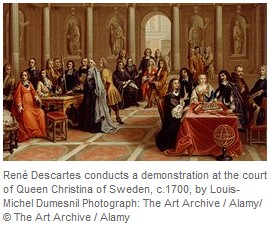
ScreenHunter_631 May. 20 15.47Many people think of René Descartes as a philosopher who persuaded himself that he was aware only of his own ideas, a dualist who thought experience did not require a body, and as a metaphysician deeply preoccupied with the topics of substance, causation and the nature of God. How this imaginary figure emerged from the anti-scholastic student of animals, snowflakes, crystals, mathematics, music and optics, the mind–body theorist and inventor of the impressive hypothesis of the celestial vortices distinctly recognized in the eighteenth century, remains something of a mystery. Meanwhile, the two books under review leave no doubt that there is more to say about Descartes and more to learn.

Steven Nadler has produced another gem of original research and lively and lucid writing. The point of departure of The Philosopher, the Priest and the Painter is the rough portrait of Descartes by Frans Hals in the National Gallery of Denmark that is believed to have served as the basis for the multiply reproduced version by an unknown artist that hangs in the Louvre. Nadler makes a good case for his hypothesis that the Hals original was affectionately commissioned by Augustijn Bloemaert, a lively and rebellious Catholic priest of nearby Harlem, on the eve of Descartes’s departure in 1649 from his last residence in Holland, in the small coastal village of Egmond de Addij, for the Swedish court, where he died the following winter.

More here.

City of Lies: The truth is more bizarre than fiction in modern-day Tehran

Eliza Griswold in The Telegraph:

Tehran'Let’s get one thing straight: in order to live in Iran you have to lie,” the British-Iranian journalist Ramita Navai begins her searing account of life in Tehran, City of Lies. It’s an audacious disclaimer with which to open a book of true-life stories. It was Camus who said that “fiction is the lie through which we tell the truth”. But this isn’t fiction, Navai tells us. These profiles are based on real Iranians. In order to survive, the eight Iranians she writes about have to bear the weight of desperate secrets. The setting is Vali Asr Street, the sycamore-lined road that both unifies and divides the debauched rich and devout poor of the Iranian capital, a city of more than seven million people. Although Navai has altered details and created composites to protect their identities, her Iranians share stories intimate and unforgettable enough to establish City of Lies as a remarkable and highly readable map of its human geography.

She speaks to a bumbling Iranian-American terrorist who botches an assassination attempt. A devout schoolgirl who escapes a horrific marriage. An underground blogger struggling to come to terms with his parents’ assassination. A local gangster cooking up sheesheh – crystal meth. A porn star risking her life. A basiji boy leaving his militant thug life to have a sex change. In one chapter, a dapper jahel, an old-school hoodlum, loses his wife. In another, an ageing socialite comes to terms with her vanished Iran. Even when the religious police raid her high-end belly-dancing class under charges that it could encourage lesbianism, she resolves to stay.

More here.

From Thomas Piketty to Cliven Bundy to GOP climate trolls, democracy is in deep crisis

Andrew O'Hehir in Salon:

Rubio_jefferson-620x412In the glory days of the anti-globalization movement, circa the “Battle in Seattle” of 1999, there was an oft-repeated street scene some of you will remember. A group of protesters would seize an intersection or a block for a little while, likely because the police were otherwise occupied or couldn’t be bothered or didn’t want to bust heads while the cameras were watching. The ragtag band would haul out the drums and noisemakers, climb the lampposts and newspaper boxes with colorful banners, and send out an exuberant chant: “This is what democracy looks like!” (Contrary to what you may have heard, smashing the Starbucks windows was not required, and not all that common.)

It’s easy to snark all over that from this historical distance: If democracy looks like a noisy street party involving white people with dreadlocks dressed as sea turtles, count me out! But the philosophy behind that radical-activist moment was not nearly as naive as it might look from here, and much of the problem lies in that troublesome noun: democracy. In those post-Communist, pre-9/11 days, the era of the “end of history,” democracy in its liberal-capitalist formulation was assumed to be the natural fulfillment of human society. It was the essential nutrient-rich medium for the growth of all good things: Pizza Hut, parliamentary elections, knockoff designer clothes and broadband Internet, not to mention all the wonderful gizmos that were about to be invented. Even anti-capitalist protesters were compelled to embrace the rhetoric of democracy, if only to suggest (as Gandhi did about “Western civilization”) that it was a great idea but we hadn’t gotten there yet.

A decade and a half later, democracy remains officially unopposed on the world stage, yet it faces an unexpected existential crisis. Since the collapse of the Soviet Union, American-style liberal-capitalist democracy has presented itself to the world as “the only legitimate form of expression or decision-making power” and “the necessary first condition of freedom.” (I’m quoting an anarchist critique by Moxie Marlinspike and Windy Hart, which is well worth reading.) But it has abruptly and spectacularly stopped working as advertised: The broken American political system has become a global laughingstock, and numerous other Western countries that modeled their systems on ours are in chronic crisis mode.

More here.

THE WORLD AS WE KNOW IT: Zia Haider Rahman’s dazzling début

James Wood in The New Yorker:
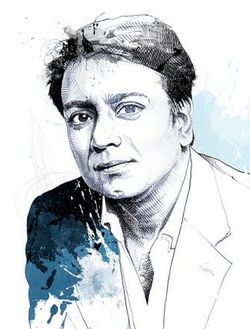
ScreenHunter_630 May. 20 15.35There is a difference between knowingness and knowledge, but what is it? Knowingness comes after knowledge; it is only the echo of its source, and it is proud to be the echo. One of the liberties of our connected age is that we can be almost infinitely knowing, consoling our lack of true knowledge with an easy cynicism of acquisition. It is cheaply glorious to be able to discover almost any fact about the world on the machine I am using to write this review: I experience that liberty as the reward it is, and also as a punishment; as both a gift of the digital world and a judgment on my scant acquaintance with the actual world.

Speak for yourself, you may say. Who is this “we,” so easily invoked? If knowingness is capitalism’s gift to those metropolitan élites who haven’t earned it, there are also multitudes of people, constrained by poverty and political oppression and the bad luck of obscurity, who don’t deserve the brutal “knowledge” that is being meted out daily on their lives; they would be very grateful for the privileges of knowingness. And, by the way, would you, in Paris or New York or London, really rather know less, as the price of being less knowing?

Zia Haider Rahman’s first novel, “In the Light of What We Know” (Farrar, Straus & Giroux), prompts such thoughts, and in some ways dramatizes them. It is a novel unashamed by many varieties of knowledge—its characters talk, brilliantly, about mathematics, philosophy, exile and immigration, warfare, Wall Street and financial trading, contemporary geopolitics, Bangladesh, Pakistan, Afghanistan, English and American society, Islamic terrorism, Western paternalism, Oxford and Yale. It is a novel that displays a formidable familiarity with élite knowledge, and takes for granted a capacity for both abstract and worldly thinking.

More here.

Remembering, as an Extreme Sport

Benedict Carey in The New York Times:

MemoIf not quite Ali-Frazier or Williams-Sharapova, the duel was all the audience of about 100 could ask for. They had come to the first Extreme Memory Tournament, or XMT, to see a fast-paced, digitally enhanced memory contest, and that’s what they got. The contest, an unusual collaboration between industry and academic scientists, featured one-minute matches between 16 world-class “memory athletes” from all over the world as they met in a World Cup-like elimination format. The grand prize was $20,000; the potential scientific payoff was large, too. One of the tournament’s sponsors, the company Dart NeuroScience, is working to develop drugs for improved cognition. The other, Washington University in St. Louis, sent a research team with a battery of cognitive tests to determine what, if anything, sets memory athletes apart. Previous research was sparse and inconclusive.

Yet as the two finalists, both Germans, prepared to face off — Simon Reinhard, 35, a lawyer who holds the world record in card memorization (a deck in 21.19 seconds), and Johannes Mallow, 32, a teacher with the record for memorizing digits (501 in five minutes) — the Washington group had one preliminary finding that wasn’t obvious. “We found that one of the biggest differences between memory athletes and the rest of us,” said Henry L. Roediger III, the psychologist who led the research team, “is in a cognitive ability that’s not a direct measure of memory at all but of attention.”

More here.

why Karl Ove Knausgaard is bad

William Deresiewicz at The Nation:

So why are we even talking about it? Because My Struggle is in the process of being anointed as a literary masterpiece, and not just in Norway. “Karl Ove Knausgaard Is Your Favorite Author’s Favorite Author” went a recent headline in The New Republic. The article cites Jeffrey Eugenides, Zadie Smith and Jonathan Lethem among the devotees and adds that Knausgaard, who turns 46 this year, is already being touted for the Nobel Prize. James Wood, in The New Yorker, has called the novel “ceaselessly compelling.” Leland de la Durantaye, in The New York Times Book Review, has pronounced it “breathtakingly good.” “Everywhere I’ve gone this past year,” wrote Smith last December in The New York Review of Books, “the talk, amongst bookish people, has been of this Norwegian.”

That talk, it’s fair to guess from the reviews, has centered on a single theme: the book is often boring, yes, the writing often artless, but despite it all—or rather, for those very reasons—Knausgaard manages something unprecedented. He immerses us completely in his own experience. “You live his life with him,” writes Smith. “You don’t simply ‘identify’ with the character, effectively you ‘become’ them.” Knausgaard’s life may be mundane, the thinking goes, but so is yours. His existence may be full of petty chores and cares, but so is everyone’s. And his renunciation of art—his apparent refusal, as Wood expresses it, to shape or select—is the very thing that draws us in.

more here.

why Karl Ove Knausgaard is good

Url

Ben Lerner at The London Review of Books:

Or, without being certain that it’s good literature. ‘It seems like a child has written it,’ Knausgaard told an interviewer. ‘There are childishness, stupidity, lack of wisdom, fantasies. At the same time, that’s where my creativity can be found. If I tried to control it and make it more mature, it wouldn’t be good at all. It’d be uninteresting, without any vivacity.’ I can almost hear Knausgaard going on to say: ‘It would merely be literature.’My Struggle positions itself as an anti-literary project: it’s what Knausgaard writes instead of novels and it describes his increasing revulsion from fiction (broadly construed). If he were to write another novel, he says in Volume 2, ‘it would just be literature, just fiction, and worthless … just the thought of fiction, just the thought of a fabricated character in a fabricated plot made me feel nauseous.’ My Struggle is sometimes categorised as a novel – by its publishers, for one – but nobody expects us to believe that it’s fiction in any conventional sense, given the verifiability of the biographical details and the huge scandal caused in Norway by its exposure of his real relationships. My Struggle is the chronicle of Knausgaard turning his back on the genre of the novel, a six-volume Lord Chandos Letter intended to exhaust and extinguish all of Knausgaard’s literary ambitions. He has described the writing of My Struggle as an act of ‘literary suicide’: ‘There is nothing left; I can never again write something from the heart without repeating myself, but I wanted it that way. In Volume 6 I even wrote a couple of lines about future novels, stories I’d thought of, just to kill them off. The last sentence in that book is: “And I’m so happy that I’m no longer an author.”’

more here.

Karl Ove Knausgaard speaks

An interview at The Paris Review:

It’s not like writing in a diary, though. A novel opens space between a writer and his or her material, the space of literature. There’s less distance between writer and diary than between writer and novel.

It’s all the difference in the world. I had tried to write from the age of eighteen, but didn’t succeed at all. Then, when I was about twenty-seven, I changed my language. This is difficult to explain. You can write a radical Norwegian or a conservative Norwegian. And when I changed to a conservative Norwegian, I gained this distance or objectivity in the language. The gap released something in me, and in the writing, which made it possible for the protagonist to think thoughts I had never myself thought.

But it isn’t only about language. There’s a kind of objectivity in the form itself. It is not you, it is not even yours. When you use the form of a novel, and you say “I,” you are also saying “I” for someone else. When you say “you,” you are simultaneously in your room writing and in the outside world—you are seeing and being seen seeing, and this creates something slightly strange and foreign in the self. When you see that, or recognize that, you are in a different place, which is the place of the novel or the poem.

In Min Kamp, I wanted to see how far it was possible to take realism before it would be impossible to read. My first book had a strong story, strong narration. Then I would see how far I could take a digression out before I needed to go back to the narration, and I discovered I could go for thirty or forty pages, and then the digressions took over. So inMin Kamp I’m doing nothing but digressions, no story lines. Language itself takes care of it. The form gives something back.

more here.

Tuesday Poem

Comete

Uphill in Melbourne on a beautiful day
a woman is walking ahead of her hair.
Like teak oiled soft to fracture and sway
it hung to her heels and seconded her
as a pencilled retinue, an unscrolling title
to ploughland, edged with ripe rows of dress,
a sheathed wing that couldn't fly her at all,
only itself, loosely, and her spirits.
A largesse
of life and self, brushed all calm and out,
its abstracted attempts on her mouth weren't seen,
not its showering, its tenting. Just the detail
that swam in its flow-lines, glossing about–
as she paced on, comet-like, face to the sun.

by Les Murray

Monday, May 19, 2014

Sunday, May 18, 2014

Evangelist-in-chief: Jimmy Carter redeemed the nation from the venality of the Nixon years

Jonathan Yardley in The Wshington Post:

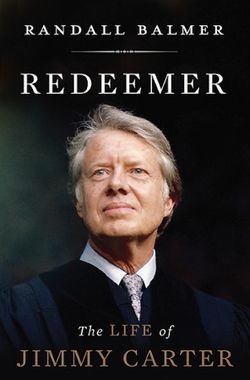
RedeemerIn Randall Balmer’s admirably succinct if thematically debatable biography, Jimmy Carter enters the White House in January 1977, three years after the resignation in disgrace of Richard M. Nixon, on a high if not downright inspiring note. “Carter represented a clean break with the recent past,” Balmer writes, “an opportunity to redeem the nation.” More than 100 pages later, in his concluding paragraph, Balmer returns to the theme, calling Carter “the man whose improbable election in 1976 redeemed the nation from the sins of Watergate.”

Like Carter, Balmer is a man of strong evangelical convictions — he teaches at Dartmouth, with an emphasis on American religious history — and he has framed this biography around the themes those convictions suggest. Inasmuch as Balmer is reasonably objective and unsentimental about Carter’s record as president, it would be unfair to say that he views Carter as a savior (a view that Carter himself probably would happily embrace), but there is a willingness here to accept Carter’s religiosity on its own terms, to make token acknowledgment of his “strain of self-righteousness” and “fierce competitiveness.” Balmar lays greatest emphasis on what he clearly views as the depth and sincerity of Carter’s beliefs and the degree to which those beliefs shaped his public and private lives, carrying on the cause of those “progressive evangelists [who] in the nineteenth century interpreted the prophetic calls for justice as a mandate for racial reconciliation and gender equality.”

More here.

Marxism and tradition in 1960s India

A.S. Byatt in The Guardian:

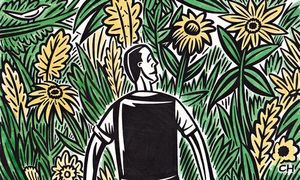
Clifford-Harper-illustrat-008Neel Mukherjee's very ambitious and very successful novel is set in Calcutta and the ricefields on the edge of the jungle in the west of West Bengal. It takes place in the second half of the 1960s and centres on the large and relatively wealthy Ghosh family, whose head, Prafullanath, owns various paper mills. The eldest grandson, Supratik, has left home and joined the CPI(M) (Communist Party of India, Marxist), and is working secretly to mobilise the peasants against the landlords. Letters from him to an unnamed correspondent form one thread of narrative. The other is an intricate account of events and relationships on the various floors of the Ghosh house. There are tragedies and comedies, deaths and births, disasters and feasts. The story is marked by marriages, and the failure of Chhayha to marry because she is too dark-skinned. The cast is huge and the reader spends time, at one point or another, with most of them. It takes a while to get to know all the men, women and children, but the story is always gripping, and there are various time-bombs that suddenly change the way we see the book's whole world.

One of Mukherjee's great gifts is precisely his capacity to imagine the lives of others. He can move from inside one head to inside another in a conversation or conflict and take the reader with him. He isn't really an omniscient narrator, there is no authorial voice – just an imagination that is more than adequate to its task. There is a scene in which Prafullanath goes in a large car to confront the massed and angry workers at a mill he has closed. Mukherjee sees this dangerous moment from every point of view – the workers who have not been paid for a year, the factory owner whose world has slipped out of his grip, Prafullanath's anxious sons. One of these, a hopeful writer, nevertheless manages to think up an ornate metaphor of “a fully reared-up snake, hood engorged, waiting to strike” for the workers, and to wonder if he could use it. The reader does not lose sight of the moral rights of the workers, but must imagine so much more.

More here.

On a Parish Death Notice

Justin E. H. Smith in his own blog:

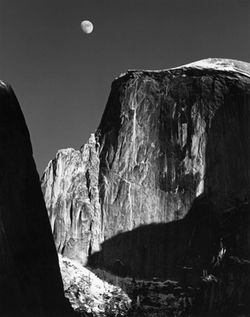
6a00d83453bcda69e201a511ba62b2970c-400wi‘Nature’, in common usage, can mean a number of different things. Sometimes it refers to the external world, and more particularly to the earth’s surface, and more particularly still to that part of the earth’s surface made up of biomass. In the same general conceptual vicinity, we also find the notion of nature as environment, as the surrounding medium through which we move. At other times, ‘nature’ refers to the particular nature of a given being, or what is sometimes called ‘essence’– what it is to be a particular entity rather than another.

The first sense of ‘nature’ reflects the word’s etymology, which is rooted in the Latin verbnasci, ‘to be born’. Nature, on this understanding, is that which undergoes generation and growth (and generally also corruption or death). This connection between nature and birth is similarly reflected in the Slavic and many other Indo-European languages (in Russian, for example, nature is priroda, connected to the verb rodit’sia, ‘to be born’; in the Sanskrit praktiby contrast the verbal root has to do more with active creation than with generation). If less evidently, the concepts of generation and growth are also embedded in the Greek term physis, from which of course we get both ‘physical’ and what is sometimes held to lie beyond this, the ‘metaphysical’.

More here.

Mr. Politically Correct Obama, Meet Your Opposite, India’s Mr. Modi

Tunku Varadarajan in The Daily Beast:

1400357321004.cachedWhen Barack Obama was made aware that Narendra Modi would be India’s next prime minister, the chances are that he moaned softly to himself…and cringed.

India’s voters had brought to power a man who is not permitted to visit the United States, having been denied a U.S. visa in 2005 on account of a State Department determination that he had violated religious freedoms in the Indian state of Gujarat. (Some 2,000 Muslims had died in riots that scarred Gujarat in 2002. Modi was the state’s chief minister at the time, and his critics hold him responsible for the deaths.) The visa ban was still in place when Modi was nominated last September to lead the Bharatiya Janata [Indian People’s] Party into the elections; and most awkwardly for Obama, the ban was still technically in place on the day of his victory. American diplomacy has been decidedly maladroit.

As if jolted awake by the obtuseness of his own State Department, Obama invited Modi to visit the U.S. “at a mutually agreeable time” when he called the Indian on Saturday to congratulate him on his triumph.

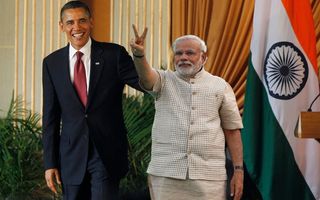
A meeting between the two men, when it occurs, could be fascinating to observe. Obama and Modi are from two different planets, and each, in his heart, is likely to have vigorous contempt for the other. The former is an exquisitely calibrated product of American liberalism, ever attentive to such notions as “inclusiveness.” He is the acme of political correctness (notwithstanding the odd drone directed at “AfPak”). Modi, by contrast, is a blunt-spoken nationalist, opposed to welfare, and to the “appeasement” of minorities.

More here.

Steven Pinker: ‘What could be more interesting than how the mind works?’

Colleen Walsh in the Harvard Gazette:

Q: Can you tell me about your early life? Where did you grow up and what did your parents do?

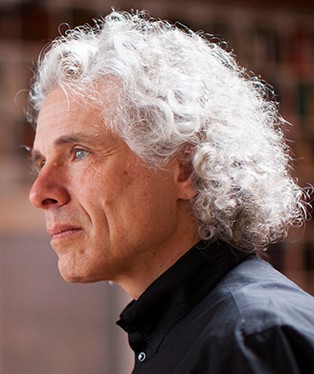
ScreenHunter_628 May. 18 18.56A: I grew up in Montreal, as part of the Jewish minority within the English-speaking minority within the French-speaking minority in Canada. This is the community that gave the world Leonard Cohen, who my mother knew, and Mordecai Richler, who my father knew, together with William Shatner, Saul Bellow, and Burt Bacharach. I was born in 1954, the peak year of the baby boom. My grandparents came to Canada from Eastern Europe in the 1920s, I surmise, because in 1924 the United States passed a restrictive immigration law. I can visualize them looking at a map and saying “Damn, what’s the closest that we can get to New York? Oh, there’s this cold place called Canada, let’s try that.” Three were from Poland, one from what is now Moldova. My parents both earned college degrees. My father had a law degree, but for much of his career did not practice law. He worked as a sales representative and a landlord and owned an apartment-motel in Florida. But he reopened his law practice in his 50s, and retired at 75. Like many women of her generation, my mother was a homemaker through the ’50s and ’60s. In the 1970s she got a master’s degree in counseling, then got a job and later became vice principal of a high school in Montreal.

More here.