A professor’s unlikely quest for busts of Alexander Pope

12-unknown_william-kurtz-wimsattLilly Lampe at Paris Review:

Fame and Friendship: Pope, Roubiliac, and the Portrait Bust in Eighteen-Century Britain,” recently on view at the Yale Center for British Art, tells a curious tale of Alexander Pope’s legacy, focusing on the strange fervor that continues to surround busts and portraits of him. Pope, whose birthday was earlier this week, was a household name, at least in one sector of British society. He was the first English poet to publish two volumes of his own collected works while living—and with the publication of the first volume, he also became the first English author to sustain himself entirely on the proceeds of his work. And he didn’t lead a meager existence. Pope was able to lease a sizable villa near Richmond, a painting of which was on view in Yale’s exhibition.

For any writer, these achievements would’ve been no small feat, but they’re especially impressive in light of Pope’s many obstacles. He was a Catholic at a time when Catholics weren’t allowed to live within ten miles of London or Westminster or to attend university; and he was beset with health problems that led to a visible hunchback and permanently stunted his height. Even so, Pope became a celebrated member of the British literary canon—someone whose very image evoked intellectual achievement.

more here.

Maya Angelou: a titan who lived as though there were no tomorrow

Gary Younge in The Guardian:

MayaThe first time I interviewed Maya Angelou, in 2002, I got hammered. What was supposed to have been a 45-minute interview in a hotel room near Los Angeles had turned into a 16-hour day, much of it spent in her stretch limo, during which we'd been to lunch, and she had performed. On the way back from Pasadena she asked her assistant, Lydia Stuckey, to get out the whisky.

“Do you want ice and stuff?” Stuckey asked.

“I want some ice, but mostly I want stuff,” said Angelou with a smile, and invited me to join her.

Then came a traffic jam. The car came to a crawl. But the whisky kept flowing. So did the conversation. We talked about South Africa, writing, growing old, staying young, our mothers, growing up poor and living abroad. We laughed a lot too: at ourselves, each other and general human folly. She reserved particular ridicule for my hotel, which she thought was pretentious. (She was right). Her laugh was no small thing. She threw her head back and filled the car with it – and it was a big car. Episodically, when words alone would not suffice, she would break, without warning, into verse – sometimes her own, sometimes others'.

When I asked her how she dealt with people's response to old age, she recited the final verse of her poem, On Aging:

I'm the same person I was back then

A little less hair, a little less chin,

A lot less lungs and much less wind.

But ain't I lucky I can still breathe in.

And then the laughing would start again. As her car pulled away after dropping me off at the hotel, she put her head out of the window, waved, and shouted like a teenage girl: “That's swanky!” She was 74 and high on life. I honestly couldn't tell if she was drunk or not. There'd been plenty of serious talk throughout the day. But she'd also been singing and laughing since the morning. Anyone who knows her work and her life story – which is a huge part of her work – knows that this is a huge part of her currency. Those maxims that people learn on their death bed – that you only have one life, that it is brief and frail, and if you don't take ownership of it nobody else will – were the tenets by which she lived.

More here.

Global health: Deadly dinners

Meera Subramanian in Nature:

Stove1After returning from her nine-and-a-half-hour shift as a security guard, Savita Satish Dadas begins plucking fenugreek leaves from their stems for dinner. She and her two children, along with three of their cousins, gather in a shed-like structure next to their house in the Satara District of Maharashtra, India. As goats and cows settle in for the night a few metres away, Dadas and the children sit down on a packed dirt floor around the family hearth. Whisps of smoke rise up from their chulha, the Indian name given to a traditional cooking-stove fuelled by wood and other organic matter often gathered from the countryside. Dadas's stove, like several of her neighbours', is sculpted out of clay. But many make a rudimentary three-stone fire — a triangle of elevated points to support a pot — that humans have used for millennia. Dadas feeds roughly chopped logs into the stove and her hands shape moistened flour into bhakri bread, the rhythmic movement illuminated by the flickering flames.

With this simple daily act, Dadas shares a connection with more than one-third of the world's population, the three billion people who depend on solid biomass fuels — such as wood, animal dung, agricultural waste and charcoal — or coal for their cooking needs. In India, a nation that is rapidly developing in many ways, 160 million households — some two-thirds of families — still rely on such fuel for their primary cooking energy source. Globally, the percentage of households that use biomass has slowly and steadily decreased over the past three decades1. But because the world's population has been rising so quickly, the number of people using solid fuels is not declining, says Kirk Smith, an environmental-health scientist at the University of California, Berkeley, who has studied the health implications of such cooking stoves for 30 years. “This is not going away.” And the urgency to transition billions of people around the world to cleaner forms of cooking has never been greater, in light of recent research revealing that emissions from traditional cooking-stoves pose a bigger threat than previously thought. Results from a global health study released earlier this year project that household air pollution from such fires causes more than four million premature deaths annually — more than one-quarter of them in India alone2. Earth's climate is also at risk from the smoke, which contains dark particles that absorb sunlight, alter atmospheric patterns and hasten glacial melting.

More here.

Thursday Poem

Kin

We were entwined in red rings
Of blood and loneliness before
The first snows fell
Before muddy rivers seeded clouds
Above a virgin forest, and
Men ran naked, blue and black
Skinned into the warm embraces
Of Sheba, Eve and Lilith.
I was your sister.

You left me to force strangers
Into brother molds, exacting
Taxations they never
Owed or could ever pay.

You fought to die, thinking
In destruction lies the seed
Of birth. You may be right.

I will remember silent walks in
Southern woods and long talks
In low voices
Shielding meaning from the big ears
Of overcurious adults.

You may be right.
Your slow return from
Regions of terror and bloody
Screams, races my heart.
I hear again the laughter
Of children and see fireflies
Bursting tiny explosions in
An Arkansas twilight
.

by Maya Angelou
from And Still I Rise
Random House, Inc.

Wednesday, May 28, 2014

Your Princess Is in Another Castle: Misogyny, Entitlement, and Nerds

1401283437859.cached

Arthur Chu in the wake of the Santa Barbara shootings, in The Daily Beast (image from Youtube):

[T]he overall problem is one of a culture where instead of seeing women as, you know, people, protagonists of their own stories just like we are of ours, men are taught that women are things to “earn,” to “win.” That if we try hard enough and persist long enough, we’ll get the girl in the end. Like life is a video game and women, like money and status, are just part of the reward we get for doing well.

So what happens to nerdy guys who keep finding out that the princess they were promised is always in another castle? When they “do everything right,” they get good grades, they get a decent job, and that wife they were promised in the package deal doesn’t arrive? When the persistent passive-aggressive Nice Guy act fails, do they step it up to elaborate Steve-Urkel-esque stalking and stunts? Do they try elaborate Revenge of the Nerds-style ruses? Do they tap into their inner John Galt and try blatant, violent rape?

Do they buy into the “pickup artist” snake oil—started by nerdy guys, for nerdy guys—filled with techniques to manipulate, pressure and in some cases outright assault women to get what they want? Or when that doesn’t work, and they spend hours a day on sites bitching about how it doesn’t work like Elliot Rodger’s hangout “PUAHate.com,” sometimes, do they buy some handguns, leave a manifesto on the Internet and then drive off to a sorority house to murder as many women as they can?

No, I’m not saying most frustrated nerdy guys are rapists or potential rapists. I’m certainly not saying they’re all potential mass murderers. I’m not saying that most lonely men who put women up on pedestals will turn on them with hostility and rage once they get frustrated enough.

But I have known nerdy male stalkers, and, yes, nerdy male rapists. I’ve known situations where I knew something was going on but didn’t say anything—because I didn’t want to stick my neck out, because some vile part of me thought that this kind of thing was “normal,” because, in other words, I was a coward and I had the privilege of ignoring the problem.

I’ve heard and seen the stories that those of you who followed the#YesAllWomen hashtag on Twitter have seen—women getting groped at cons, women getting vicious insults flung at them online, women getting stalked by creeps in college and told they should be “flattered.” I’ve heard Elliot Rodger’s voice before. I was expecting his manifesto to be incomprehensible madness—hoping for it to be—but it wasn’t. It’s a standard frustrated angry geeky guy manifesto, except for the part about mass murder.

More here.

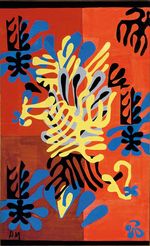
Henri Matisse: The Cut-Outs

Clar05_3611_01T.J. Clark at the London Review of Books:

The problem that follows for the critic is not to decide whether Matisse’s cut-outs succeed, much of the time, in shrugging off these limitations of social purpose or available theme – only a killjoy or an iconographer could resist the splendour on the walls – but to speak rationally about how it was done. In many ways the most useful piece of writing about late Matisse remains an article called ‘Something Else’ published in Henri Matisse: Paper Cut-Outs almost forty years ago by the poet and essayist Dominique Fourcade. It is that rare beast in the art world, a catalogue essay of high seriousness that entertains real doubts about the quality of its objects. Naturally this means that it has been shuffled off subsequently into art-historical limbo (I can’t see that it gets a mention in Tate’s book to accompany the current show), but its arguments – coming from a writer with deep knowledge of Matisse’s art and life – seem to me worth revisiting. Fourcade begins by refusing to be impressed by the phrases from books and interviews invariably brought on to define the cut-outs’ originality. ‘Cutting straight into colour reminds me of the direct carving of the sculptor,’ Matisse said inJazz. ‘I arrived at the cut-outs,’ he wrote to his protector Father Couturier, ‘in order to link drawing and colour in a single movement.’ But how is any of this new for Matisse? Hadn’t his painting ever since 1905 been an attempt to link drawing and colour in a single movement; that is, to make colour appear (it must be a matter of appearance, of contrivance, but if the spell works the result will be utterly convincing) to divulge its shape and extent, its internal spatiality, its proximity and distance? There is an oil painting at Tate which epitomises the previous colour regime. Red Interior: Still Life on a Blue Table is one of a cluster of works from 1947-48 that said farewell, so it turned out, to the set of objects – the intimate and agitated small world – around which Matisse’s painting had been oriented for half a century. (‘Window’, ‘table’, ‘glimpse of garden’ and ‘interior’ are tropes that the cut-outs then largely abandon.) It is very hard to pin down what makes Red Interior so beautiful and hard to bear.

more here.

the nsa debate

LeadColin Friedersdorf at The Atlantic:

In a review of Glenn Greenwald's No Place to Hide: Edward Snowden, the NSA, and the U.S. Surveillance State, George Packer, whose best work is superb, makes a number of dubious claims. They are typical of liberal moderates who acknowledge that the NSA's behavior is worrisome yet direct their most scathing remarks at the people who revealed it, as if they are the ones who pose an ongoing threat to what is right and good. The liberal moderates present themselves as sober analysts striving for objectivity. They're careful to name excesses of the national-security state and its critics, but only the latter are subject to scorn, disdain, and ad hominem attacks. Sometimes I wonder if a formal etiquette guide to that effect is tucked into the seat-back pouches on the Acela Express.

Packer is best understood by beginning here:

Snowden is a libertarian whose distrust of institutions and hostility to any intrusion on personal autonomy place him beyond the sphere in American politics where left and right are relevant categories. A temperament as much as a philosophy, libertarianism is often on the verge of rejecting politics itself, with its dissatisfying but necessary trade-offs; it tends toward absolutist positions, which grow best in the mental equivalent of a hermetic laboratory environment.

more here.

the novel is really and truly dead

Printing-press-001Will Self at The Guardian:

There is now an almost ceaseless murmuring about the future of narrative prose. Most of it is at once Panglossian and melioristic: yes, experts assert, there's no disputing the impact of digitised text on the whole culture of the codex; fewer paper books are being sold, newspapers fold, bookshops continue to close, libraries as well. But … but, well, there's still no substitute for the experience of close reading as we've come to understand and appreciate it – the capacity to imagine entire worlds from parsing a few lines of text; the ability to achieve deep and meditative levels of absorption in others' psyches. This circling of the wagons comes with a number of public-spirited campaigns: children are given free books; book bags are distributed with slogans on them urging readers to put books in them; books are hymned for their physical attributes – their heft, their appearance, their smell – as if they were the bodily correlates of all those Gutenberg minds, which, of course, they are.

The seeming realists among the Gutenbergers say such things as: well, clearly, books are going to become a minority technology, but the beau livre will survive. The populist Gutenbergers prate on about how digital texts linked to social media will allow readers to take part in a public conversation. What none of the Gutenbergers are able to countenance, because it is quite literally – for once the intensifier is justified – out of their minds, is that the advent of digital media is not simply destructive of the codex, but of the Gutenberg mind itself. There is one question alone that you must ask yourself in order to establish whether the serious novel will still retain cultural primacy and centrality in another 20 years. This is the question: if you accept that by then the vast majority of text will be read in digital form on devices linked to the web, do you also believe that those readers will voluntarily choose to disable that connectivity?

more here.

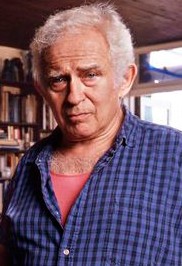
Norman Mailer’s A Fire on the Moon: a giant leap for reportage

Geoff Dyer in The Guardian:

ScreenHunter_658 May. 28 20.35Mailer starts with the news of Hemingway's death; I'll start with Ezra Pound's claim, in The ABC of Reading, that literature “is news that STAYS news”. The appeal of having one of America's best-known writers cover the biggest news story of the decade – probably of the century, conceivably of all time – was obvious, and Mailer was a natural fit. Back then a lot of people were quoting the opinion that he was the best journalist in America. One of those people was Mailer himself who took umbrage at the praise as it tacitly downgraded his achievements as a novelist. Imagine Laurence Sterne with a huge subject, a big advance and a looming deadline, and you have some sense of the conflicting pressures at work on Of a Fire on the Moon (the original American title).

The deadline needs emphasising. Other writers had plenty to say about the moon landing – everyone had something to say about it – but few would have had the chops to bang out 115,000 words for publication in three issues of Life magazine, the first tranche of which, Mailer groans, was due less than three weeks after the astronauts splashed down in the Pacific. That, to put it mildly, is a lot of words in a very short time: not quite as challenging a task as the one set out by John F Kennedy in 1961 – to land a man on the moon and return him safely to earth by the end of the decade – but a serious job of work all the same. So the question today, for anyone under the age of 45 who was unable to experience the event, let alone read about it as news, is the extent to which the result is compromised or enhanced by the circumstances of its occasion and composition. Now that the subject matter is the stuff of history – when the word astronaut might be used in the context of historical as opposed to science fiction – does Mailer's book pass Pound's testing definition? And where does it stand within two quite different contexts: that of other books about the moon landings, and within the large scope and wildly mixed quality of Mailer's work as a whole?

More here.

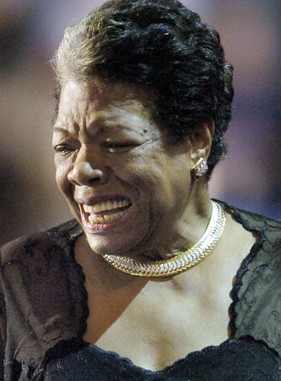
Maya Angelou, Lyrical Witness of the Jim Crow South, Dies at 86

Margalit Fox in the New York Times:

ScreenHunter_657 May. 28 20.22Maya Angelou, the memoirist and poet whose landmark book of 1969, “I Know Why the Caged Bird Sings” — which describes in lyrical, unsparing prose her childhood in the Jim Crow South — was among the first autobiographies by a 20th-century black woman to reach a wide general readership, died on Wednesday in her home. She was 86 and lived in Winston-Salem, N.C.

Her death was confirmed by her longtime literary agent, Helen Brann. No immediate cause had been determined, but Ms. Brann said Ms. Angelou had been in frail health for some time and had heart problems.

As well known as she was for her memoirs, which eventually filled six volumes, Ms. Angelou very likely received her widest exposure on a chilly January day in 1993, when she delivered the inaugural poem, “On the Pulse of Morning,” at the swearing-in of Bill Clinton, the nation’s 42nd president, who, like Ms. Angelou, had grown up poor in rural Arkansas.

It began:

A Rock, A River, A Tree

Hosts to species long since departed,

Marked the mastodon,

The dinosaur, who left dried tokens

Of their sojourn here

On our planet floor,

Any broad alarm of their hastening doom

Is lost in the gloom of dust and ages.

But today, the Rock cries out to us, clearly, forcefully,

Come, you may stand upon my

Back and face your distant destiny,

But seek no haven in my shadow,

I will give you no hiding place down here.

Long before that day, as she recounted in “Caged Bird” and its five sequels, she had already been a dancer, calypso singer, streetcar conductor, single mother, magazine editor in Cairo, administrative assistant in Ghana, official of the Southern Christian Leadership Conference and friend or associate of some of the most eminent black Americans of the mid-20th century, including James Baldwin, the Rev. Dr. Martin Luther King Jr. and Malcolm X.

More here.

A Better Path to High Performance

Erin O'Donnell in Harvard Magazine:

AnxietyWhen forced to perform in a high-pressure situation—addressing a room of skeptical colleagues, meeting with a demanding boss, or singing for a crowd—keep calm! That, at least, is the conventional wisdom. Yet new research by social scientist Alison Wood Brooks, assistant professor of business administration at Harvard Business School, suggests that people in fact perform best not when they try to relax, but when they take simple steps to get excited about the challenge at hand.

In previous work, Brooks studied how even run-of-the-mill anxiety (Did I remember to turn off the stove? Will I meet my deadline?) can harm decision-making. Her research revealed that anxiety is a drain on cognitive resources, using up brain power and information-processing ability and reducing confidence. “Feeling anxious is very unpleasant,” she says, so people go to great lengths to avoid it. If they are involved in negotiations, for example, “they exit early, they make large concessions, they respond very quickly to counteroffers, and ultimately they perform poorly.” Yet anxiety doesn’t always harm performance. The Yerkes-Dodson Law, formulated in the early twentieth century, maintains that “a moderate amount of anxiety can actually be motivating and energizing,” Brooks explains: it may prompt thorough preparation for a high-stakes presentation. If arousal and anxiety build, though, performance begins to decline.

More here.

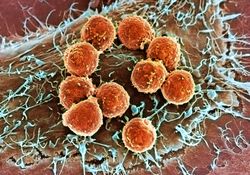
Old cancer drug gets fresh look

Heidi Ledford in Nature:

CellsWhen Dave deBronkart was diagnosed with advanced kidney cancer in 2007, he learned about a treatment called high-dose interleukin-2 (IL-2) that fires up the body’s immune system to fight the disease. The response rate was not great — tumours shrank in only about 15% of patients. And as many as 4% of people died from the treatment. But some of those who responded survived for years or even decades. DeBronkart’s prognosis was grim — only 8% of people with his disease survive for five years past diagnosis. He says that he was willing to risk what life he might have had left for the possibility of stopping his cancer’s growth: “I said, ‘Lethal side effects? OK.’ ” Now, nearly seven years after his treatment, deBronkart’s immune system continues to hold his cancer in check.

When researchers gather this week for the annual American Society of Clinical Oncology (ASCO) meeting in Chicago, Illinois, the spotlight will be on immunotherapies — a class of drugs that, like IL-2, kindle the immune system’s ability to fend off cancer (see Nature 508, 24–26; 2014). Attendees will hear the latest about a new generation of these drugs — particularly those targeting a protein called PD-1, which cancers use to fend off immune-system attack. Pharmaceutical companies are racing to bring these PD-1 inhibitors to market. Other data to be presented at the meeting suggest that IL-2, the drug that saved deBronkart and the first cancer immunotherapy approved by the US Food and Drug Administration (FDA), may be on the verge of a revival after having fallen out of favour. Two years after he finished the therapy, deBronkart learned that because of IL-2’s risks, three-quarters of eligible patients are never told that it is an option. “There are patients who are dying without ever getting a potentially curative treatment,” says Steven Rosenberg, an oncologist at the US National Cancer Institute in Bethesda, Maryland. “It’s a real problem.”

More here.

Wednesday Poem

On a Marriage that Was to Take Place atop Half Dome in Yosemite National Park

for Nick and Katie

1.
Yesterday, right when our call got dropped,
I was going to tell you something about marriage.

I was going to tell you something gnomic,
a maxim worth getting engraved.

I’ve since forgotten,
but I believe it was akin to saying that, like Truth,
marriage is impossible to define in verbal space.

So, I guess I’m glad I forgot. The words
would’ve seemed either too hastily conceived for their subject matter
or else weightless, enigmatic – without impact.

I think it was Auden who whined, “Marriage is rarely bliss,”
though he lightened the phrase by encapsulating it in the context of modern
physics –
namely, at least it has the ability to take place,
and that should be enough to bring bliss equal to Buddha’s Emptiness.

So, I’m happy our call got
dropped,
for the dial tone was
the pithiest aphorism on marriage any sentient life could’ve produced.

The key word is “produced.”

2.

This is what marriage is not:

Socrates gurgling hemlock
on his dusty prison cot,
giggling as he glimpsed a dikast’s deformed cock;

glittering light on a sundial,
in front of which two boys, dressed
to give witness at trial,
fight. Both of them give it their best

as red balloons filled with helium
become tiny, nondescript dots
against a sunset and fumbled rum
speckles their t-shirts with spots;

Nietzsche tenured for philology
at Basel; Nietzsche feverishly etching
Fick diese scheiße! on a Jena clinic’s wall; biology
predetermining the team for which he was pitching;

a poem; a hot dog; cocaine;
a discharged Kalashnikov
engendering generational pain
somewhere in Saratov

circa 1942;
this is what marriage is not:
hatred, jealousy, ballyhoo,
obsessive yearnings for a yacht;

this is what marriage is not:
anything one pair of hands has wrought.

by Christopher Gorrie
from Aaduna, Winter/Spring 2014

Tuesday, May 27, 2014

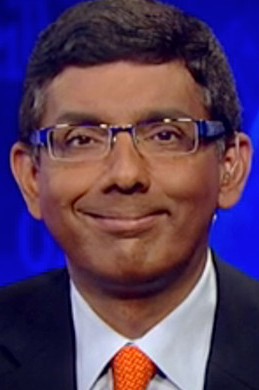
The End of a Douchebag: Dinesh D’Souza Facing Jail Time

Ben Cohen in The Daily Banter:

ScreenHunter_656 May. 28 11.52There are few things more enjoyable in life than watching a genuine asshole get their comeuppance. Dinesh D’Souza, a man who made a career out of smearing President Obama using every dishonest tactic in the GOP handbook, is almost certainly going to jail after pleading guilty on Tuesday to a campaign finance law violation.

D’Souza avoided a prolonged and embarrassing trial, acknowledging that the case brought against him by U.S. Attorney Preet Bharara was beyond dispute. Bharara charged him with using “straw donors” in order to give funds to Republican Wendy Long’s New York U.S. Senate campaign in 2012. D’Souza pleaded guilty to one criminal count of making illegal contributions in the names of others.

According to the Reuters report: “Lawyers for both sides agreed that under advisory federal sentencing guidelines, D’Souza faces between 10 and 16 months in prison.”

As Bob Cesca pointed out, there is “a delicious irony” in someone who accused the president of being a fraud, himself being indicted for fraud. In his breathtakingly dishonest (and ultimately racist) documentary “2016: Obama’s America”, D’Souza essentially claimed that Obama is an undercover radical, anti colonialist, propelled to success by guilty whites (whom he hates), and is ultimately out to destroy America from the inside.

More here.

Judging Spinoza

Steven Nadler in the New York Times:

ScreenHunter_655 May. 27 17.50In February of 1927, the historian Joseph Klausner stood before an audience at Hebrew University in Jerusalem and delivered a lecture on the “Jewish character” of Baruch Spinoza’s philosophy. As he neared the end of his talk, Klausner dropped the usual academic idiom and, with great passion, announced his intention to bring Spinoza, excommunicated in 1656 by the Portuguese-Jewish community in Amsterdam, back into the Jewish fold. “To Spinoza the Jew,” he declared: “The ban is nullified! The sin of Judaism against you is removed and your offense against her atoned for. You are our brother! You are our brother! You are our brother!”

Klausner’s theatrical performance was the first of several efforts in the 20th century to revoke Spinoza’s excommunication. No less an eminence than David Ben-Gurion, the first prime minister of Israel, publicly argued for “amending the injustice” done to the philosopher, insisting that the 17th-century rabbis had no authority “to exclude the immortal Spinoza from the community of Israel for all time.”

All these efforts were unsuccessful (not to mention unauthorized). Unlike most of the bans issued by the Amsterdam Portuguese in that period, the ban on Spinoza was never rescinded. In fact, in 1957, Rabbi Solomon Rodrigues Pereira of Amsterdam even reaffirmed the excommunication. Like Galileo, disciplined by the Roman Catholic Church just two decades before him, Spinoza has gone down as one of history’s great thinkers punished by intolerant ecclesiastic authorities for his intellectual boldness.

More here.

How ants optimize food search

From Phys.org:

ScreenHunter_654 May. 27 17.35Ants are capable of complex problem-solving strategies that could be widely applied as optimization techniques. An individual ant searching for food walks in random ways, biologists found. Yet the collective foraging behaviour of ants goes well beyond that, as a mathematical study to be published in the Proceedings of the National Academy of Sciences reveals: The animal movements at a certain point change from chaos to order. This happens in a surprisingly efficient self-organized way. Understanding the ants could help analyze similar phenomena – for instance how humans roam in the internet.

“Ants have a nest so they need something like a strategy to bring home the food they find,” says lead-author Lixiang Li who is affiliated both to the Information Security Center, State Key Laboratory of Networking and Switching Technology, at the Beijing University of Posts and Communications, and to the Potsdam Institute for Climate Impact Research. “We argue that this is a factor, largely underestimated so far, that actually determines their behavior.”

The Chinese-German research team basically put almost everything that is known about the foraging of ants into equations and algorithms and fed this into their computers. They assume that there are three stages of the complex feed-search movements of an ant colony: Initially, scout ants indeed circle around in a seemingly chaotic way. When exhausted, they go back to the nest to eat and rest. However, when one of them finds some food in the vicinity of the colony, it takes a tiny piece of it to the nest, leaving a trail of a scent-emanating substance called pheromones.

More here.

Pope Francis Visit to Palestine

Richard Falk in Global Justice in the 21st Century:

ScreenHunter_653 May. 27 17.24Pope Francis’ visit to the Holy Land raises one overwhelming question: ‘what is the nature of religious power in our world of the 21st century?’ ‘can it have transformative effects’?

Media pundits and most liberal voices from the secular realm approve of this effort by Francis to seek peace through the encouragement of reconciliation, while dutifully reminding us that his impact is only ‘ceremonial’ and ‘symbolic’ and will not, and presumably should not, have any political consequences beyond a temporary cleansing of the political atmosphere.

The June 6th prospect of Mahmoud Abbas and Shimon Peres praying together in the Vatican as a step toward a peaceful end of the long struggle is, I fear, an ambiguous sideshow. For one thing, Peres as President of Israel is about to leave the office, and in any event, his position exerts no discernible influence on the head of state, Benjamin Netanyahu, or the approach taken by Israel in addressing Palestinian concerns. It has long been appreciated that Peres is less than he seems, and beneath his velvet globe is a steel fist. Also, Abbas, although the formal leader of the Palestinian Authority and Chair of the PLO, is a weak and controversial leader who has yet to establish a unity government that includes Hamas, and finally provides political representation for the long suffering population of the Gaza Strip within global venues.

Yet it would be a mistake to ignore the significance, symbolically and materially, of what Pope Francis’ visit to Palestine heralds.

More here.

How ‘Pick-Up Artist’ Philosophy and Its More Misogynist Backlash Shaped Mind of Alleged Killer Elliot Rodger

“I’m the perfect guy, and yet you throw yourselves at all these obnoxious men, instead of me, the supreme gentleman,” Rodger complained in the video. “I will punish all of you for it.”

Amanda Marcotte in The American Prospect:

ScreenHunter_652 May. 27 16.54Women—hot young women, really—owed him sex and, because they reneged on their obligations, Elliot Rodger would get his revenge by going on a killing spree. That was the thesis of a video titled “Elliot Rodger’s retribution,” featuring the angry rantings of the 22-year-old college student before he allegedly went on a murderous rampage through Isla Vista, California, which resulted in six murders, thirteen people injured, and Rodger himself dead.

“You denied me a happy life, and in turn, I will deny all of you life,” he threatened. “It’s only fair.”

This video and others that Rodger put on his YouTube channel were full of language that was immediately recognizable to many: He was speaking the lingo of the “pick-up artist” (PUA) community that feminists have been raising alarms about for many years now, arguing that it’s a breeding ground for misogynist resentment and may even be encouraging violence against women.

“Alpha,” PUA lingo for a dominant male, was in the video threatening the mass murder. Rodger identified as an “incel,” which means “involuntarily celibate,” a term that was developed on web-based bulletin boards devoted to PUA enthusiasts that weren’t finding much luck getting laid. His theories about what “women” are thinking and why they are denying him the sex he felt entitled to came straight out of the theories of mating and dating that underlie the entire concept of PUA.

More here.