The Case for Reparations

C08527e5a

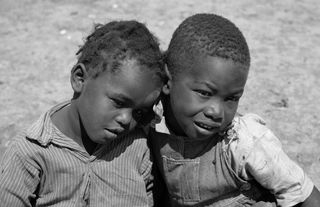
Ta-Nehisi Coates in The Atlantic (photo Carly Mydans/Library of Congress):

In the 1920s, Jim Crow Mississippi was, in all facets of society, a kleptocracy. The majority of the people in the state were perpetually robbed of the vote—a hijacking engineered through the trickery of the poll tax and the muscle of the lynch mob. Between 1882 and 1968, more black people were lynched in Mississippi than in any other state. “You and I know what’s the best way to keep the nigger from voting,” blustered Theodore Bilbo, a Mississippi senator and a proud Klansman. “You do it the night before the election.”

The state’s regime partnered robbery of the franchise with robbery of the purse. Many of Mississippi’s black farmers lived in debt peonage, under the sway of cotton kings who were at once their landlords, their employers, and their primary merchants. Tools and necessities were advanced against the return on the crop, which was determined by the employer. When farmers were deemed to be in debt—and they often were—the negative balance was then carried over to the next season. A man or woman who protested this arrangement did so at the risk of grave injury or death. Refusing to work meant arrest under vagrancy laws and forced labor under the state’s penal system.

Well into the 20th century, black people spoke of their flight from Mississippi in much the same manner as their runagate ancestors had. In her 2010 book, The Warmth of Other Suns, Isabel Wilkerson tells the story of Eddie Earvin, a spinach picker who fled Mississippi in 1963, after being made to work at gunpoint. “You didn’t talk about it or tell nobody,” Earvin said. “You had to sneak away.”

More here.
A brief history of mathematical symbols

Joseph Mazur in The Guardian:

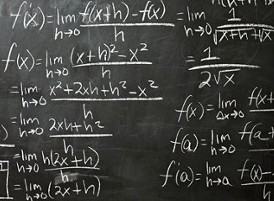
ScreenHunter_637 May. 22 16.25A few years ago friends and I were talking about the origins of written music. When the conversation turned to the origins of math symbols, I was surprised to learn that few people knew that almost all maths was written rhetorically before the 16th century, often in metered poetry. Most people think symbols for addition, subtraction or equality had been around long before Euclid wrote his Elements in the first century BCE. No! The original Elements is rhetorical. There are no symbols in Euclid’s works, aside from the letters marking the ends of lines and corners of geometric objects. There are no symbols in any early Arab algebra books. Nor do we find any in early European printed algebra books.

Even our wonderful symbol for equality – you know, those two parallel lines – was not used in print before 1575, when the Welsh mathematician and physician Robert Recorde wrote an algebra book that he called the Whetstone of Witte. (We can only guess that the title is a pun on sharpening mathematical wit.) In it he wrote “is equal to” almost two hundred times for the first two hundred pages before finally declaring that he could easily “avoid the tedious repetition” of those three words by designing the symbol “=====” to represent them.

More here.

Why Noam Chomsky Is One of America’s Great Public Intellectuals

Henry A. Giroux in AlterNet:

10277265_689799111087856_4456947417169452030_nNoam Chomsky is a world-renowned academic best known not only for his pioneering work in linguistics but also for his ongoing work as a public intellectual in which he has addressed a number of important social issues that include and often connect oppressive foreign and domestic policies, a fact well illustrated in his numerous pathbreaking books. Chomsky’s oeuvre includes too many exceptionally important books to single out any one of them from his extraordinary and voluminous archive of work. Moreover, as political interventions, his many books often reflect both a decisive contribution and an engagement with a number of issues that have and continue to dominate a series of specific historical moments over the course of 50 years. His political interventions have been historically specific while continually building on the power relations he has engaged critically. For instance, his initial ideas about the responsibility of intellectuals cannot be separated from his early criticisms of the Vietnam War and the complicity of intellectuals in brokering and legitimating that horrendous act of military intervention. Hence, it becomes difficult to compare his 1988 book, Manufacturing Consent, coauthored with Edward S. Herman, with his 2002 bestseller, 9/11. Yet, what all of these texts share is a luminous theoretical, political, and forensic analysis of the functioning of the current global power structure, new and old modes of oppressive authority, and the ways in which neoliberal economic and social policies have produced more savage forms of global domination and corporate sovereignty.

More here.

Stephen Hawking’s boycott hits Israel where it hurts: science

Hilary Rose and Steven Rose in The Guardian:

ScreenHunter_636 May. 22 16.16Stephen Hawking's decision to boycott the Israeli president's conference has gone viral. Over 100,000 Facebook shares of the Guardian report at last count. Whatever the subsequent fuss, Hawking's letter is unequivocal. His refusal was made because of requests from Palestinian academics.

Witness the speed with which the pro-Israel lobby seized on Cambridge University's initial false claim that he had withdrawn on health grounds to denounce the boycott movement, and their embarrassment when within a few hours the university shamefacedly corrected itself. Hawking also made it clear that if he had gone he would have used the occasion to criticise Israel's policies towards the Palestinians.

While journalists named him “the poster boy of the academic boycott” and supporters of the boycott, divestment and sanctions (BDS) movement celebrated, Ha'aretz, the most progressive of the Israeli press,drew attention to the inflammatory language used by the conference organisers, who described themselves as “outraged” rather than that they “regretted” Hawking's decision.

That the world's most famous scientist had recognised the justice of the Palestinian cause is potentially a turning point for the BDS campaign. And that his stand was approved by a majority of two to one in the Guardian poll that followed his announcement shows just how far public opinion has turned against Israel's relentless land-grabbing and oppression.

More here.

All about Ann Yearsley

2fee315e-e0f5-11e3_1069767hMin Wild at the Times Literary Supplement:

By the closing years of the eighteenth century, well-to-do readers had at last become familiar with the astonishing fact that ordinary working people liked to sing, to make poetry, and even, sometimes, to write it down. Yet the sensation caused by Ann Yearsley’s first volume of poems in 1785 would not have been possible without her complacent editors having described her in its preface as a “poor illiterate woman”. After her death, Yearsley was scolded by Robert Southey in his essay on the “Lives and Works of our Uneducated Poets” for using “ignorant and vulgar” syntax, but she was neither illiterate nor uneducated; she merely worked at the “low” occupation of selling milk, and was female. Working women poets, however, were not new; in 1739, the washerwoman Mary Collier produced the combative “Woman’s Labour”, and the poetry of Mary Leapor, the brilliantly vivid maidservant, was published posthumously in 1748.

The Collected Works reviewed here can best be read as resulting from a spectacular car crash produced by Britain’s accident-prone, labyrinthine class system. In 1784, the impeccable Hannah More – the respectable, established poet and civic commentator – was told the story of an impoverished milkwoman who wrote verses in her own town of Bristol.

more here.

on ‘Harlequin’s Millions,’ by Bohumil Hrabal

13569179Michael Dirda at The Washington Post:

In the acknowledgments to her translation of this small masterpiece, Stacey Knecht writes, “Apparently, it is possible to fall in love with a writer you’ve never met.” Bohumil Hrabal (1914-1997) may not be a name familiar to many Americans, but that’s our loss. Milan Kundera — author of “The Unbearable Lightness of Being” and much else — considered Hrabal his country’s greatest writer. Years ago, when a group of European literary folk visited The Washington Post, I had coffee with Ivan Klima and asked that distinguished author what Czech novel he would recommend I read. The answer was instantaneous: Bohumil Hrabal’s “I Served the King of England,” which chronicles the fortunes of a young waiter before, during and after World War II. Cinema buffs may recall that it was filmed in 2006 by Jiri Menzel, who also directed several other movies derived from Hrabal’s fiction, including “Closely Watched Trains,” which won the 1968 Oscar for best foreign film.

One of its author’s last completed novels, “Harlequin’s Millions” may look initially off-putting because Hrabal — like the Austrian Thomas Bernhard and the Portuguese José Saramago — doesn’t break up his chapters into paragraphs. He also likes run-on sentences, the better to reflect a narrator’s stream of consciousness.

more here.

Why has Google added the Grand Canyon to Street View?

StreetViewGrandCanyon-1-630Jeremy Miller at Harper's Magazine:

Google’s declared mission is “to organize the world’s information and make it universally accessible and useful,” a statement that casts the planet as a vast and undifferentiated stream of data, awaiting processors and algorithms powerful enough to transform and order it for human use. And so, in the spirit of the mile-to-mile scale map of Lewis Carroll’s Sylvie and Bruno, the company has captured the canyon with tremendous accuracy, allowing anyone with a computer and a decent Internet connection to “cover the whole country.”

To better understand how — and more importantly, why — this capturing has been carried out, I arranged a meeting with Karin Tuxen-Bettman, a “geo data strategist” and the project lead for Google’s Grand Canyon mapping effort. Before setting out from my home in the East Bay, I typed my destination into my smartphone. Then I somnambulantly followed its commands southward, across Dumbarton Bridge and into the labyrinth of identical office buildings that comprises Google’s sprawling Mountain View complex.

After I’d parked and wandered aimlessly for a few minutes, Google spokesperson Susan Cadrecha called out my name from across the lot.

“I’m usually pretty good with maps,” I said sheepishly.

“It’s okay,” she replied. “Everything sort of looks the same around here.”

more here.

Egyptian mummies: Science or sacrilege?

Zoe Pilger in The Independent:

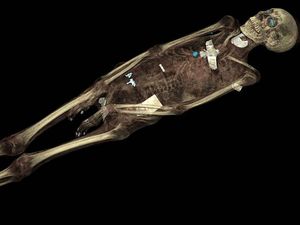
Mummy3A shocking photograph of an Egyptian mummy unwrapped greets the visitor to a new exhibition at the British Museum, Ancient Lives, New Discoveries: Eight Mummies, Eight Stories. The photograph was taken in 1908, when the pillage of sacred “curios” from around the world was at its height, and Egypt was under British rule.

The image is painfully symbolic; it shows the skeleton of the 12th Dynasty male Khnum-Nakht laid out on a table. The cloth in which he has been wrapped for thousands of years lies around his remains. A team of scholars are standing over him, including the pioneering Margaret Murray, who was the first woman to be appointed a lecturer of archaeology in the UK. She wears a white pinafore and her hair is wispily pinned up. The unwrapping took place at the Manchester Museum in front of a crowd of 500, eager to see a mystery – literally – stripped. Mummy unwrappings or “unrollings” were popular public spectacles in the early 20th century, when Egyptology was a new academic discipline. The photograph points to a violation. By cutting open the mummies, scholars and collectors destroyed the fragile layers of embalmment, arranged with care after death in order to ensure the person's existence in the afterlife. For the ancient Egyptians, the protection of the body was paramount. In 1908, there seemed to be little fear of the supernatural wrath incurred by the disturbance of the dead, but in 1922 Howard Carter would famously discover the tomb of King Tutankhamun. Mummy mania was born. Some of those associated with the expedition died in mysterious circumstances; “the curse” of the mummy was dramatized in the media.

More here.

Bacteria found in healthy placentas

Katia Moskvitch in Nature:

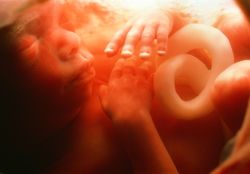
FetusThe placenta, long thought to be sterile, is home to a bacterial community similar to the one found in the mouth, researchers report today. The microbes are generally non-pathogenic, but according to the authors of the study, variations in their composition could be at the root of common but poorly understood pregnancy disorders such as preterm birth, which occurs in one out of every ten pregnancies. In 2012, Kjersti Aagaard, an obstetrician at Baylor College of Medicine in Houston, Texas, and her collaborators found that the most abundant microbes in an expectant mother’s vagina were different from those in a non-pregnant woman, but were not generally representative of those that were most common in the stool of an infant in its first week of life1. To investigate where these microbes were coming from, the team decided to examine the placenta.

In the new study, the researchers took samples of placental tissue from 320 women just after delivery, extracted DNA from the tissue and sequenced it. They found that the weight of the mother or whether she gave birth by caesarean or vaginally did not seem to change the makeup of the placental microbiome. But, Aagaard says, the bacterial community “was different among women who either experienced a preterm birth or had a much earlier infection, such as a urinary tract infection — even if that infection was treated and cured many months or weeks previously”. Their findings are published today in Science Translational Medicine2. The researchers also compared the placental microbiomes to those found in the vagina, gut, mouth and on the skin of non-pregnant women. They found that the placental microbiome was most similar to that of the mouth. The authors speculate that the microbes travel to the placenta from the mouth via the blood. The results reinforce data suggesting a link between periodontal disease in the mother and the risk of preterm birth, says Aagaard.

More here.

Wednesday, May 21, 2014

Europe and the New Democracy

EuropePhilippe Bénéton at The Hedgehog Review:

The project of creating a unified Europe, which began in earnest a half century ago, has been a great adventure, and partly a great success. The European “civil war,” which began in the sixteenth century and went on for hundreds of years, has finally ended. Peace is firmly established within the European borders. In this respect, the founders of Europe, and especially the architects of the Franco-German reconciliation, made history. And they knew the history they were making.

Apart from that signal achievement, the adventure of unification gives the appearance of groping in the dark. The general reason is clear: Europe is a powerful idea, but it is also an indeterminate idea. Gradually, from about the 1970s, the procedures of unification took the place of the project. Now official Europe is thought of as a process. European issues are reduced to taking the next step. Any pause will ruin the undertaking. The obligation to walk together and the obsession with compromise prevent serious debate. The process governs.

As a result, the primary questions remain unanswered: Europe no doubt, but which Europe? For what purpose? In what form? With whom? Things are unclear. Those who make the history appear not to understand the history they make.

more here.

Why do we love Stendhal?

Danton-levine_png_600x1058_q85Adam Michnik at the New York Review of Books:

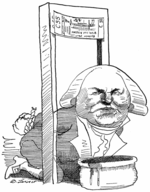
We do not love him for his heroism, as he never was an indomitable conspirator for freedom or a martyr of any “right cause.” On the contrary, he shined in the Paris drawing rooms whose boredom he described with great venom; he held public offices although he felt diminished by the lack of appreciation for his own intelligence and former services; at the time of the domination of the “priestly party” he would say sacrilegious things like “God can be excused because he does not exist”—but that never brought any harm upon him. So he was neither a martyr nor a hero. He was a smart and insightful skeptic; he was wise with his wonderful irony and helpless anger. He was able to ridicule mercilessly because he could read the mysteries of the human soul.

We love Stendhal, this expert in pandering, for his lack of hypocrisy, for honesty toward himself, for dignity when confronted with villainy, and for the sense of intrinsic value devoid of narcissism and devastating megalomania.

more here.

World War II Led to a Revolution in Cartography

One-world-one-war_thumbSusan Schulten at The New Republic:

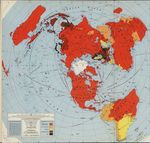
More Americans came into contact with maps during World War II than in any previous moment in American history. From the elaborate and innovative inserts in the National Geographic to the schematic and tactical pictures in newspapers, maps were everywhere. On September 1, 1939, the Nazis invaded Poland, and by the end of the day a map of Europe could not be bought anywhere in the United States. In fact, Rand McNally reported selling more maps and atlases of the European theaters in the first two weeks of September than in all the years since the armistice of 1918. Two years later, the attack on Pearl Harbor again sparked a demand for maps. Two of the largest commercial mapmakers reported their largest sales to date in 1941, and by early 1942 Newsweek had named Washington, D.C. “a city of maps,” one where “it is now considered a faux pas to be caught without your Pacific arena.”

War has perennially driven interest in geography, but World War II was different. The urgency of the war, coupled with the advent of aviation, fueled the demand not just for more but different maps, particularly ones that could explain why President Roosevelt was stationing troops in Iceland, or sending fleets to the Indian Ocean.

more here.

Jasper Johns’ latest show at MoMA reminds us that sometimes with art, the meaning is found in the making

Morgan Meis in The Smart Set:

ScreenHunter_634 May. 21 17.47Jasper Johns has a way of making a flip thing into a deep thing. Take his current show at the Museum of Modern Art. It is called “Regrets.” The title comes from a rubber stamp. Johns uses the stamp as a quick and painless form of R.S.V.P. When people send him letters or cards asking him to do things he doesn’t want to do, he stamps the offending item with his “regrets” and then sends it back. Onerous obligation avoided. Problem solved.

Used this way, the word “regrets” doesn’t have any regrets. There are no bad feelings involved. Not really. Johns wasn’t torn up about saying “no” to these requests. He didn’t have any deeper regrets. “Regret,” in this context, simply means, “a polite, usually formal refusal of an invitation.”

But there is another meaning of “regret” that has much more to do with feelings. We say things like “I will always regret how I treated her,” or, “I regret that I never kept on with my piano lessons.” There is a twinge of sadness in this kind of regret. It delves into the counterfactual. It carries the wish that things be otherwise. The sadness of this regret brings us back to the earliest forms of the word. At its Old French and English and Germanic root, the word “regret” has fundamentally to do with distress, with longing. It is a word related to “bewailing,” “lamenting,” “groaning,” and “weeping.”

When Jasper Johns started stamping his latest artworks with the word “regrets,” he was having fun, being ironic. But he was also playing with what underlies fun and irony. He was getting at the real core of irony, which is always about deeper meanings, profundities that are not apparent to those who look only at the surface.

More here.

Arrested development: A handful of girls defy ageing

Virginia Hughes in New Statesman:

AgeRichard Walker has been trying to conquer ageing since he was a 26-year-old free-loving hippie. It was the 1960s, an era marked by youth: Vietnam War protests, psychedelic drugs, sexual revolutions. The young Walker relished the culture of exultation, of joie de vivre, and yet was also acutely aware of its passing. He was haunted by the knowledge that ageing would eventually steal away his vitality – that with each passing day his body was slightly less robust, slightly more decayed. One evening he went for a drive in his convertible and vowed that by his 40th birthday, he would find a cure for ageing. Walker became a scientist to understand why he was mortal. “Certainly it wasn’t due to original sin and punishment by God, as I was taught by nuns in catechism,” he says. “No, it was the result of a biological process, and therefore is controlled by a mechanism that we can understand.”

Medical science has already stretched the average human lifespan. Because of public health programmes and treatments for infectious diseases, the number of people over age 60 has doubled since 1980. By 2050, the over-60 set is expected to number 2 billion, or 22 per cent of the world’s population. But this leads to a new problem: more people are living long enough to get chronic and degenerative conditions. Age is one of the strongest risk factors for heart disease, stroke, macular degeneration, dementia and cancer. For adults in high-income nations, that means age is the biggest risk factor for death. A drug that slows ageing, even modestly, would be a blockbuster. Scientists have published several hundred theories of ageing (and counting), and have tied it to a wide variety of biological processes. But no one yet understands how to integrate all of this disparate information. Some researchers have slowed ageing and extended life in mice, flies and worms by tweaking certain genetic pathways. But it’s unclear whether these manipulations would work in humans. And only a few age-related genes have been discovered in people, none of which is a prime suspect. Walker, now 74, believes that the key to ending ageing may lie in a rare disease that doesn’t even have a real name, “syndrome X”. He has identified four girls with this condition, marked by what seems to be a permanent state of infancy, a dramatic developmental arrest. He suspects that the disease is caused by a glitch somewhere in the girls’ DNA. His quest for immortality depends on finding it.

More here.

An ultra-sensitive chip for early cancer detection

From KurzweilAI:

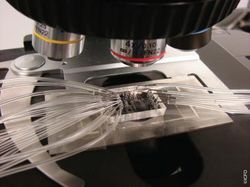
ChipAn international team of researchers, led by ICFO – Institute of Photonic Sciences in Castelldefels, has developed a “lab-on-a-chip” platform capable of detecting very low concentrations of protein cancer markers in the blood, using the latest advances in plasmonics, nano-fabrication, microfluids and surface chemistry. Currently, most cancers are detected when the tumor is already composed of millions of cancer cells and the disease is starting to advance into a more mature phase. The new device enables diagnoses of the disease in its earliest stages before it take hold, which would be key to successful diagnosis and treatment of this disease. This device also offers reliability, sensitivity, potential low cost, and small size (only a few square centimeters), allowing for effective diagnosis and treatment procedures in remote places.

Although very compact , the lab-on-a-chip hosts sensing sites distributed across a network of fluidic microchannels, enabling it to conduct multiple analyses. Gold nanoparticles on the surface of the chip are chemically programmed with an antibody receptor that can specifically attract the cancer protein markers circulating in blood. When a drop of blood is injected into the chip, it circulates through the microchannels and if cancer markers are present in the blood, they will stick to the nanoparticles located on the micro-channels as they pass by, setting off changes in “plasmonic resonance.” The magnitude of these changes are directly related to the concentration and number of markers in the patient blood, which provides a direct assessment of the risk for the patient to develop a cancer. “The most fascinating finding is that we are capable of detecting extremely low concentrations of this protein in a matter of minutes, making this device an ultra-high sensitivity, state-of-the-art, powerful instrument that will benefit early detection and treatment monitoring of cancer,” said ICREA Professor Romain Quidant, coordinator of the project.

More here.

Wednesday Poem

The morning glory –
another thing
that will never be my friend.
…………… — Basho

Vintage Gray

Rain has a way of darkening the bark on trees,
deepening the wood cracks in fences.
Grass appears softer, envious of clouds
that tease with their rootlessness,
their promise of travel and a good night’s sleep.
Normally, I’d have a little Johnny Hodges
playing in the background or Casablanca
splashing silvery-blue against a wall,
but today I’m listening to a vintage radio
broadcast: Bing Crosby banters with Jack Teagarden,
the cool cadence of Crosby’s voice
complementary to the sound of fat oak leaves
pounced by rain. I can see them:
Bing still boyish on the verge of fifty,
placing a hand on the rawhide shoulders of Teagarden,
who periodically grins at the floor,
fidgets with the slide of his trombone.
I smile at the plate I’m washing, the tension
slackens in my neck and my apartment warms
with the admiration in their voices.
Both men have been dead for decades
but somewhere there’s a place, a park bench
looking out over a lake or a table at some café
left vacant, unused since their passing.
Not an homage to where they once had their lunch
but a space that encompassed
what they knew and never knew of each other.
Not heaven or a memory (nothing
we can’t touch or prove), but a room
behind a locked door behind which we can stand,
a spot on a map we can point to.
Somewhere we know exists and leave alone.
.

by Joshua Michael Stewart
from Vintage Gray

Puddinghouse Publications, 2007

Why do people persist in believing things that just aren’t true?

Maria Konnikova in The New Yorker:

ScreenHunter_633 May. 21 11.42Last month, Brendan Nyhan, a professor of political science at Dartmouth, published the results of a study that he and a team of pediatricians and political scientists had been working on for three years. They had followed a group of almost two thousand parents, all of whom had at least one child under the age of seventeen, to test a simple relationship: Could various pro-vaccination campaigns change parental attitudes toward vaccines? Each household received one of four messages: a leaflet from the Centers for Disease Control and Prevention stating that there had been no evidence linking the measles, mumps, and rubella (M.M.R.) vaccine and autism; a leaflet from the Vaccine Information Statement on the dangers of the diseases that the M.M.R. vaccine prevents; photographs of children who had suffered from the diseases; and a dramatic story from a Centers for Disease Control and Prevention about an infant who almost died of measles. A control group did not receive any information at all. The goal was to test whether facts, science, emotions, or stories could make people change their minds.

The result was dramatic: a whole lot of nothing. None of the interventions worked. The first leaflet—focussed on a lack of evidence connecting vaccines and autism—seemed to reduce misperceptions about the link, but it did nothing to affect intentions to vaccinate. It even decreased intent among parents who held the most negative attitudes toward vaccines, a phenomenon known as the backfire effect. The other two interventions fared even worse: the images of sick children increased the belief that vaccines cause autism, while the dramatic narrative somehow managed to increase beliefs about the dangers of vaccines. “It’s depressing,” Nyhan said. “We were definitely depressed,” he repeated, after a pause.

More here.

Lawrence Summers: Thomas Piketty Is Right About the Past and Wrong About the Future

Lawrence Summers in The Atlantic:

ScreenHunter_632 May. 21 11.31Piketty’s timing may be impeccable, and his easily understandable but slightly exotic accent perfectly suited to today’s media; but make no mistake, his work richly deserves all the attention it is receiving. This is not to say, however, that all of its conclusions will stand up to scholarly criticism from his fellow economists in the short run or to the test of history in the long run. Nor is it to suggest that his policy recommendations are either realistic or close to complete as a menu for addressing inequality.

Start with its strengths. In many respects, Capital in the Twenty-First Century embodies the virtues that we all would like to see but find too infrequently in the work of academic economists. It is deeply grounded in painstaking empirical research. Piketty, in collaboration with others, has spent more than a decade mining huge quantities of data spanning centuries and many countries to document, absolutely conclusively, that the share of income and wealth going to those at the very top—the top 1 percent, .1 percent, and .01 percent of the population—has risen sharply over the last generation, marking a return to a pattern that prevailed before World War I. There can now be no doubt that the phenomenon of inequality is not dominantly about the inadequacy of the skills of lagging workers. Even in terms of income ratios, the gaps that have opened up between, say, the top .1 percent and the remainder of the top 10 percent are far larger than those that have opened up between the top 10 percent and average income earners. Even if none of Piketty’s theories stands up, the establishment of this fact has transformed political discourse and is a Nobel Prize-worthy contribution.

More here.