by Bill Benzon
A little over a week ago Jacob Collier’s version of Mel Torme’s “The Christmas Song” (“Chestnuts Roasting on an Open Fire”) came up on YouTube. I know the song well, and love it. As I’d seen a video or three by this Collier fellow, I decided to give it a listen.
Wow! What?
I was stunned, but also a bit skeptical. Collier was obviously a talented musician, with mad skills. But to what end? This struck me as being musical comfort food. Skillfully made – oh yes! the man has chops! – but comfortable. But then, what’s wrong with comfort? As a steady aesthetic diet, it’s inadequate. But don’t we sometimes turn to music for comfort and solace? Do we not need comfort and solace in this time of Covid, not to mention the post-election tantrums of He Who Must Not Be Named?
What else has Collier got? If it’s all like this, then Collier’s a one trick pony. But maybe he’s got more tricks up his sleeve. I decided to investigate.
Caveat: I’m going to insert a bunch of videos into this piece; one of them is very long – over three hours. Feel free to skip over material. Read more »
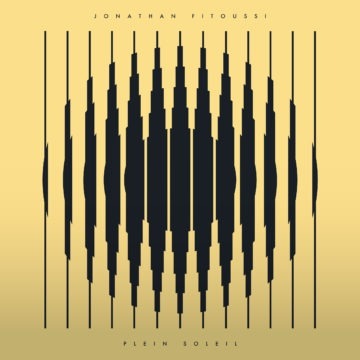 2020 has been a wild ride, but it’s almost over, and I’m here to tell you it wasn’t all bad, as some great music came out this year – so much, in fact, that we’ll have to have two or even three podcasts this time even for the small taste which is our annual year-end review. Here’s part 1 (widget and link below).
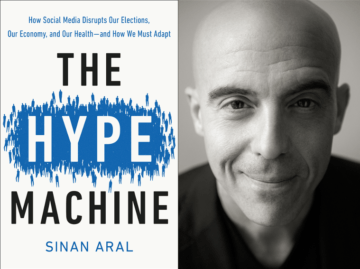 Given where we find ourselves in this late November of 2020, it is hard to think of a book more relevant or timely than The Hype Machine by Sinan Aral. The author is the David Austin Professor of Management and Professor of Information Technology and Marketing at the Massachusetts Institute of Technology. As one of the world’s foremost experts on social media and its effects, Prof. Aral is the perfect person to look at how this phenomenon has changed the world and the human experience. This is what he sets out to do in his new book, The Hype Machine, published under the Currency Imprint of Random House this September, and with considerable success.
 Dylan Kwait. Surfers by Plum Island, October 2020.
 Not long ago there was an article circulating on Facebook about ‘Hating the English’, originally published in a large circulation newspaper. The Irish author says something to the effect that once she thought it was just a few bad ones etc., but now she hates the lot of them. It’s been stimulated, I think, by the repulsive English nationalism that has been raising its head since Brexit, plus the usual ignorance about Ireland, Irish history and Irish interests on the part of your typical ‘Brit’. It’s not a very good piece of writing, and it has a rather slight idea in it. I’d ignore it but for the ‘likes’ and positive comments it’s received, particularly from ‘leftists’. It’s an example of what we could call ‘bloc thinking’ – the emotionally satisfying but futile consignment of entire masses of people into categories of nice and nasty.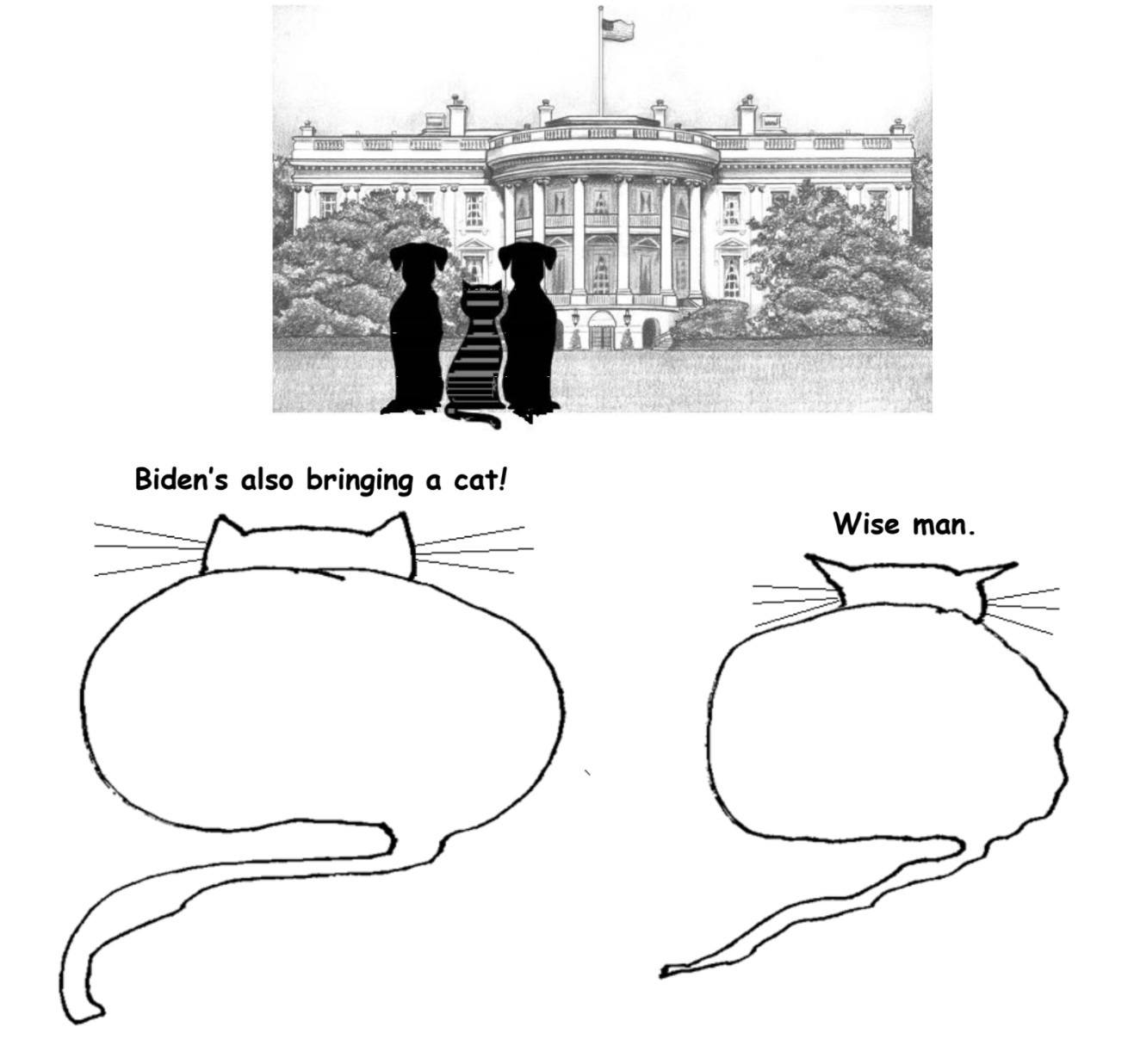
 According to Donald Trump, in
 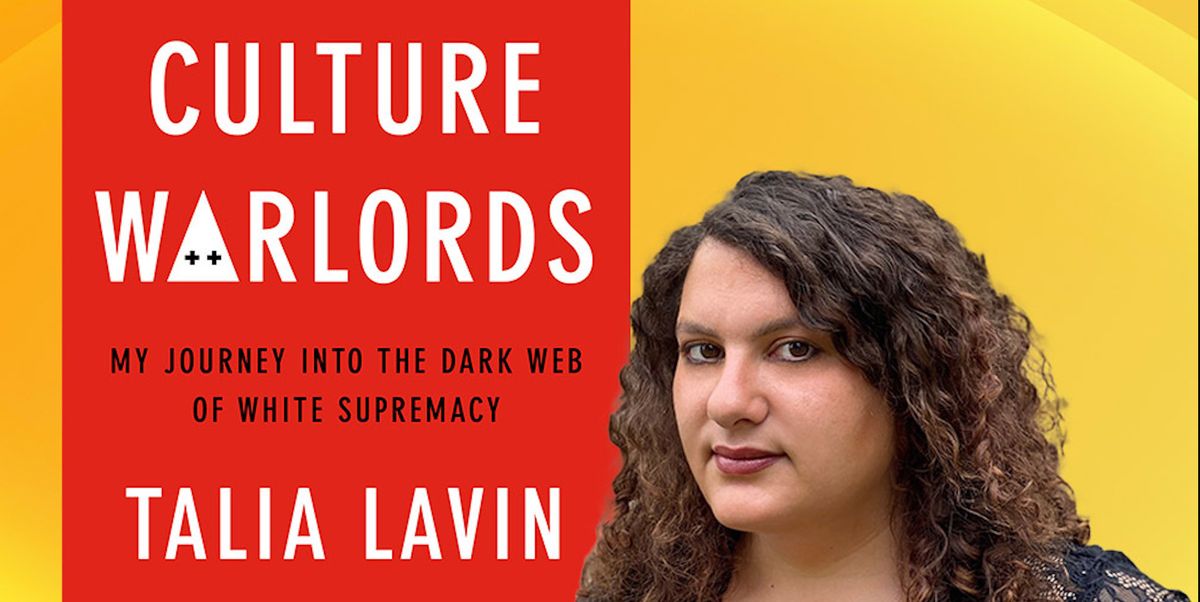 Recent protests in the US by Trump supporters since the election of Joe Biden, highlight just how political ideologies have the potential to tear seemingly ‘stable’ societies apart. A political divide however cannot always be seen as a clear-cut contradiction between the right and the left, as, for example, the way Trump supporters might assert; Biden, and Democrats more broadly, could hardly be seen to represent the left. Likewise, the right has it shades of commitment to conservatism. However, Trump’s 70 million supporters represent a congealing of far-right politics in America identifiable by the policies articulated by Trump that they endorse: anti- immigration, racism, a resurgent nationalism. While there is little doubt that such policies have been magical music to the ears of many right wingers, for others Trump and the Republican Party do not go far enough, and it is these extreme right-wing groups that are the subject of Talia Lavin’s book Culture Warlords: My Journey into the Dark Web of White Supremacists.
 When I was seventeen years old, I took my first college science course, a summer class in astronomy for non-majors. The professor narrated his wild claims in an amused deadpan, calmly showing us how to reconstruct the life cycle of stars, and how to estimate the age of the universe. This course was at the University of Iowa, and I imagine that the professor was accustomed to intermittent resistance from students like me, whose rural, religious upbringing led them—led me—to challenge his claims. Yet I often found myself at a loss. The professor used a soft sell, and his claims seemed somewhere beyond the realm of mere politics or belief. Sure, I could spot a few gaps in his vision (he batted away my psychoanalytic interpretation of the Big Bang by saying he had never heard of Freud), but I envied him. I wished that my own positions were so easy to defend.
 Cosmology is a young science. Maybe the youngest. Some people say it started in the 1920’s when these little glowing clouds visible at certain points in the sky were found, by better and better telescopes, to be composed of billions and billions of stars, just like our own galaxy – the Milky Way – and it was then discovered that no matter what direction you looked they were all rushing away from us. More than one cosmologist has wondered if these galaxies know something that you and I don’t.
 Many decades back when I was teaching at MIT, a senior colleague of mine, Paul Rosenstein-Rodan, a famous development economist, asked me at the beginning of our many long conversations what my politics was like. I said “Left of center, though many Americans may consider it too far left while several of my Marxist friends in India do not consider it left enough”. As someone from ‘old Europe’ he understood, and immediately put his hand on his heart and said “My heart too is located slightly left of center”. A 2015 study by psychologist Jose Duarte and his co-authors found that 58 to 66 per cent of social scientists in the US are ‘liberal’ (an American word, which unlike in Europe or India, may often mean ‘left of center’), and only 5 to 8 per cent are conservative. If anything, social scientists in the rest of the world are on average probably somewhat to the left of their American counterparts. If that is the case, for the world in general social democracy is likely to be an important, though not always decisive, ingredient of their ideology. In European politics and intellectual circles there was a time when social democrats were considered the main enemy of the communists, at least in their rivalry to get the attention of working classes, but now with the fading away of old-style communists, social democrats have a larger tent, which includes some socialists of yesteryear as well as liberals, besieged as they both now are by right-wing populists.

 I’m disappointed in my columns so far. Not to say that they’ve been completely without value; I’ve managed to turn out some decent pieces and some kind readers have taken the time to tell me as much. But, taken together, my output exhibits a fault that I had sought to avoid from the outset. It has been far too occasional, too reactive, too of the moment in an extended, torturous moment of which I very much do not wish to be. There are exculpatory circumstances, of course. These are difficult times, and we are weak and vulnerable beings, and I am nothing if not an entrenched doom-scroller with a tendency for global anxiety. This is not an apology, because a core tenet of my approach to writing is a complete disregard for my audience. You’re all lovely people, I’m sure, but in order to write I have to provisionally discount your existence. This is, rather, a confession to the only person whose opinion matters to me as a writer. And that would be myself.