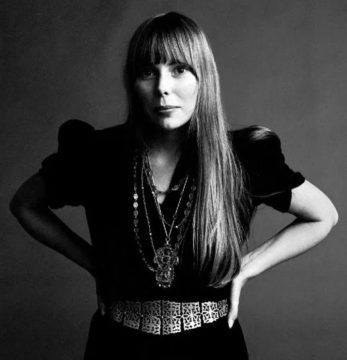
by Robyn Repko Waller

Academic titles aren’t everything. But they signpost what might not otherwise be socially salient; I, and others like me, are present here as members of this academic community.
Earlier this week the Wall Street Journal published a now widely criticized op-ed piece, imploring Dr. Jill Biden to drop her academic title from her public persona before her tenure as First Lady. Many outlets have condemned the misogynistic tone of the piece, which refers to Dr. Biden as “kiddo,” disparages her dissertation as sounding “unpromising,” and encourages her instead to focus, as if it is mutually exclusive, on the excitement of living in the White House. Even the author’s former employer has distanced themselves from his views.
Now, the author, Mr. Epstein, does provide an argument of sorts for his views, backed with anecdotal evidence. He cites his decades-long career as a university lecturer and editor of a scholarly publication, a career he has advanced without a Masters or PhD. Sometimes, he notes, students have called him by ‘Dr.’ He reports that he has an honorary doctorate, but he speaks poorly of the kind of individuals who typically have such honorary degrees bestowed upon them in contemporary times — wealthy donors and entertainers. Rather, he quips, “no one should call himself ‘Dr.’ unless he has delivered a child.” (An apropos male doctor reference in a misogynist piece.) Charitably (against all initial recoiling), we may read this as the view that the mere possession of a doctorate, at least of the honorary variety, does little to track the merit or quality of work or worth of the individual. Using the title, then, presumably, does not signify what it seems.
Of course, we may well agree that plenty of meritorious work, academic or otherwise, has been produced by those without a doctorate or even a bachelor’s degree. To think otherwise is to slide into the growing elitism about the “uneducated.” I was a first-generation (undergraduate) college student. Having grown up in a proud working-class family, whose character —community-mindedness, warmth, ingenuity, courage — and work ethic were second-to-none, I also recoil at this growing elitism. Plus I can understand the frustration about celebrity and money trumping desert for academic accolades. Few scholars, if any, have gotten nearly as much attention as Nicole Polizzi, aka Snooki, did when delivering a lecture to a university (although I’m sure it was an interesting address). More seriously, there is a severe socioeconomic barrier to entry into college in the US and elsewhere. Read more »
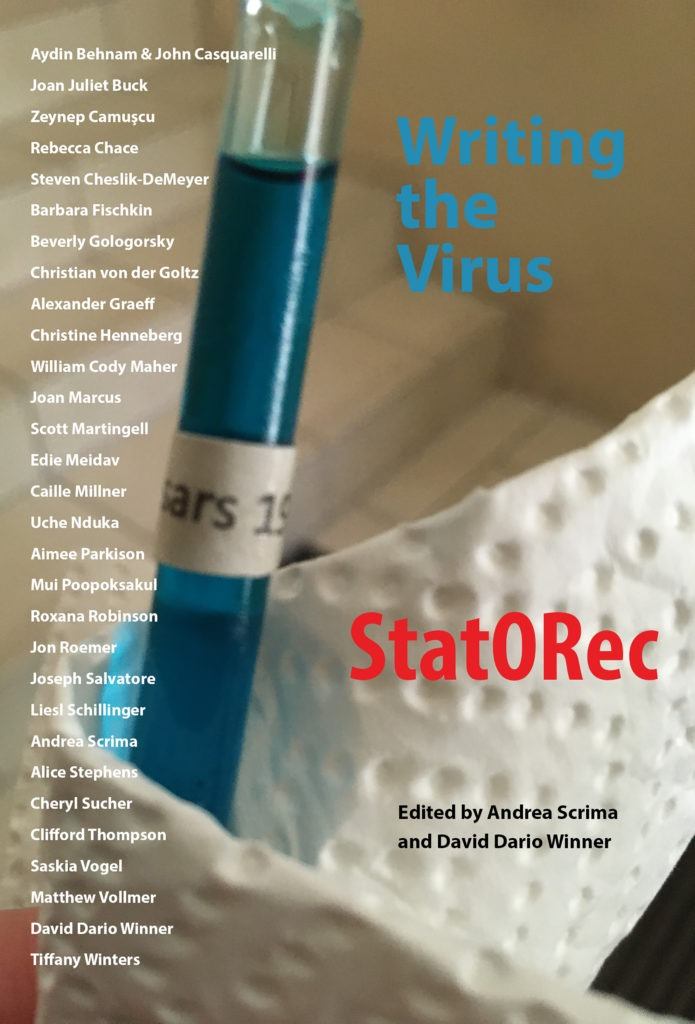


 Last month
  My Jewish maternal grandparents came to America just ahead of WWII. Nearly all of my grandmother’s extended family were wiped out in the Holocaust. Much of my grandfather’s extended family had previously emigrated to Palestine.
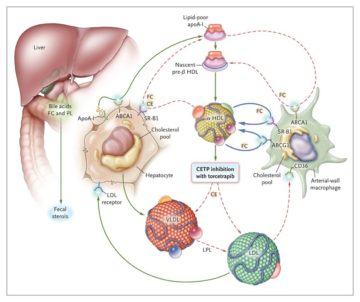 shocking. Torcetrapib, for example, failed at the very end of its phase III trial. So many resources had been expended to get that far in development. Everything spent was lost. All that remained was a big data pile worth virtually nothing, along with pilot plants that were built to supply the drug to thousands of patients across years of clinical trials.
 “The American way of life is not up for negotiation.” —George HW Bush to the assembled international diplomats at the Earth Summit in Rio de Janeiro, 1992
 Not since the Civil War and Reconstruction has the citizenry in the United States been so divided. In our current
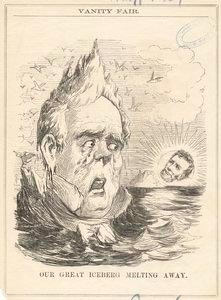 November 6, 1860. Perhaps the worst day in James Buchanan’s political life. His fears, his sympathies and antipathies, the judgment of the public upon an entire career, all converge into a horrible realty. Abraham Lincoln, of the “Black Republican Party,” has been elected President of the United States.

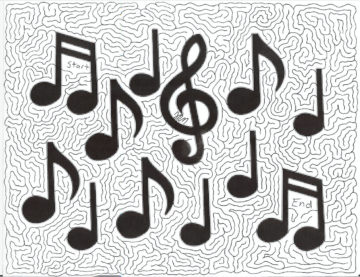 Back in 1971, I couldn’t have predicted that the release of Joni Mitchell’s fourth album, Blue, would mark the beginning of the end of a friendship.