
by Leanne Ogasawara
1.
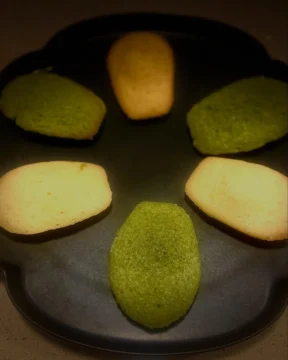
A man sits unsettled on a wintry Paris afternoon, when his mother offers him some tea—along with a small little cake, shaped like a shell.
Perhaps it is the most famous cake in literary history, for the moment he tastes the madeleine, softened in the tea, he is, in that instant, transported across time and space, as the world of his childhood rises before him, whole and luminous.
What begins as a simple sensation becomes a revelation: the past, long buried, is not gone at all, but waiting in the body, ready to return.
Philosopher Paul Ricoeur might have said this was the perfect example of the way literature illuminates how human beings experience time. In his three-volume series, Time and Narrative, Ricœur suggests that time becomes human only when it is articulated through narrative, because this is when lived duration is gathered and configured into meaning.
A philosophy student undergraduate, I am now married to an astrophysicist so I guess it was no surprise that time was something I became completely obsessed with when I began studying the craft of fiction. Just think of how Proust’s madeleine moment captures the way we really do experience time. Like a palimpsest, where one sensation can trigger an entire buried world, and we feel ourselves transported through a temporal aperture, like a worm hole, through the story of our lives.
In a class on time and fiction I took several years ago, we looked at a story in The New Yorker by Weike Wang called Omakase. A kind of frame story, it begins when a couple goes out to dinner, and in almost every moment that happens in chronological time, a sip of tea or when the woman finds herself observing the man chat with the waitress, there is a shift of thought, an interior unfolding. It’s like the multi-dimensional unfolding of a Sophon in the Three-Body Problem, her inner world unfolds in multi-dimensions. Read more »
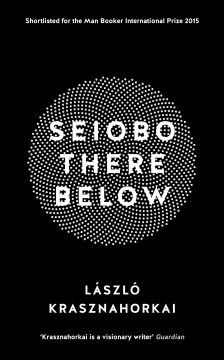 The stories in Seiobo There Below, if they can be called stories, begin with a bird, a snow-white heron that stands motionless in the shallow waters of the Kamo River in Kyoto with the world whirling noisily around it. Like the center of a vortex, the eye in a storm of unceasing, clamorous activity, it holds its curved neck still, impervious to the cars and buses and bicycles rushing past on the surrounding banks, an embodiment of grace and fortitude of concentration as it spies the water below and waits for its prey. We’ve only just begun reading this collection, and already László Krasznahorkai’s haunting prose has submerged us in the great panta rhei of life—Heraclitus’s aphorism that everything flows in a state of continuous change.