
by Ashutosh Jogalekar
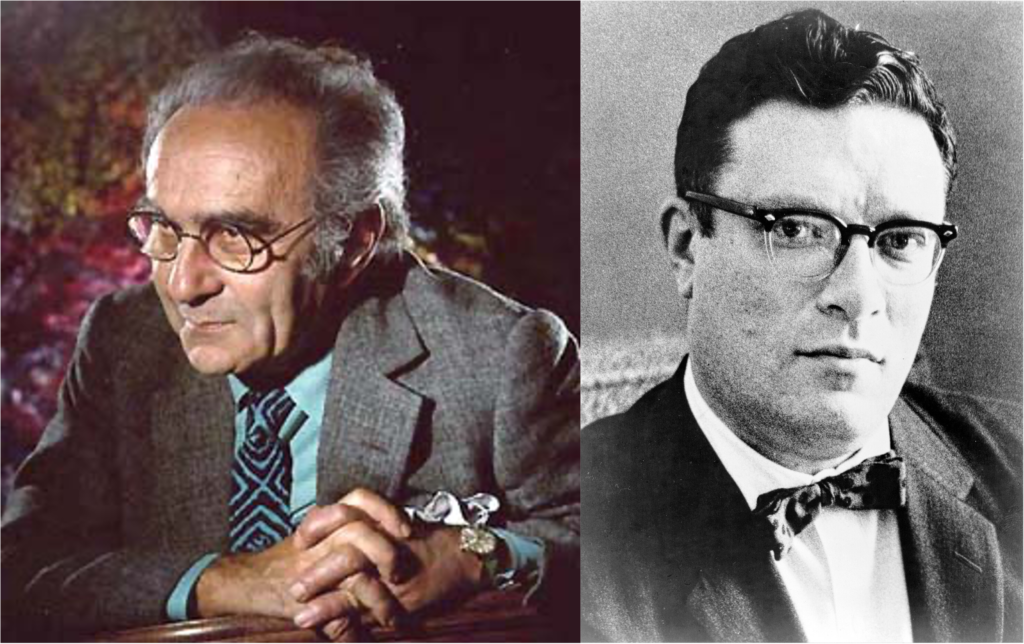
There are two kinds of science writers which I will call “artists” and “craftsmen”. Since I might face the opprobrium of both groups by attaching these labels to them, and especially because the two categories may overlap considerably, let me elaborate a little. Artists are big on literary science writing; craftsmen are big on explanatory science writing. Artists write beautiful prose; craftsmen write clear prose. Artists write relatively few books and are likely to win big book awards like the Pulitzer Prize; craftsmen are content to be merely prolific, often writing dozens or even hundreds of books.
Let me quote from a master craftsman of the trade to put the discussion into context. Isaac Asimov who wrote more than 500 books, seemingly on every subject conceivable, had the following to say about his writing style:
“I made up my mind long ago to follow one cardinal rule in all my writing—to be ‘clear’. I have given up all thought of writing poetically or symbolically or experimentally, or in any of the other modes that might (if I were good enough) get me a Pulitzer prize. I would write merely clearly and in this way establish a warm relationship between myself and my readers, and the professional critics—Well, they can do whatever they wish.”
Asimov wasn’t just a great science fiction writer but a great science writer. He was known as “The Great Explainer” for his ability to explain complex, sweeping scientific topics to laypeople. But Asimov’s quote above also illustrates a central dilemma of science writing. That dilemma was best captured by the physicist Paul Dirac when he expressed puzzlement to Robert Oppenheimer who he had befriended while the two were researchers at the University of Göttingen in the 1920s. Oppenheimer, a man with broad interests across science and the humanities, studied both physics and poetry. Befuddled, Dirac once asked him, “Oppenheimer, they tell me you are writing poetry. I do not see how a man can work on the frontiers of physics and write poetry at the same time. In science you want to say something that nobody knew before, in words which everyone can understand. In poetry it seems to be the opposite”. Dirac had a point. In science a tiger is a striped mammal and an apex predator. In poetry a tiger is a “tyger”, with an “immortal hand or eye framing thy symmetry”. Read more »
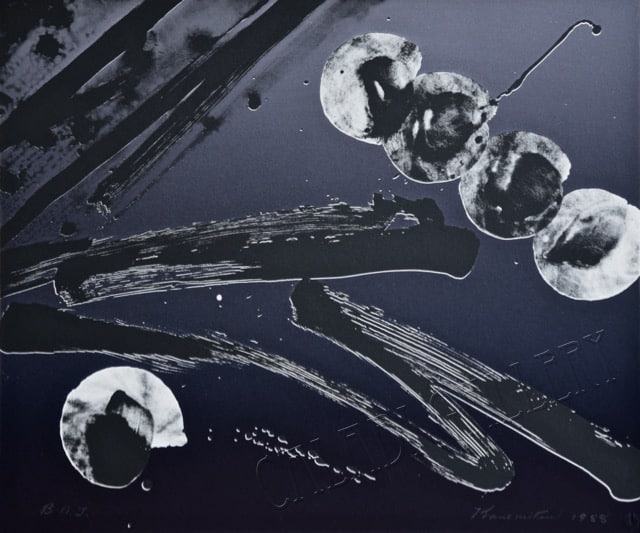 Matsumi Kanemitsu. For The Dream, 1988.
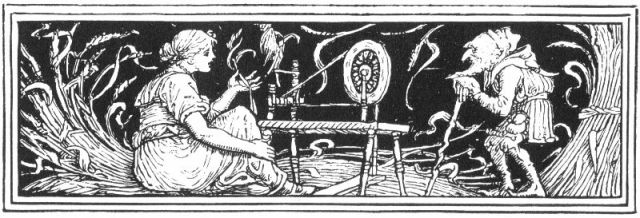 “This is the story of a man. Not rich and powerful, not a big man like your father, Sweetheart. Just a funny little man. I didn’t know him long, only three nights. But there was something about him, something magical.” If “Rumpelstiltskin” started with this framing, we would have a different picture of the story’s meaning, a truer picture, for this framing suggests what is hidden below the surface.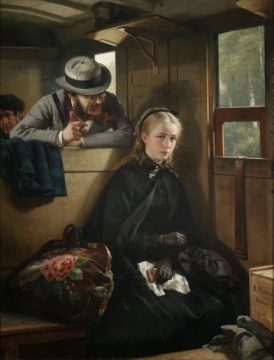

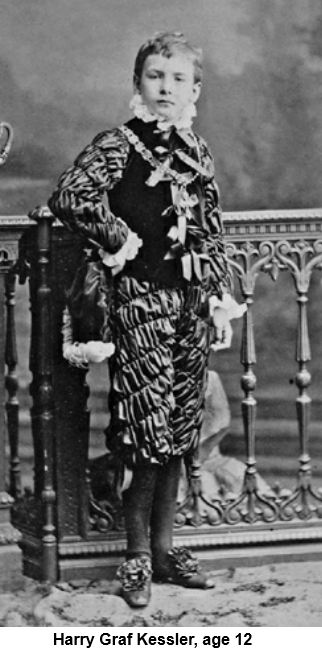 Count Harry Kessler was born to write it all down. In this excerpt from his second ever diary entry, written at the German spa town of Bad Ems where Kaiser Wilhelm also summered, the 12-year-old French-born German boy has a high old time stretching the limits of the English language, in preparation for matriculation at a prestigious British boys’ school. An incipient snob and precociously intelligent, Kessler offers us a nutshell preview of the diabolical pleasure with which he will mash words, sounds and images for the next 57 years—savaging inanity wherever he sees it—but more importantly, promoting and nurturing great artists and thinkers along the way, including Rilke, Beckmann, Seurat, Grosz, Maillol, van der Velde, Max Reinhardt, Gordon Craig, von Hofmannsthal, Stravinsky, Rodin, Kurt Weill, Strauss, Nijinsky, Munch, Walther Rathenau and many others.
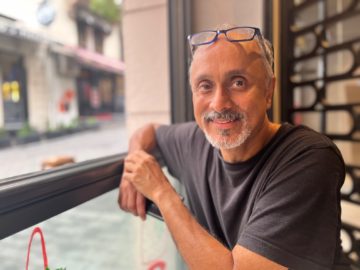
 Over the years I’ve been teaching, many people have asked me about the content of an elementary course I teach. I’m interested in the syllabi and exams of courses in other fields, so this I hope may be of interest to others as well. The survey course on which this exam is based is a smorgasbord of probability, voting theory, scaling, and other variable material. Since the class is very large, I often reluctantly make the final exam multiple choice as is the example below. Try it if you like. Two hours is all the time you have. Writing useful prompts for ChatGPT will take too long to be of much help.
 In
In 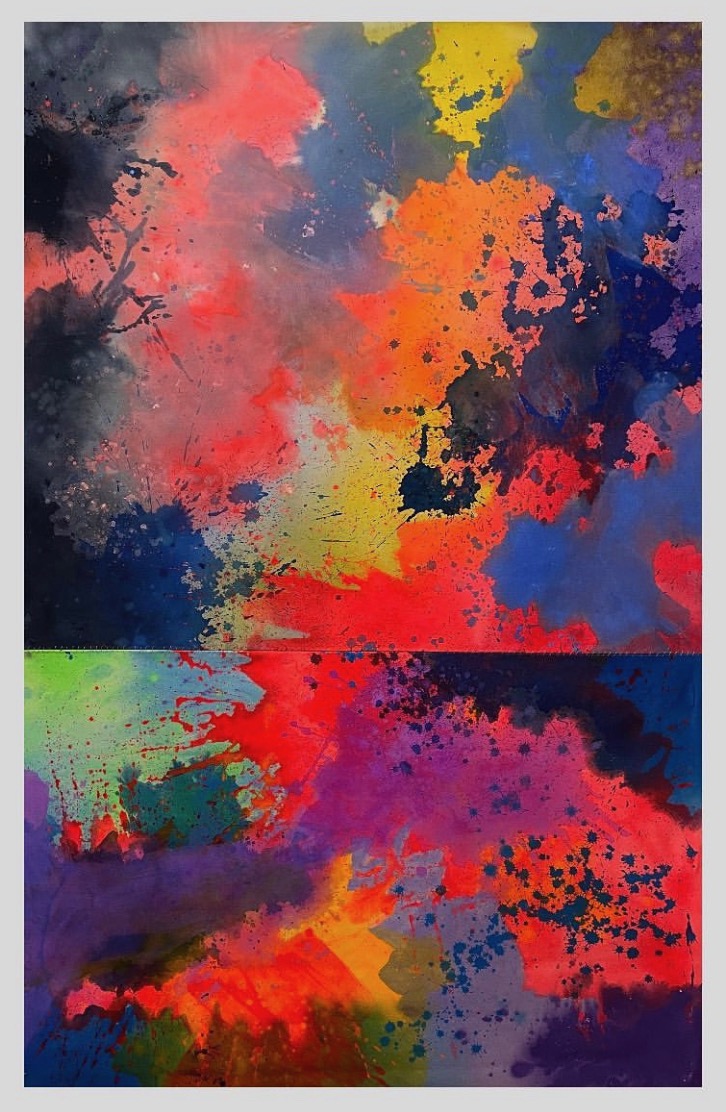 Rashida Abuwala. Untitled Diptych, 2023.
 The other day, one of my grandsons asked me if I’d like to play Mario Kart with him. It goes against my grain to turn down invitations from my grandsons. However, when we’d played Mario Kart a few weeks earlier, I’d been terrible at it. His younger brother, watching from the sidelines, wanted to know why I played so badly. I said it was because the game was new to me, but in fact I’ve always been slow and clumsy at games that require quick reactions and hand-eye coordination, back to Pac-Man and even earlier. As an undergrad I was good at an arcade version of Trivial Pursuit, but that cuts no ice with anyone these days.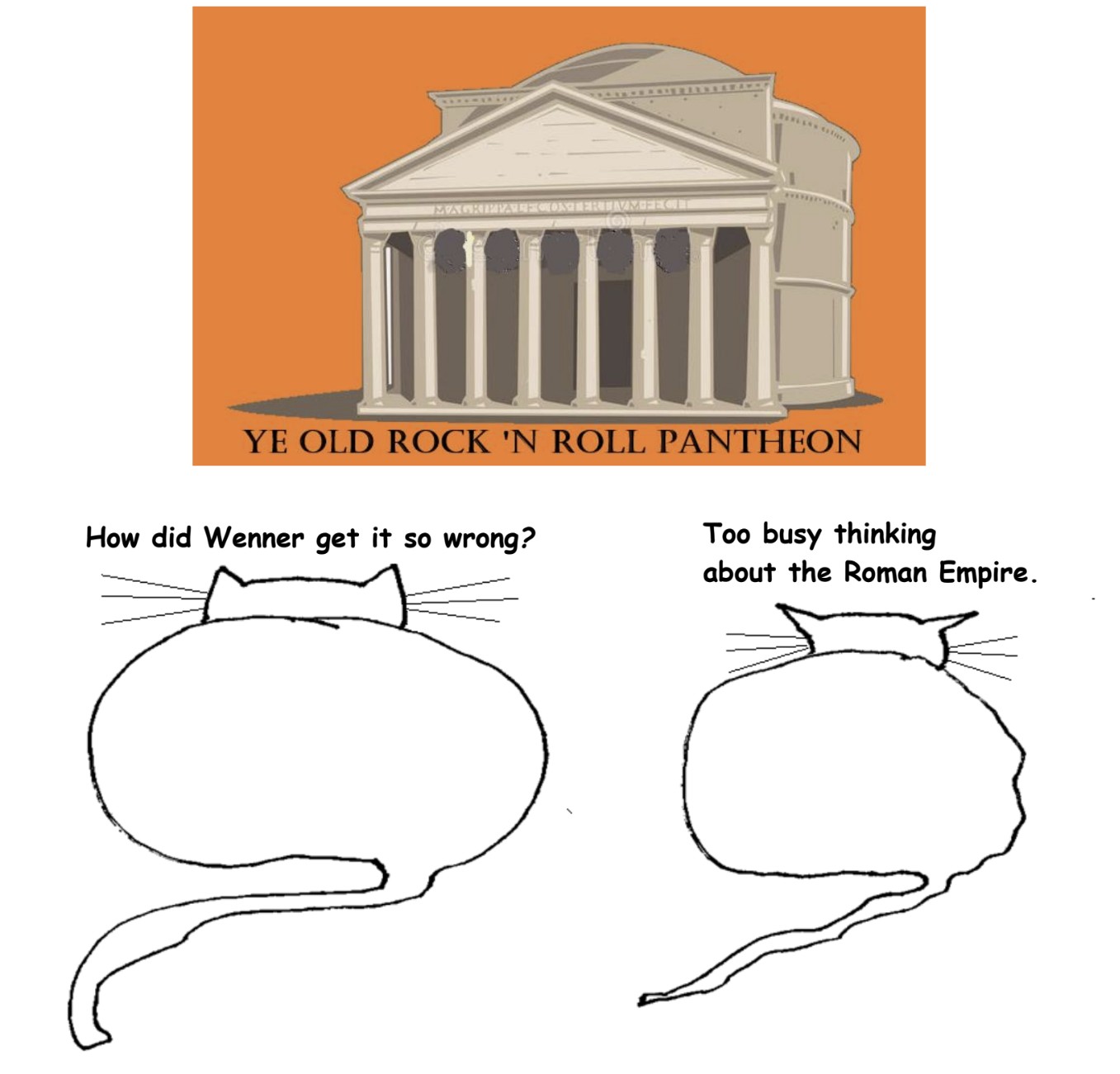
 In geometry, a line goes on and on: it goes on and on and never stops. In poetry, a line goes on as long as the poet lets it….though in practice this rarely means more than six or seven words at a stretch.