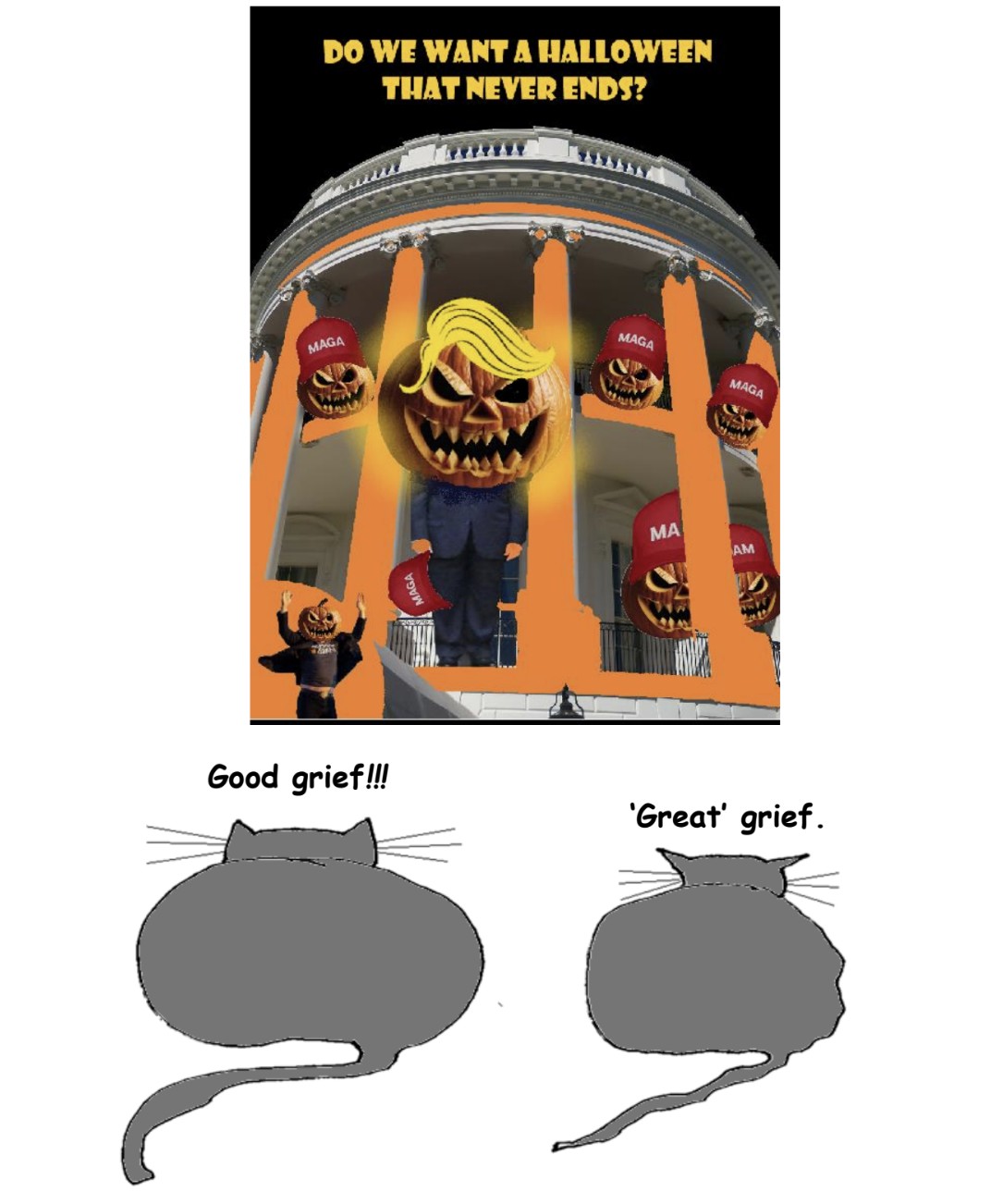
by David Winner
I’m writing on Halloween, but by the time this is published the election will have passed, and we may even know the identity of our next president. Whether she’s won or lost, I wanted to suggest something that I think could have helped Kamala.
But first a little background. In the Charlottesville, Virginia, of my growing up (the 1970s) everyone appeared to be coded as either white or Black. I didn’t really understand distinctions between Jamaicans, Jews, Bengalis, Asians, Mexicans, Italians, West Africans. All I grasped was that basic racial binary.
While in later years I began to see my peculiar parents’ peculiar brand of racism, they did not express what I understood to be racist sentiments when I was a child. A fellow white kid at summer camp somewhere else in Virginia thought I was “liberal” because I did not hate Black people, but the first real prejudice I became aware of back home in Charlottesville was a pseudo beach club in high school at an artificial lake outside of town that would not admit “poofs.”
In my progressive hippie-dippy private high school, most students were white like me, and most came from middle-class or upper middle-class backgrounds: the children of professors, lawyers, businesspeople. Most of us did not have heavy southern accents or real southern identities. Every member of my core group of friends, my clique as it were, were from those similar backgrounds.
But not everyone in school was like us. There were students with southern accents and markedly different tastes. In clothes, in vehicles, in drugs, but most significantly in music. We moved quickly through classic rock (Henrix, The Who) into punk, new wave (The Clash, David Bowie, Gang of Four) whereas they liked more heavy metal and country rock.
I was not a member of the beach club, but my friends and I were not epithet-free. Our epithets involved class and culture rather than race, gender, religion, or sexuality.
We didn’t directly insult people by calling them r*d n*ks to their face, but we used their musical taste to stick that to them. Read more »
 Historians have spilled much ink analyzing and interpreting all of the U.S. presidential elections, dating back to George Washington’s first go in 1788. But a handful of contests get more attention than others. Some elections, besides being important for all the usual reasons, also provide insights into their eras’ zeitgeist, and proved to be tremendously influential far beyond the four years they were intended to frame.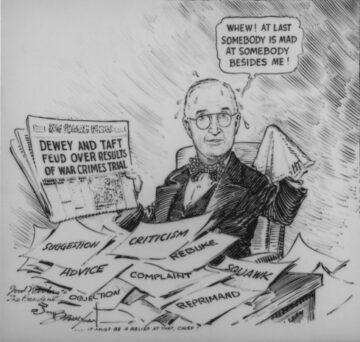
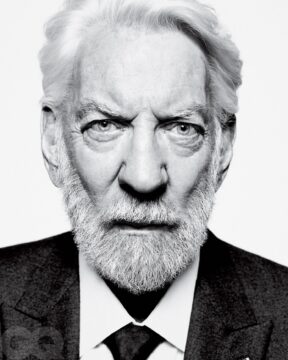 Donald Sutherland was a connoisseur of poetry. In the 80s I knew poetry-quoting doyennes from the glittering parties the Academy of American Poets threw as well as the Sudanese who recited their histories in song, but mostly I knew poets obsessed with competing with dead ones, with an eye toward their next book. Poets generally love poetry the way auto mechanics love cars. They don’t luxuriate in the front seat, or take long winding car trips through the Berkshires, they make sure the ignition catches and go on to the next one. Hearing Sutherland recite poetry you heard the Stanislavski method of poetry-recitation, an oral delivery straight from the mind as well as the mouth. Sutherland said he was manipulated by words, not as a ventriloquist but in the relationship between feeling and meaning. Likewise, after numerous tussles with directors Fellini and Preminger and Bertolucci – he even tried to get Robert Altman fired from M.A.S.H. – he decided he was merely the director’s vehicle. Poetry directed him.

 In daily life we get along okay without what we call thinking. Indeed, most of the time we do our daily round without anything coming to our conscious mind – muscle memory and routines get us through the morning rituals of washing and making coffee. And when we do need to bring something to mind, to think about it, it’s often not felt to cause a lot of friction: where did I put my glasses? When does the train leave? and so on.
 A good poem can do many things – be clever, edifying, provocative, or moving – but a truly great poem (which is to say a successful one), need only be concerned with one additional attribute, and that is an arresting turn of phrase. By that criterion, Ukrainian-American poet Ilya Kaminsky’s “We Lived Happily During the War,” originally published in Poetry in 2013 and later appearing in the 2019 collection Deaf Republic, is among the greatest English-language verses of this abbreviated century. Within the context of Deaf Republic, Kaminsky’s lyric takes part in a larger allegorical narrative, but that broader story in the collection aside, “We Lived Happily During the War” is arrestingly prescient of both the 2014 Russian invasion of Crimea and Vladimir Putin’s brutal and ongoing assault on the broader country of Kaminsky’s birth since 2022, including bombardment of the poet’s home city of Odessa. Yet even stripped of this context, “We Lived Happily During the War” concerns itself with the general tumult of modern warfare, both its horror and prosaicness, its sanitation and its tragedy. More than just about Ukraine, or Syria, or Gaza, Kaminsky’s lyric is about us, those comfortable Western observers of warfare who have the privilege to be happy and content at the exact moment that others are being slaughtered.