by Michael Liss
It is time for navel-gazing here in the US.
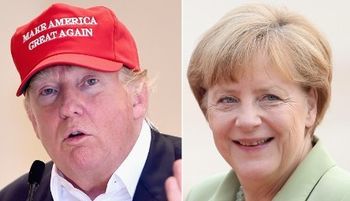
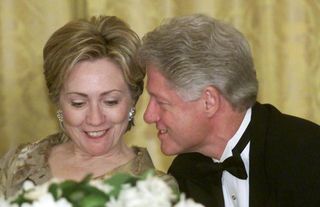
We are about to have an election in which the two likely nominees have managed to alienate the electorate to an unprecedented degree. It has led to a surreal atmosphere. Hillary Clinton slogs on with a message that brings to mind the appeal of an appointment with a dental hygienist—it won’t be the highlight of your day, but it’s the healthy choice. Donald Trump has managed to do something quite brilliant—he has identified his target audience, taken disgust with dysfunction, mixed it with a shot of anger, and distilled it into one easily digestible slogan: “Make America Great Again.”
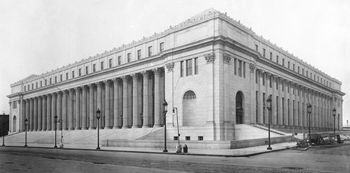
It is a genius-level move by a master salesman. With those few words, Trump seizes for himself and his supporters a core identity as the true heirs of a legacy of American preeminence. Like a classic old building, American greatness is still here—it’s just covered under layers of accumulated grime. With the right man in charge, someone of vigor and boldness, we can sandblast it all away and have a palace—even a cathedral—that celebrates. As we once were, so shall we be again.
But who were we? To what are we returning? That’s a fascinating question, because to own something, you need to be able to define it. And history lacks the clarity of a mathematical proof or a replicable scientific experiment. To paraphrase an interesting point Mary Beard makes in SPQR: A History of Ancient Rome, the historian engages in a work of reconstruction which, by definition, is self-limiting. When the written word is absent or suspect, you learn about things by piecing together inference and fact, as if you were reassembling a broken amphora. You can scientifically analyze the contents, you can date the time it was fired, you can make assumptions about the economic and social standing of the owner and the community he lived in, but, in the end, what you have in front of you is likely the remains of an attractive, once useful, pot. A pot—not an unimpeachable set of facts about the nature of the people who used it.

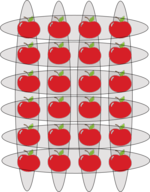
 Math works pretty well. We can count apples and oranges; we can scribble equations and then launch a rocket that lands gently upright. When an argument is indisputable, we colloquially say “do the math,” and we speak of events that will happen with “mathematical certainty.” Math works so well that you're forced to wonder: why, and what does it mean about our world? I won't fully answer these questions, but I'll offer a few perspectives.