
What Vermeer’s Love Letters Say

by Scott Samuelson

Johannes Vermeer, Young Woman Reading a Letter by an Open Window, 1657. Prior to the 2021 restoration.

Studying in Leipzig back in 1993, I took the train down to Dresden and visited the Old Masters Picture Gallery. As I meandered among the masterpieces, I was stopped in my tracks by Johannes Vermeer’s Young Woman Reading a Letter by an Open Window. The droplets of light on her braids. Her ringlets of loose hair. The almost-touchable texture of the tapestry. The almost-smellable bowl of fruit. The mysterious green curtain. Her face engrossed in the end of the letter. Her blurred reflection on the windowpane. I ended up gawking at the painting so long I missed my train back.

Right now, at the Frick Collection in New York, people the world over are crowding into an exhibit called “Vermeer’s Love Letters,” featuring three exquisite portraits by the master on his favorite theme (I first wrote “only three”—but that’s nearly ten percent of his work!). Vermeer shows are always a sensation. I still remember the excitement I shared in early 1996 with the line of museumgoers waiting in the cold to see the once-in-a-lifetime exhibit at the National Gallery in Washington D.C., which gathered twenty-one of his thirty-five paintings.

How have Vermeer’s paintings come to entrance the world? Why is that painting in Dresden—alas, not in the Frick show—still my absolute favorite over thirty years later? What are Vermeer’s love letters trying to tell us?

A couple of years ago, I had an experience that revealed to me the secret of our fascination with his paintings. It took place at Terminal One in O’Hare—at Stefani’s Tuscany Café. But before I unveil the mystery (at least as far as I’ve been given to understand it), let me say a quick word about light. Read more »
Monday, May 30, 2016

The Prescriptivist’s Progress

by Ryan Ruby

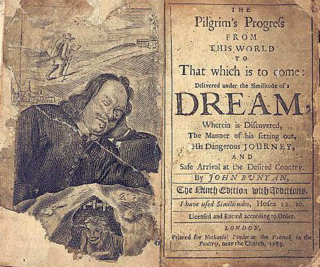
PilgrimsprogressbookThis month, two minor controversies revived the specter of the “language wars” and reintroduced the literary internet to the distinction between prescriptivism and descriptivism. One began when Han Kang's novel The Vegetarian won the Man Booker Prize and readers took to their search engines en masse to look up the word “Kafkaesque,” which had been used by the book's publishers and reviewers to describe it. Remarking upon the trend, Merriam-Webster noted sourly: “some argue that ‘Kafkaesque' is so overused that it's begun to lose its meaning.” A few weeks before, Slate's Laura Miller had lodged a similar complaint about the abuse of the word “allegory.” “An entire literary tradition is being forgotten,” she warned, “because writers use the term allegory to mean, like, whatever they want.”

When it comes to semantics, prescriptivists insist that precise rules ought to govern linguistic usage. Without such rules there would be no criteria by which to judge whether a word was being used correctly or incorrectly, and thus no way to fix its meaning. Descriptivists, by contrast, argue that a quick glance at the history of any natural language will show that, whether we like it or not, words are vague and usage changes over time. The meaning of a word is whatever a community of language users understands it to mean at any given moment. In both of the above cases, Merriam-Webster and Miller were flying the flag of prescriptivism, protesting the kind of semantic drift that results from the indiscriminate, over-frequent usages of a word, a drift that has no doubt been exacerbated thanks to the internet itself, which has increased the recorded usages of words and accelerated their circulation.

Read more »