by Paul North
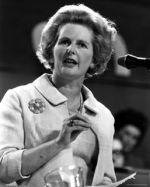
So, you only say TINA when there is another alternative so strong that you have to pretend it doesn't exist. A prime piece of rhetoric, TINA also alludes to a dearly held belief. The phrase was—and is—a statement about how we think things are, a belief about how the world is made. Say TINA and you imply this belief. As I say, you don't really call it an alternative, if there is only one. That is called reality. And this is just the point: TINA implies a single world with a single theory that fits all of the facts. So, if someone says TINA, listeners are reminded of their belief that, yes, there is one way that things are and one correct account of it. We can in good conscience ignore anything else. There is no decision left to make. The belief that goes along with TINA and which TINA reinforces we can call TOOT: There's Only One Theory. When she was saying TINA, Thatcher was implying TOOT at the same time. Mine workers striking? TOOT: there's only one theory and it tells us to break the back of their movement because the free flow of labor is best governed by the market. Jobless rate high? The same theory—the only one—says: inflation is the greatest evil in a post-industrial economy. That economy sluggish? The very same theory says: privatize national industries and increase worker productivity. Question is, can there really be only one theory covering human matters?





![FullSizeRender[2]](/wp-content/legacy/6a00d8341c562c53ef01bb09730b5a970d-150wi "FullSizeRender[2]")