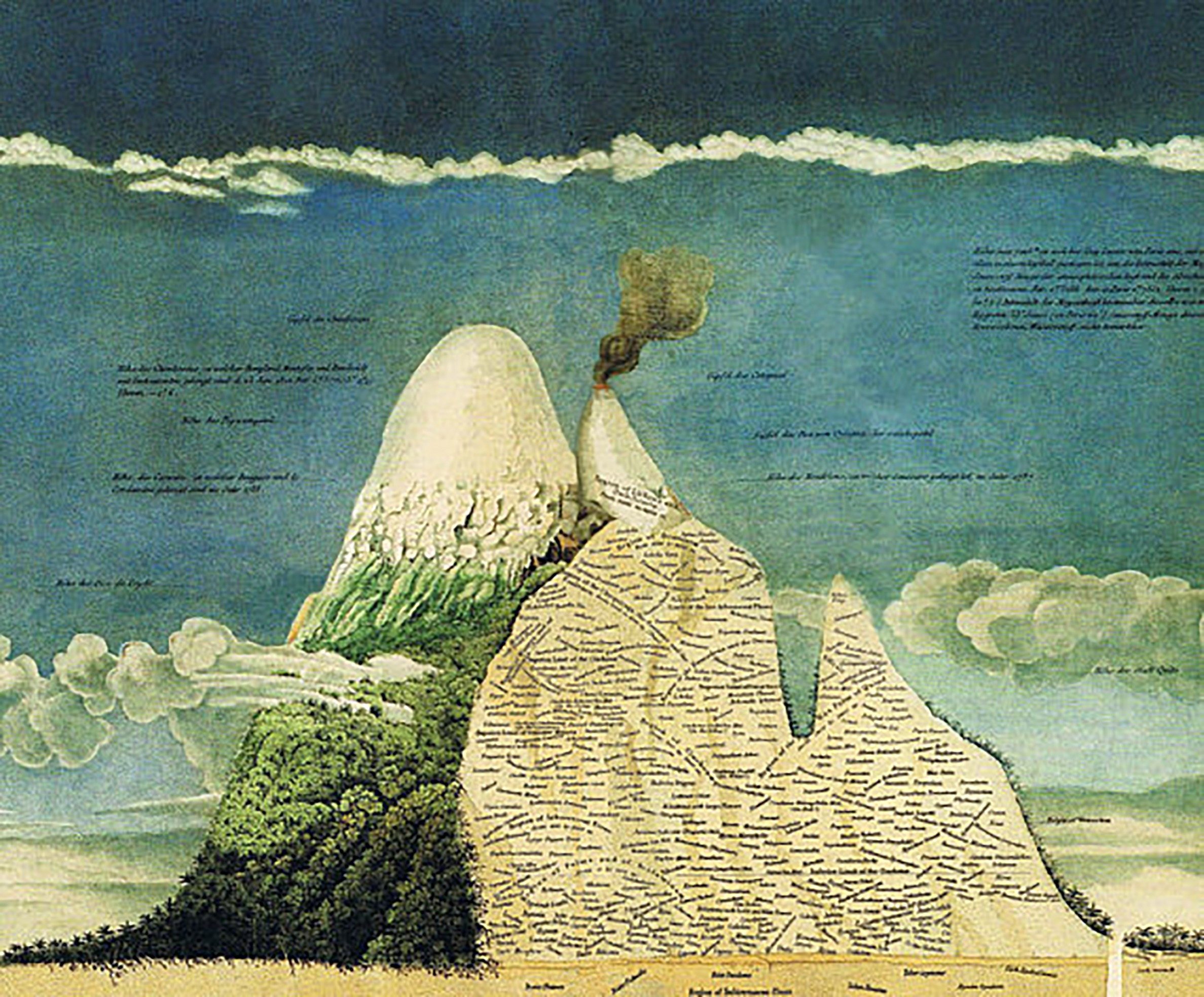
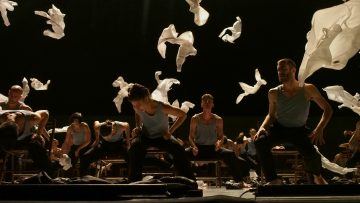
 Sughra Raza. Enlightened, April, 2019.
Digital photograph.

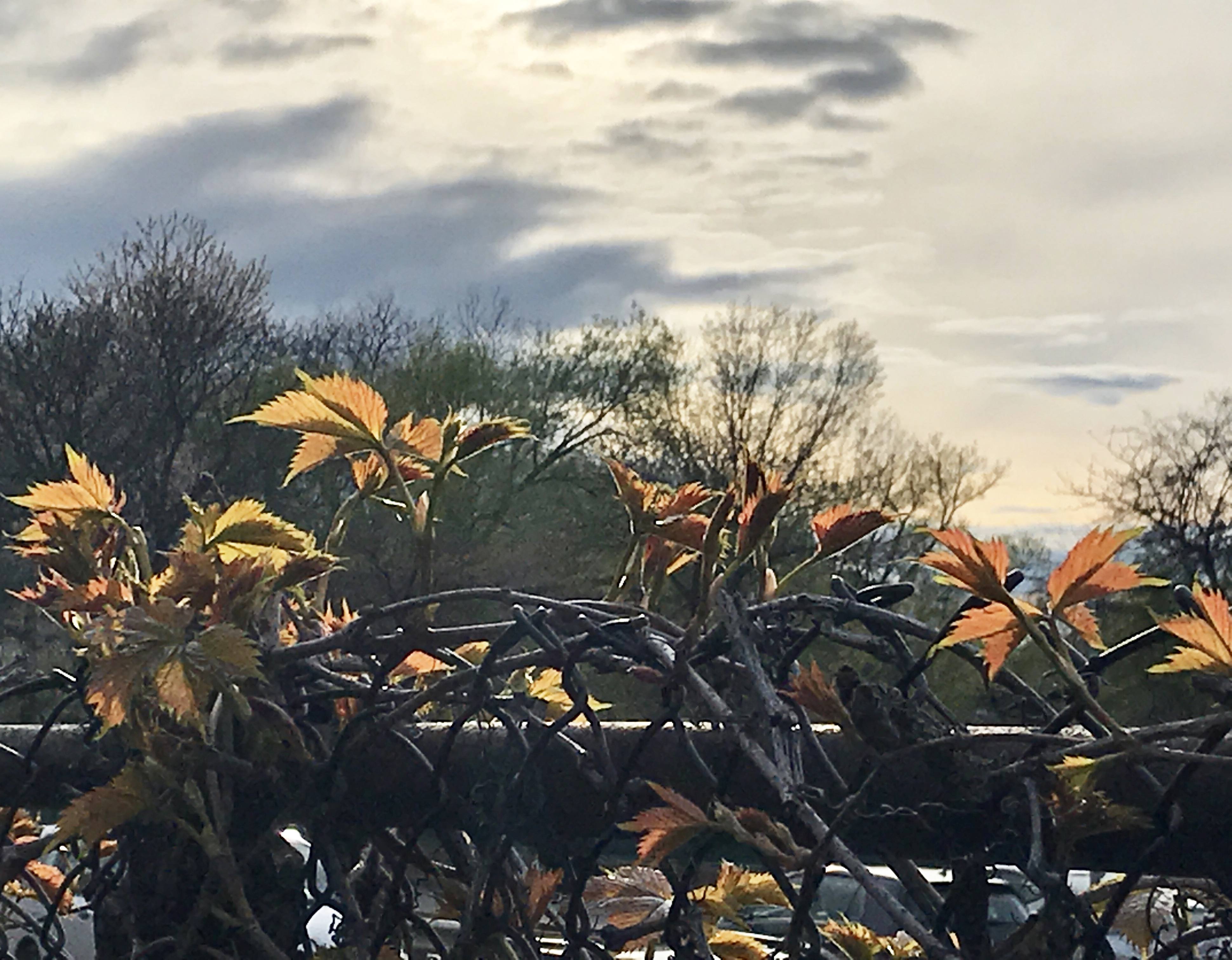
Sughra Raza. Enlightened, April, 2019.
Digital photograph.
by Mary Hrovat
 When I returned to school after my first marriage ended, I had to decide what to study. I’d been working toward a degree in history when I dropped out of a community college to get married, but I’d always been drawn to astronomy. One of the reasons I chose astronomy over history, or any other option, was that I felt that astronomy contained many of the other things I was interested in. To put it another way, I thought that if I didn’t study astronomy, I would regret it, but if I did study it, I wouldn’t necessarily lose touch with the other things I was interested in because they were all part of astronomy, in one way or another.
My degree is actually in astrophysics, and obviously it involved a lot of physics and mathematics. To see how the universe works, you have to understand gravitation, nuclear fusion, thermodynamics, atomic physics, and much more. In addition, to use and design telescopes and detectors, you need to know about optics, electronics, and materials science. Although I started out with very little background in math, I wound up with a minor in mathematics. By the time I had taken all the math classes required for the degree, and a fourth semester of calculus (which I hoped would help me understand my physics classes better), I was only three credits away from a math minor, so I took a class in linear algebra.
Astronomy also has obvious links to chemistry and geology. The story of the universe is, from one viewpoint, the story of chemical evolution, the development of more complex chemical elements as stars turned hydrogen and helium into more complex elements through nucleosynthesis. To study planets and moons, we can sometimes apply what we know about the rocks and weather and geological processes of Earth. Geology also comes into play in other ways. For example, one piece of evidence for the dinosaur-killing asteroid that struck Earth around 65 million years ago is a thin layer of iridium in Earth’s crust. Read more »
by Joan Harvey

In the dark times
Will there be singing?
There will be singing.
Of the dark times.
(Bertolt Brecht)
I like the idea of Industrial music as a kind of corrupted psychedelia – the same derangement of the senses, but the childhood innocence has gone. (Comment on YouTube of Throbbing Gristle’s Discipline)
I respond this way again and again, always a split second after each fricative machine growl. Half dreaming now and forced into pure response, I regress. The animal brain writhes sensuously in its own mere selfness. I am at the edge of a pleasure rarely visited. The possibility of ecstasy—being out of myself—is nearly always either novel enough to marvel at (a strictly front-of-brain act) or strange enough to scare me back into my body. (Alexander S. Reed, Assimilate 304) [i]
Most people I know not only don’t care for this music, but probably dislike it intensely.
I can’t really imagine people who don’t already enjoy this sort of music walking into one of these events and actually having a good time.
Therefore proselytizing should probably not be my aim.
We want to share our pleasures and convince others, but sometimes from the beginning it’s a lost cause.
Still, its a part of my existence most people don’t see. And in a way it’s somewhat surprising to me.
Oddly, I began going to industrial shows rather late in life.
They’re more in the line of a thing a teen goth would discover.
When we’re lucky we continually discover new pleasures.
And with luck, many of them. Read more »
by Brooks Riley
by Jeroen Bouterse
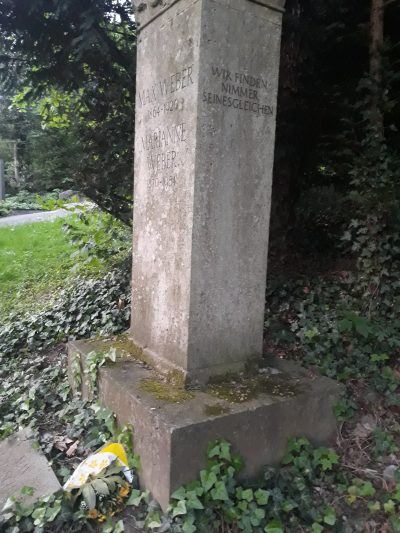
In the school vacation, I finally decided to go on what is probably my only-ever academic pilgrimage: I visited Max Weber’s tombstone in the Bergfriedhof cemetery in Heidelberg.
I had intended to go for some time. In my original plans, I’d go on foot (from the Netherlands) like a proper pilgrim, but after years of failing to go through I had come to realize that was not going to happen anytime soon. So I went by train. Which was too easy; I stood next to the monument before I knew it. I’m still coming to grips with the fact that only on the first time can you do a thing like this properly – that is, with enough ascetic self-denial to mark the purposefulness of your actions – and that I messed up that one chance.
Oh well. Isn’t it fitting to feel the charismatic potential of this particular relic being sapped by the very efficiency of modernity – the stahlhartes Gehäuse of the InterCity Express, working unfailingly to disenchant this tiny part of the world, too. Except for one detail, which I’ll get to later.
I fell in love with Weber as a history undergraduate. We read a fragment of the Protestant Ethic and the Spirit of Capitalism. The combination of a big and, not unimportantly, Western-centered thesis with detailed, painstaking social and historical explanations seemed a best of two worlds. More than that, Weber’s explanations, rather than reducing the ideas and deepest convictions of the people and movements he studied to some other variable, gave center stage to those convictions. He demonstrated that historical explanation involved understanding the beliefs and values laid down in historical texts, thereby at least partly justifying what I felt most comfortable doing. Read more »
by Joshua Wilbur
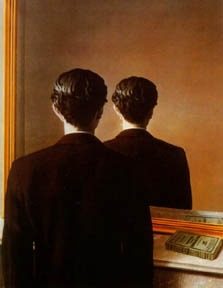
As you read these words, someone (or some thing) could be creeping up behind you.
Maybe you’re sitting at your desk. Or at your kitchen table. Or on a half-empty train. Behind you looms an encroaching presence, a silent observer. I picture a middle-aged man in a black suit — a tired and unfeeling assassin— but imagine whatever or whomever you like. A mythical monster, a scorned lover.
Someone might just be there. Right behind you. You won’t know for certain until you look.
* * *
We humans don’t have eyes in the back of our heads. Evolution didn’t budget for that luxury. Some animals—deer, horses, cows—have eyes on the sides of their heads, allowing them a wide field of vision. Other animals—humans, dogs, cats—have their eyes closer together and facing forward, allowing them to better judge depth and distance.
So while grass-grazers enjoy peripheral, panoramic vision their hungry hunters quickly spot them through dense forest. This suggests a simple rule of thumb for distinguishing the skulls of predators from those of prey: “Eyes in the front, the animal hunts. Eyes on the side, the animal hides.”
Eyes in the back, though, would require too many complex mutations, and we do well enough craning our necks to find food. Our bodies have been molded over millions of years to fulfill carnal desires, desperate for what’s in front of us: arms stretching out, noses protruding, mouths gnawing ahead. Biology has determined our fate as forward-oriented creatures and given us a great fear of that which lies outside our perception. Read more »
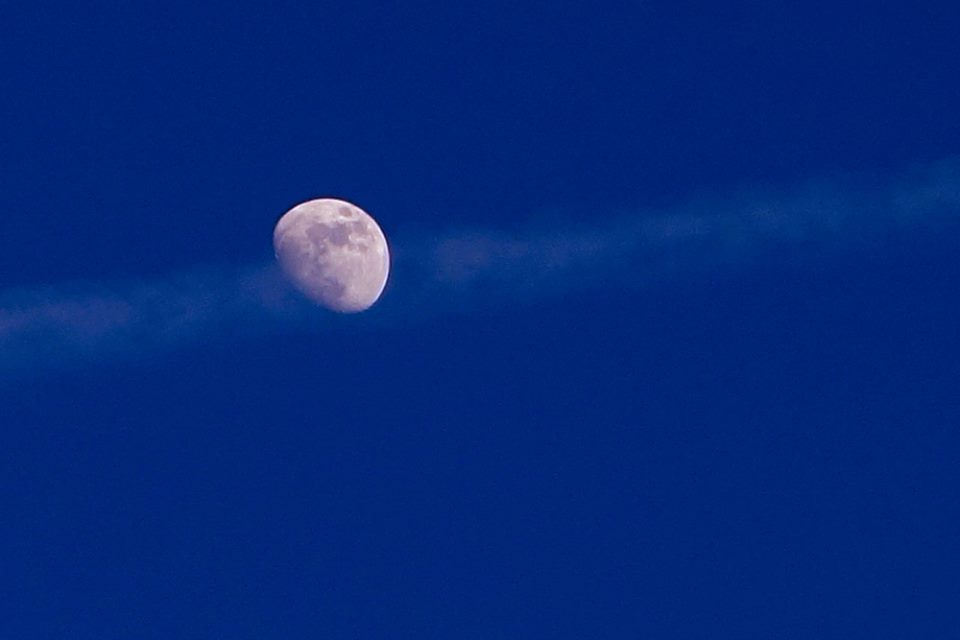
Photo of moon with a jet vapor trail taken from my balcony in April of 2015.
by Carol A Westbrook

“Medicare for All” is a battle cry for the upcoming national elections, as voters’ health care costs continue to skyrocket. Universal Medicare, they believe, will provide free health care, improve access to the best doctors, and lower the cost of prescription drugs. Is it a dream, or is it a nightmare?
I am 100% in favor of universal health care, but believe me, it ain’t gonna be free. True, I’m not an economist–I’m a doctor–but I can do the math. I’ve had years of experience, both practicing under Medicare’s system and as a Medicare patient, and I understand something about health care costs. Few voters under age 65 understand what Medicare provides, and even fewer have a grasp on what it will cost the government–and ultimately the taxpayer–to extend it to all.
What Medicare provides for free is Medicare A insurance, which covers inpatient hospital, costs. To cover outpatient and emergency room visits, the senior must purchase Part B, which covers 80% of these charges. Medicare B costs $135/month plus a sliding scale based on income. Prescription drug coverage requires purchasing Medicare D from a private company. (Medicare C is alternative private insurance). Medicare A, B and D premiums are all deducted from the monthly Social Security check. Additionally, a senior may purchase a Medicare Supplement from a private insurance company, which covers the un-reimbursed Part A, and B costs. Confusing? Here are two examples. Read more »
by Gabrielle C. Durham
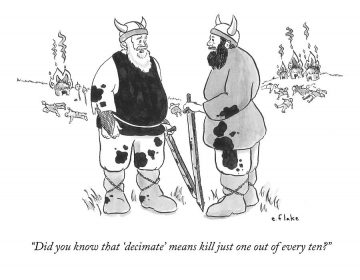 If you took Latin, then you probably have a larger vocabulary than the average bear, and you are more likely to have strong opinions on some words you vaguely remember based on Latin roots (cognates). For example, folks are more commonly using “decimate” to mean destroy or devastate, and it annoys the living materia feculis out of me. Decimate originally meant to kill every 10th person, based on the Latin word for 10 (decem), which is so oddly and satisfyingly specific. “Devastate” and “destroy” are already well known and used, so why do they need another alliterative ally in little weirdo “decimate”?
Another little sneak is “cleave.” Meaning #1 is to adhere tightly and closely or unwaveringly. Meaning #2 is to divide or split, to separate, or to penetrate a material by or as if by cutting or tearing. The second meaning is where we get “cloven” as in “cloven hoof,” the tool “cleaver,” “cleft” as in “cleft palate,” and “cleavage.” Both versions arose before the 12th century. The first meaning comes from Old English clifian by way of Middle English clevien. The second meaning comes from Middle English cleven from Old English cleofan and likely Old Norse kljufa, meaning to split. How can these words be so close for almost a millennium with polar opposite meanings? Read more »
by Abigail Akavia
Two weeks ago I celebrated Passover with my family. It was an intimate affair, just four adults and three preschoolers in the small dining room of our rented apartment in Leipzig. Our secular way of life makes Passover, for us, a holiday of light-to-non-existent religious content; nonetheless the richness of the symbolism and of the ritualistic foods is still something we enjoy. Making the Seder palatable to the kids, both the dinner itself and its ritualistic elements, became the central concern for us, their perpetually exhausted parents. The traditional text read in the Seder, the Haggadah, is cryptic in its Aramaic expressions and passages of Talmudic hermeneutics, on which the guests, both young and old, are encouraged to ask questions. But our distaste for the way the myth of Passover resonates in contemporary nationalistic discourse in Israel and elsewhere has brought us to include alternative content in our Seders, stories of other historical struggles towards freedom, which have often been conceived in terms that echo the story of Exodus. This year we read parts of the Hagaddah composed by Rabbis for Human Rights, which was originally read in a detention camp for African refugees in the Israeli desert in 2016, and includes Bob Marley’s Redemption Song. When we lived in Chicago, we told stories of Harriet Tubman and The Underground Railroad.
An Israeli Seder is not dissimilar to American Thanksgiving: a long meal that commemorates the founding of the nation, along with the post-nationalistic reckoning that both holidays can prompt. In both cases, a religious-historical myth becomes incarnated in food. Thus, the matzo, the most important culinary feature of Passover, reminds us of the unleavened bread that the Israelites hastily prepared when they fled their enslaving Egyptians. Every other part of the meal is also meant to symbolize part of the story, that of the Hebrews’ struggle to become a nation. (The series of hardships which the Seder is meant to recall may explain why the Seder meal, while as excessive as a Thanksgiving dinner, is arguably less delicious.) Read more »
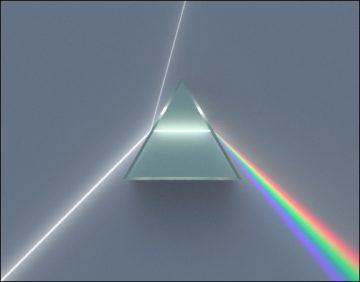
in the matrix of a prism is magic
of two kinds, the inestimable
and that which can be counted
—the inestimable cannot be counted
by definition
if I say red is passionate hot sexy
or if I say red’s the color of death
in unstoppable bleeding
or that its fresh blush reminds me
of one spectacular sunrise
or the touch of you
there’s no calculation I can make
that will sum red’s isness because
as it comes by refraction
from the nothing of white
it may enter a zone
of the most inexplicable
part of mind which is always
putting its private spin on things
but
if I say red’s frequency is 4.3 times
ten to the fourteenth hertz
I’ve dropped into the estimable
spectrum of words which
…….. when so precisely split
leave’s no room for imagination
which just makes me blue
Jim Culleny
4/30/19
by Shawn Crawford

In 1904 America, of boys between the ages of ten to fifteen, 26% worked full time away from home. In the textile mills of New England, children began working at age six for twelve to sixteen hour shifts. When dozing off, cold water would be thrown on them. Ingrates. At the turn of the twentieth century, 70% of children working as migrant pickers in Colorado’s fields had become deformed from the labor.
Given the horrendous conditions, one would think child labor laws sped their way through congress at the beginning of the twentieth century. Instead, a decades-long battle saw legislators bellowing for the rights of business owners and decrying the laziness of the American worker. Chief among these was Weldon Heyburn, an Idaho senator and Theodore Roosevelt’s nemesis. Heyburn thought anyone, including children, that didn’t work from sunup to sundown an idler. And the rights of the business owner had to remain sacred; if someone wanted to hire a fetus to dig coal then by god the government had to protect that right. One can only assume today’s health-care debate would have caused Heyburn’s head to explode.
But after the hysteria and grandstanding and rhetoric died down, sensible child labor laws became established, including the complete banning of children from certain occupations. The pace of industrialization simply outran most people’s understanding of what children could safely do, and as always certain ruthless businesses were happy to exploit the situation. Besides which, the idea of childhood as a distinct time of development separate from adulthood remained a new and contentious idea. For years, children existed as miniature adults, and the faster they took up the work and learned the realities of the adult world the better. Both culture and science would come to understand children as different from adults on all levels: emotionally, physically, and psychologically.
But as we usually do, Americans have forgotten their past and proved incapable of applying former lessons to new contexts. Because while we protect children from labor and most other unpleasant adult responsibilities, we have no problem unleashing them to run free in all the perks of adulthood. Read more »
by Samia Altaf
 Soon after President Obama moved into the White House, Mrs. Obama set up her vegetable garden. She planted tubers like carrots and turnips, leafy veggies such as spinach and kale, and herbs—thyme, sage, mint, and whatnot. But she did not plant beets. Why? I was quite perplexed and tried to find out the reason. I called the White House but did not get a satisfactory answer. “What the hell are you talking about?” said someone who picked up the phone. Maybe her children do not like them, said my child who was not overly fond of the vegetable. Not like beets? How is that possible? Of all the tuberous veggies available to man, the beet in my view is one of the best and the most poetic.
I, too, as a rebellious ten-year-old, did not quite like beets. Well, I liked them all right, I just did not like to eat them. I liked looking at them laid out with the dirt still clinging to the quivering roots. And the color! The color, that deep dark red verging on purple, intrigued me. In Urdu poetry, the idiom khoon-e-jigar is central. Though the literal translation (“blood of the liver”) is both prosaic and meaningless, it leaves the Urdu poetry buff aswirl with the despair of true or imagined loss mixed with the exquisitely tender pain of thwarted desire. The color of beets would be the color of that pain. If the liver bled that would be the color of its blood, as I confirmed during surgical training when I saw blood in the hepatic vein. So, whenever I heard Ghalib’s immortal line dil ka kya rang karoon khoon-e-jigar hone tak I’d think of beets and feel that the great nineteenth-century poet was thinking of them too. Concentric circles of dark and darker still, altogether a swirl of vivid colors and smoldering passions and black brooding juxtaposed against the colors of the leaves, the dull green of the old on the outside and the fresher lighter tone of the new, tender and vulnerable on the inside. I loved cutting a beet in two, looking tentatively inside, and rubbing it on my lips till grandmother gave me hell. My mother, who had much disdain for new-fangled cosmetics like lipsticks, said that brides in her time rubbed bleeding beets on their lips, a practice that was strictly prohibited for the unmarried.
I loved beets. I just did not like to eat them. Read more »
by Brooks Riley
by Joseph Shieber

In our pluralistic society, could First Amendment protections of religious freedom, say, clash with other firmly entrenched legal norms? So, to take a particular example, suppose a Muslim woman was called as a prosecution witness in a criminal trial. Could her religious obligation to wear the niqab trump the defendant’s right to confront his accuser?
I began thinking about this particular sort of case because of a September 2018 decision in the Pennsylvania murder trial of Tyreese Copper, who was convicted and sentenced to life in prison. One of the witnesses for the prosecution was a Muslim woman named Davina Sparks, who insisted upon being allowed to wear the veil covering her face while giving testimony in open court.
Here’s what happened next, according to the account at the Volokh Conspiracy blog. The defendant’s attorney
objected to Ms. Sparks testifying while wearing her Muslim garb that covered her face. Ms. Sparks refused to remove the garb, citing her religion as the reason for her refusal. Out of deference to Ms. Sparks’s religious beliefs, the court decided to clear the courtroom for Ms. Sparks to testify without her face garb “so I can at least have her taking off her covering only in the presence of the people who are absolutely essential to being here,” i.e. the jury, court staff, defense counsel, and defendant.
Now, as Volokh goes on to discuss in his post, Commonwealth v. Copper has become an object of debate because the judge’s clearing the courtroom impinged upon Copper’s Sixth Amendment right to a public trial (via the Fourteenth Amendment). But I want to look at the case from a different perspective. Read more »
I’m trying to get down the light:
smooth-pooling & blue midday
a touch of peach and green
rising off the street at night
& casting against my face.
I try to get the light into my body
so it won’t leave me
I swallow everything glowing:
it started with leaves hanging
coated with a dazzling frost
then I started chewing
water glasses, I enjoyed the crunch–
then lit cigarettes flicked from fingers
thick sludge gleaming in gutters
(I bring my own cup)
and artificial emeralds
ripped from a passing stranger’s neck.
by Tamuira Reid
Nadia was missing. She had been missing for three days. Three days, two hours, six minutes. Each time a pair of feet clunked up the stairs, a set of keys jangled, someone coughed, laughed, sighed, or took a piss I’d push the door open a crack, still bolted, because it’s New York, because I am conditioned into doing these things. I’d peer into the long hallway, searching for her face only to come up empty.
****
We officially met in the middle of the night, after a failed attempt at baking on my end. I was standing on a chair, half-naked, using a throw pillow to fan the air around the smoke detector. Ollie cried from the bedroom.
Are we on fire?
It’s okay, baby. Nothing is on fire.
There was knocking at the door. A pounding at the door. I jumped off the chair and put a jacket on.
It’s the firemen, mama! Did they bring a dog?
I stared through the peephole and saw the big blonde Russian from next door. She moved in a month before, right after the drummer moved out. She was a lot quieter than him and wore winged eyeliner and red lipstick and had tattoos wrapped around her neck like scarves. Sometimes I’d see her at night, when I’d climb out onto the fire escape and smoke a guilty cigarette after my boy had fallen asleep, stretched across the width of our bed. She was out there smoking too, hips bumping against the metal rail, looking up at a starless sky.
Can I help you?
Shut that shit off.
I’m trying.
Let me in. I’ll do it.
I pulled my jacket tighter around me. She was even taller than I remembered, and somehow prettier. In a matter of seconds, she pushed past me, grabbed an umbrella from its hook on the wall, and gutted the detector with one swift swing. Silence.
It was love at first sight. Who cared if I was straight. I’d make it work somehow. Read more »

Solitary swan outside the Diocesan Museum, Brixen, South Tyrol, in April, 2014.
by Emrys Westacott
 Recently, I was waiting to board an American Airlines flight from Boston to Rochester, when, along with ten of my fellow passengers, I was summoned to the desk in front of the boarding gate. There we learned, by listening intently to what the AA gate agent told the first passenger in line, that we were being bumped from the flight, that AA would try to find alternative flights for us, and that we would each receive a voucher worth $250, redeemable on AA bookings, valid for one year.
Of the eleven victims, reactions were mixed. Most of us chunteringly but passively accepted our fate. But two or three individuals kicked up nasty. One woman smacked her hand on the counter in front of the agent and declared loudly, “Listen. I’m not interested in your excuses. I am getting on that plane!” A tall man with an incredulous sneer fixed on his face continually informed both the AA agents and the rest of us for the next half hour that the reason they were giving for why we had to be bumped was “bullshit, pure bullshit.”
He seemed to have a point. The reason provided for why we were being bumped was that, given its required fuel load, this particular plane would be too heavy with us on board. I’m not sure how many passengers actually boarded the plane, but I would guess it was fewer than sixty; so the ratio of bumped to boarded seemed remarkably high. We all assumed that AA had simply overbooked the flight, as airlines regularly do in order to make more money, and the agents were following a script which involved feeding us a bogus justification. “Safety regulations require that…..” is always going to sound more acceptable than “Our concern to maximize profits has led us to….”
Asked how they chose whom to bump, the supervising agent said the selection was based on who had checked in last. This, too, seemed dubious since some of us had checked in online the night before. He didn’t mention the fact that bumpees were chosen exclusively from the cheap seats, although this is standard practice.
Still, every cloud, etc. Observing the behaviour of the outraged and vocal bumpees, provided an occasion for reflection on the ethics of dealing with bureaucracy when one feels one is being in some way wronged or treated badly.
First, we need to make a basic distinction between (a) a jobsworth, and (b) institutional bullshit. Read more »